J. Soc. Cosmet. Chem. 27 163-208 (1976) ¸ 1976 Society of Cosmetic Chemists of Great Britain Analytical aspects of potentially risk-bearing substances in cosmetics D. H. LIEM* Presented at the IFSCC VIIth International Congress on 'Cosmetics--Quality and safety' organized by the Society of Cosmetic Chemists of Great Britain at London on 26-30th August 1974 Synopsis--Analytical surveys have been made in the last three years to obtain a clearer picture of the use of POTENTIALLY RISK-BEARING SUBSTANCES in cosmetics in furtherance of COSMETIC LEGISLATION in the Netherlands. EYE MAKE-UP COLOURS have been identified by a set of characteristic standard reactions. LIPSTICK COLOURS were identified by well-known CHROMATOGRAPHIC methods. Colour intermediates for the OX!DATIVE HAIR COLOURINGS were identified by two-dimensional THIN-LAYER CHROMATOGRAPHY of the unpurified extract and the aromatic amines confirmed by glc analysis, which also permitted quantitative determination. A GAS-LIQUID CHROMATOGRAPHY separation of phenolic intermediates is also described. SUNTAN PREPARATIONS were analysed for the presence of uv-absorbers, BROWNING AGENTS and local ANAESTHESICS. A simple AEROSOL sampling method, prior to glc analysis, has been developed, thus permitting a total analysis of solvents and propellants in single liquid phase aerosols within an hour. Analytical data of market samples is also presented. INTRODUCTION Analytical data gives a picture of the use of potentially risk-bearing sub- stances in cosmetics, which might be different from literature and textbook sources. At the time the Dutch Cosmetic Bill became valid in September 1968 not * Government Food Control Station, H. B. Blijdensteinlaan 2, Enschede, Holland. 163

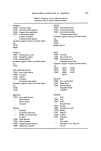
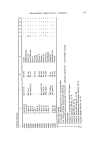
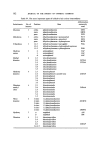
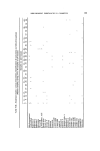
164 JOURNAL OF THE SOCIETY OF COSMETIC CHEMISTS much was known about the actual use of these materials. It was decided to start analytical market surveys of several classes of cosmetics in order to contribute to the establishment of a well-balanced legislation in Holland. The work will continue for several years, but it was thought valuable to make the analytical experiences available to those who are interested in the field of analytical cosmetic chemistry. EYE MAKE-UP COLOURS Identification Application of colours in the area of the eye should be carried out with the utmost care and with the best non-toxic colours available, in order to minimize the hazard of damage to this vital organ. In contrast to lipstick colours no practical data are available on the kinds of pigments that are in actual use in today's eye cosmetics. At the beginning of 1972 an analytical survey of these colours was started. As no analytical methods were available such a system was developed. To get an idea what kind of colours might be used an inventory was compiled which is tabulated in Table I (1-5). Many are inorganic insoluble pigments. From this point of view instrumental analysis of the metal elements would give much information. Emission spectro- scopy, X-ray fluorescence and X-ray diffraction methods are the methods of choice. On the other hand it should also be possible to make an analysis along classical chemical lines. A 'non-instrumental' methodology has been used but excluding the identification of the whites (except for TiO2). This can only be done satisfactorily by instrumental analysis. Apparatus and reagents Apparatus for thin-layer chromatography Polyamide powder MN-SC6 or similar Microburner Lead acetate/cotton plugs Platinum needle Sodium Peroxide granules (Merck Platinum disk 6563 for instance) Homogenizer (for instance Ultra Turrax: TP 18/2, Janke & Kunkel. W. Germany) Kjeldahl flasks (25 ml) Microscope Vitreosol or quartz crucibles (ca 20 ml) Centrifuge
Purchased for the exclusive use of nofirst nolast (unknown)
From: SCC Media Library & Resource Center (library.scconline.org)