258 JOURNAL OF THE SOCIETY OF COSMETIC CHEMISTS finger into the vagina followed by smelling and tasting of the secretion (13). In the pigtail macaque, Macaca nernestrina, the male displayed the Flehmen posture following olfactory inspection of the female's genitalia (6). In the stumptail macaque, Macaca arctoides, sniffing, fingering and licking of the perineal region occurs following female presentation (2) and prior to copula- tion (3). Although olfactory cues from the urine of receptive females are not ruled out, it would appear from these observations that in the macaques, communication of sexual status is by way of vaginal secretions. To test this proposition use was made of operant conditioning tech- niques, in which male rhesus monkeys were required to press a lever in order to raise a partition which physically separated them from a female partner, but through which they could both see and smell the partner. Males had to work with some dedication, pressing the lever 250 times to gain access to the female. They regularly responded for ovariectomized partners treated with oestrogen, but rarely performed when faced with untreated ovariectomized females (9). Temporarily depriving these males of their sense of smell did not markedly affect either their pressing for or behaviour with the oestrogen-treated females these females were presum- ably remembered as being attractive because of previously rewarding sexual experiences with them. However, the temporarily anosmic male failed to respond for unfamiliar ovariectomized females after these females were administered oestrogen, and shown to be sexually stimulating to normal males. When the olfactorily deprived males had their sense of smell restored they readily began pressing for access to these females. That is to say, anosmia did not impair males' sexual arousal and sexual activity with familiar oestrogenized females, but anosmic males were not able to detect the onset of attractiveness which oestrogen promoted in their unfamiliar partners. These results were consistent with the hypothesis that oestrogen- ized female rhesus monkeys produced substances which stimulated the sexual interest of their partners via the olfactory sense. The preoccupation of males with the female's genital region suggested this might be an obvious place at which to start looking for male sex attractants. We therefore studied the effects on male behaviour of trans- ferring vaginal secretions from oestrogenized 'donor' monkeys to ovariec- tomized, unattractive 'recipient' partners. Application of vaginal secretions to the sexual skin area of recipients, which were themselves quite unrecep- rive to males, nevertheless resulted in a marked stimulation of the male partner's sexual activity (10). Oestrogen-primed vaginal secretions have

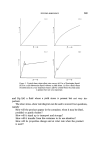
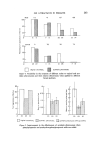
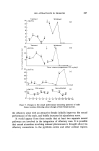
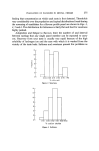
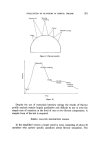
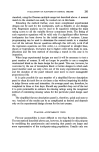
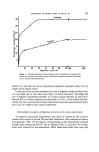
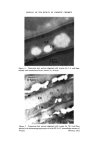
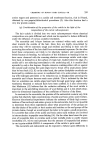
SEX ATTRACTANTS IN PRIMATES 259 now been applied to the sexual skin area of ovariectomized recipient rhesus monkeys on 249 separate occasions, and a 1 h behaviour test observed on each occasion in an acoustically isolated testing booth housed behind a one-way screen. These tests involved 11 pairs of animals and the secretions significantly increased the male partners' sexual behaviour above pre- treatment periods when only control substances were applied (Fig. 1). In Pre - treatment Treatment Pre-treatment Treatment 12 - 0.6 - PO.O 200 !49 • 0.4- .•, • 0-2- / PO-001 / 20O 249 Figure l. Effects of applying vaginal secretions from oestrogenized 'donor' females to the sexual skin area of ovariectomized 'recipient' on the sexual stimulation of males. Data for 11 pairs involving five males, five females and five donors. the pre-treatment period eight ejaculations were recorded in 200 tests and these increased to 139 during 249 tests when vaginal secretions were smeared on the sexual skin of unreceptive recipients (C •'= 96.04, P 0.001). Of even greater significance was the increase in male mounting attempts from 174 during the pre-treatment period to 2292 during applications to the same female partners. This high number of mounting attempts with few ejacula- tions was an indication of the unreceptive condition of the ovariectomized recipients, and clearly demonstrates the males' increased sexual interest in these pheromone treated females. To determine the chemical nature of the substances in vaginal secretions responsible for these powerful behavioural effects, extraction and fractiona- tion procedures were used in conjunction with behavioural assay methods.
Purchased for the exclusive use of nofirst nolast (unknown)
From: SCC Media Library & Resource Center (library.scconline.org)