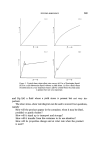
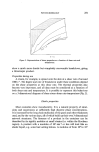
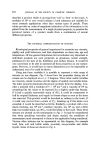
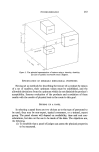
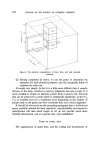
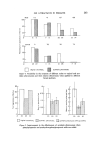
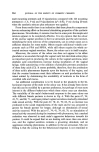
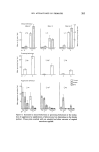
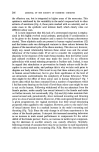
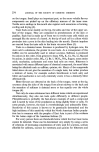
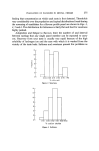
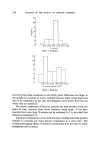
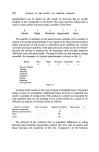
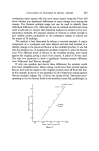
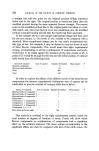
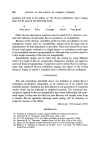
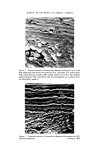
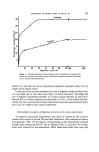
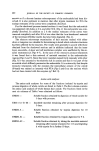
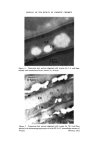
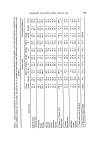
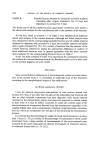
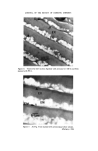
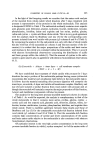
260 JOURNAL OF THE SOCIETY OF COSMETIC CHEMISTS The early stages of this procedure involved the use of ether extracts of secretions, collected by lavage with water from oestrogen-treated donor females (8). Ovariectomized rhesus monkeys were again the recipients for these extracts and the very low levels of sexual activity during the pre- treatment period was in marked contrast to the high levels seen during the applications of ether extracts. A gas chromatographic comparison of ether extracts of the vaginal secretion from ovariectomized untreated females indicated that the amounts of volatile components were absent or low, while oestrogen treatment stimulated production of volatile components and improved the sex attractant properties of vaginal secretions (11). Identification of these volatile components was obtained by preparative gas chromatography and mass spectrometry (5). The resultant mass spectra were compared with authentic samples, and established the identification of the first five peaks as acetic, proprionic, isobutyric, butyric and isovaleric acids. A mixture of authentic acids was made up to match their concentra- tion in a pool of vaginal washings, and a small sample of this mixture when tested for behavioural activity was demonstrated to possess sex attractant properties (Fig. 2). The effectiveness of these pheromones in stimulating sexual behaviour in the rhesus monkey does, however, vary according to social conditions: with some partners and in certain tests no sexual stimulation occurs. As more males are tested it is becoming evident that the response to pheromones varies between individuals and is also dependent in part upon the female partner with which they are paired. When the behavioural effects of fresh vaginal secretions and a synthetic mixture of their acid content were com- pared in the same nine pairs of animals, vaginal secretions appeared to be more effective in stimulating the male's sexual behaviour (Fig. 3). Although both vaginal secretions and the synthetic pheromone complex stimulated male sexual activity at significantly higher levels than in the pre-treatment tests, vaginal secretions were effective in 59•o of applications compared with only 35•o effectiveness of the synthetic acid mixture. Moreover, vaginal secretions stimulated 452 male mounting attempts compared with only 257 during application of synthetic pheromone to the same female partners (t= 2.39 P 0.02). This lower proportion of effective tests during applications of the synthetic pheromone is due to its failure to stimulate mounting behaviour in certain pairs (Fig. 4). The relative effectiveness of untreated vaginal secretions and the synthetic acid mixture varied with the male partners from 100•o in the case of male 113 to 45•o success with male 68. With males 113

SEX ATTRACTANTS IN PRIMATES 261 o 2o io • Pre-treatment • cF68,71 ? -- -L_. I ..• 0 4 8 12 cFII5,71 ? -- -cF41,71 ? 4 - 0- I I I I 0 2 4 6 Figure 2. Sexual stimulation of male rhesus monkeys during treatment of their female partners with a synthetic mixture of aliphatic acids applied to their sexual skin area. ¸, test without ejaculation ß E, one ejaculation in the test. ß 2E, two ejaculations in the test. and 41, acids and vaginal secretions were equally effective and this was also the case with females 71, 78 and 74, although with female 74 they were equally ineffective (Fig. 4). With male 67 and 68, the synthetic acid mixture was approximately half as effective as the fresh secretion. This was due to these males being paired for some of their tests with female 76 where, although secretions have stimulated sexual activity in 52•o of tests, the acid mixture has always been ineffective. Thus it can be seen that the male's response to olfactory attractants varies between individuals and is also, in part, dependent on the female parmer with which they are paired. Whereas some females readily evoke a sexual response from the male, others when treated in the same manner fail to do so. Hence, the response to pheromones in these highly-evolved social primates is not stereotyped. Furthermore, it can be seen that for cer- tain pairs, the synthetic acid mixture is not as effective in stimulating the
Purchased for the exclusive use of nofirst nolast (unknown)
From: SCC Media Library & Resource Center (library.scconline.org)