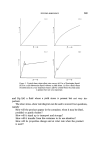
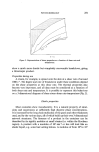
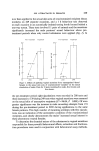
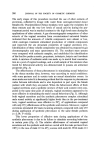
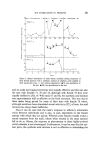
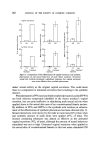
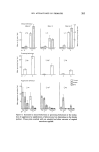
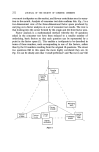
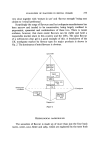
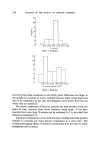
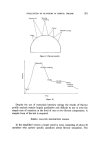
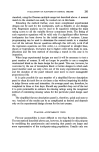
248 JOURNAL OF THE SOCIETY OF COSMETIC CHEMISTS any of his Majesty's subjects by means of the scents, paints, cosmetic washes, artificial teeth, false hair, Spanish wool, iron stays, hoops, high-heeled shoes or bolstered hips, shall incur the penalty of the law in force against witchcraft and like misdemeanours, and that marriage, upon conviction, shall stand null and void'. A similar Act was passed in America in 1770. The author is unaware whether the Act has ever been repealed! We can conclude that a great deal of time and expertise have been devoted to the art and science of cosmetic formulation for several hundred years. In this century many new and improved raw materials have been introduced, while many, some of them highly toxic, have disappeared. The very size of the business has rendered it imperative that it be put on a much more scientific basis than that on which it had existed for so long. Cosmetics today consist of oils, gels, emulsions, suspensions, or a com- bination of the last three. Physical forms range through solids, pastes, creams, gels, lotions and liquids. They will usually contain thickening and/or stabilizing agents. Hence they show complicated rheological pro- perties. It is the function of the cosmetic rheologist to quantify the physical properties so that a set of numbers are available which are related to what the consumer will see and feel when he or she buys and uses the product. To be useful the numbers must relate to the conditions of use. TYPES OF RHEOLOGICAL TEST The physical conditions which are important in a description of a pro- duct are the stress likely to be applied, the rate at which it will be applied, and the temperature during use or storage. Every product will have a unique set of numbers describing its physical properties, and each type of product a typical set. Shear stress-shear rate data Practically all cosmetics have one property in common they are shear sensitive, i.e. they break down when disturbed. This breakdown is charac- terized by the i-• (shear stress-shear rate) diagram. Some typical curves are shown in P•g. 1. Fig. l(a) describes a simple Newtonian fluid--not likely to be encountered by many cosmetic rheologists. Fig. l(b) describes a non- NewtonJan fluid without a yield stress, also uncommon in cosmetics. Fig. l(c) describes a fluid where the yield stress is a very important factor,

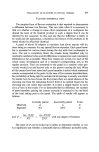
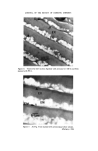
PSYCHO-RHEOLOGY 249 (a) (b) (c) (d) Figure 1. Typical shear stress-shear rate curves. (a) For a Newtonian liquid. (b) For a non-Newtonian liquid without a yield stress. (c) For a fluid where the yield stress is a very important factor. (d) For a fluid where the yield stress is present but not very important. and Fig. l(d) a fluid where a yield stress is present but not very im- portant. The shear stress-shear rate diagram can be used to answer four questions, namely How will the product appear in the container, when it may be tilted, prodded or gently shaken'?. How will it stand up to transport and storage? How will it transfer from the container to its use situation? How will its properties change and at what rate when the product is used ?
Purchased for the exclusive use of nofirst nolast (unknown)
From: SCC Media Library & Resource Center (library.scconline.org)