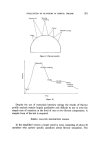
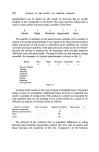
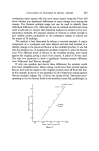
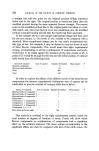
J. Soc. Cosmet. Chem, 27, 271-287 (1976) ¸ 1976 Society of Cosmetic Chemists of Great Britain Evaluation of flavours creams in dental ERIC BAINES* Presented at the Symposium on 'A Sensory Approach to Cosmetic Science' organized by the Society of Cosmetic Chemists of Great Britain at Manchester on 7-9th April 1975 Synopsis--One of the most important features of a DENTAL CREAM is its FLAVOUR. CONSUMER TESTS show the close relationship of overall preference with flavour attributes. Evaluation methods can be of different types depending on which aspect of flavour is being examined. Any convenient PANEL can be used to determine whether two flavours are notice- ably different. Detailed flavour descriptions can be obtained using flavour profile panels. In the classic form such panels require screening and training of their members so as to render them expert. These restrictions can be considerably relaxed, however, if the DELPHI TECHNIQUE is used to elicit an accurate consensus of opinion from the panel. Flavour descriptions can also be obtained by the use of panels of 20-30 members awarding ratings over a limited number of flavour questions. Results of such panels can be subjected to more elaborate methods of statis- tical analysis, such as analysis of variance and regression analysis, provided that the flavours tested conform to a carefully planned experimental design. Panels intended to test the acceptability of flavours must be large and as representative as possible of the toothpaste using population. INTRODUCTION Flavour is one of the most important attributes of a toothpaste, it is what is noticed during brushing and immediately afterwards. Although consistency and texture are also important, they tend to be standardized * Colgate-Palmolive Ltd, Ordsall Lane, Salford M5 3FS. 271

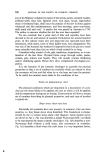
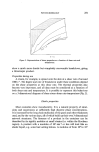
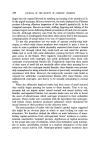
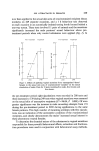
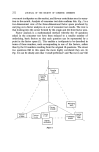
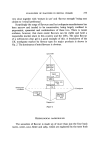
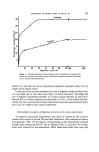
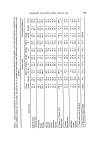
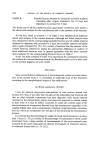
272 JOURNAL OF THE SOCIETY OF COSMETIC CHEMISTS over most toothpastes on the market, and flavour contributes most to sensa- tion in the mouth. Analysis of consumer test data confirms this. Fig. 1 is a two-dimensional view of the three-dimensional factor space produced by carrying out a factor analysis on a set of consumer test results. The view is that looking into the corner formed by the origin and the three factor axes. Factor analysis is a mathematical method whereby the 10 questions asked in the consumer test have been reduced to a smaller number of underlying, basic factors so that each question can be represented by a point in the factor space (1). This enables a toothpaste to be described in terms of three numbers, each corresponding to one of the factors, rather than by the 10 numbers resulting from the original 10 questions. The closer two questions fall in this space the more highly correlated they are. In Fig. I it can be clearly seen that 'overall preference' and 'flavour in use' fall / 1 / / / t / / Cleanlng whole mouth Cleaning teeth \ \ \ \ / \ Amount • ' , I Flavour I • I Leovincj Texlure in use ß mouth o*'oom l j ]:x•:e I-I r['•Vu• r • I Fr•eshe?. 'ng fresh ' ' [ ' --I •rea,n [ [ Overall • preference Figure I
Purchased for the exclusive use of nofirst nolast (unknown)
From: SCC Media Library & Resource Center (library.scconline.org)