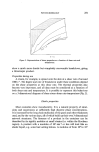
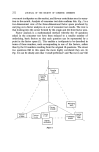
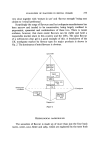
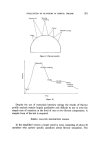
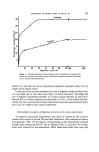
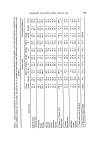
EVALUATION OF FLAVOURS IN DENTAL CREAMS 273 very close together with 'texture in use' and 'flavour strength' being next closest to 'overall preference'. Surprisingly the range of flayours used by toothpaste manufacturers has been narrow and tended to be conservative, being largely confined to peppermint, spearmint and combinations of these two. There is recent evidence, however, that more exotic flayours can be viable and hold a respectable market share in this country and the USA. The spice flavour of a well-known clear gel is a good example of this. A breakdown of the UK toothpaste market by flavour type for major products is shown in Fig. 2. The dominance of mint flavours is obvious. Spearmint Macl •an's spem mint S [gna I • J Col late I•ø/ø I I z•ø/o •, ......... l- fMr •i•mi'nSt Peppermint Figure 2 Eucalyptus PHYSIOLOGICAL BACKGROUND The sensation of flavour is made up of more than just the four basic tastes, sweet, sour, bitter and salty, which are registered by the taste buds

274 JOURNAL OF THE SOCIETY OF COSMETIC CHEMISTS on the tongue. Smell plays an important part, as the more volatile flavour components are picked up on the olfactory mucosa of the inner nose. Tactile nerve endings in the mouth also register such sensations as burning, cooling and drying (2). Taste buds occur mainly on the tip, the sides and rear of the upper sur- face of the tongue. They are contained in protuberances of the skin or papillae. Each bud is made up of from two to twelve taste cells which are arranged like the staves of a barrel. At the tip of each cell is a cilium which protrudes into a pore in the skin leading into the mouth. Electric impulses are carried from the taste cells to the brain via nerve fibres (3). Taste is a chemical sense. Sourness is produced by hydrogen ions, the more acid a substance, the greater its sour taste. As a consequence of this buffers can be successfully used to reduce sourness. Saltiness is produced by cations in the order, from greatest to least, NH4, K, Ca, Na, Li, Mg and by anions, in similar order, SO4, C1, Br, I, HCO3, NO3. Sugars, some amino acids, saccharine, cyclamates and some lead salts are sweet. Bitterness is associated with many different types of chemical compound, the most bitter being the alkaloids such as caffeine, quinine, etc. Many of the compounds listed above do not give the sensation of a single taste, but rather produce a mixture of tastes, for example sodium bicarbonate is both salty and bitter and saccharine is not only extremely sweet, it has a distinctly bitter aftertaste (4). Bitter flayours are detected at the back of the tongue, sweet at the tip, sourness along the sides of the tongue from about midway to the back and the sensation of saltiness is detected more or less equally over the whole tongue (4). Not only do some substances have different tastes which are experienced simultaneously, they also can taste quite differently to different people. Phenylthiourea is probably the best-known example of such a compound and is tasted by most of the population as being slightly bitter or salty. To some people, however, the taste is overwhelmingly and unbearably bitter. Sensitivity of this nature is known to be genetically determined and the high incidence of this sensitivity which the North American Indian popula- tion has in common with the peoples of East Asia is part of the evidence for the Asian origin of the American Indians (5). For every person there are thresholds below which the four basic tastes cannot be detected. These can be determined very simply by using a series of solutions of increasing concentration of citric acid for sourness, sodium chloride for saltiness, sucrose for sweetness and quinine for bitterness and
Purchased for the exclusive use of nofirst nolast (unknown)
From: SCC Media Library & Resource Center (library.scconline.org)