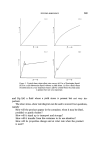
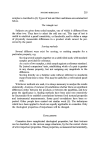
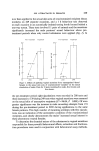
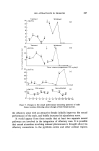
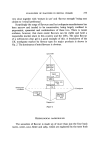
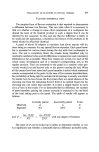
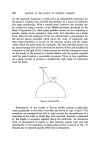
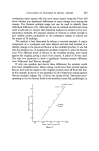
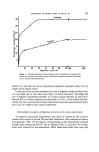
EVALUATION OF FLAVOURS IN DENTAL CREAMS 283 toothpastes mean square with the error mean square using the F-test will show whether any significant differences in mean ratings exist among the creams. The Duncan multiple range test can be used to identify these individual differences (13). Although the use of a limited and discrete rating scale would seem to require that statistical analysis be carried out by non- parametric methods, the classical analysis of variance is robust enough to give reliable results, particularly as the toothpaste ratings of interest are the means of 30 readings. The method is best illustrated by taking a concrete example. A major component of a toothpaste had been altered and this had resulted in a definite change in the perceived flavour of the modified product. It was felt that the simplest way of tackling the problem would be to alter the flavour level. Five different levels of flavour in the modified product were tested against the original, giving a total of six creams. A panel of 30 was used. The only two questions to show a significant 'between creams' difference were 'bitterness' and 'flavour strength'. If only one question had shown these differences the solution would have been straightforward. Mean ratings would have been plotted against flavour level and the match to the original product read off from this line. In the example, however, it was necessary to plot 'bitterness' ratings against 'flavour strength' ratings. Fig. 12 shows the results of this. The points corre- sponding to the five flavour levels in the modified cream fall, gratifyingly, in c• 1.6 1.0 Modified product Flcvour level/ 5 x' :5 x '/ Original 0 product 2x / I x' / 2.4 2'6 2'8 Mean flavour strength rate Figure 12

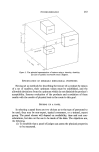
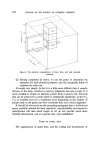
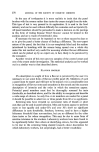
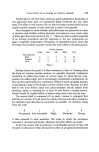
284 jOURNAL OF THE SOCIETY OF COSMETIC CHEMISTS a straight line with the point for the original product falling somewhat below and to the right. The original product is dearly less bitter than the modified product having the same apparent flavour strength. The nearest point on the modified product line to the original point was taken as a suit- able match and when that flavour level was substituted into the modified product consumer testing showed that the match had been successful. In the example above a very simple experimental design had been used for the test creams, i.e. five levels of one variable to be compared with a standard. More complicated designs can be very easily incorporated into this type of test. For example, it may be desired to test two levels of each of three flavour components. This would mean that eight experimental creams, corresponding to all the combinations of components and levels, would have to be tested against the standard giving nine creams in all. A panel of 27 would be enough for this test and the initial analysis of variance table would have the following form: Source of variation Sum of squares Degrees of freedom Mean square F Between toothpastes ........... 8 ........... Between panel members ........... 26 ............ Error ............. 208 ........ Total ............. 242 In order to explore the effects of the different levels of the three flavour components the between experimental toothpastes sum of squares can be subdivided to give the analysis of variance table shown below. Source of variation Between levels of component 1 ......... Between levels of component 2 ......... Between levels of component 3 ......... Interactions: Component 1 x Component 2 .......... Component 1 x Component 3 .......... Component 2 x Component 3 .......... Components 1 x 2 x 3 .......... Error (from previous table) .......... Sum of squares Degrees of freedom Mean square F 1 1 1 1 208 This analysis is confined to the eight experimental creams, hence the total number of degrees of freedom of seven. F-tests will show which flavour components or combinations of components had a significant effect on the attribute analysed. The mean ratings corresponding to the significant effects can then be compared with that of the ninth cream, the
Purchased for the exclusive use of nofirst nolast (unknown)
From: SCC Media Library & Resource Center (library.scconline.org)