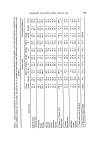
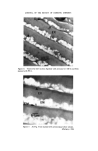
CHEMISTRY OF HUMAN HAIR CUTICLE--III 295 In the light of the foregoing results we consider that the amino acid analysis of the material from whole cuticle which dissolves after 5 days treatment with pronase is representative of the proteins in the whole endocuticle. This analysis is designated ENDO in Table I. The endocuticle evidently contains more aspartic acid, glutamic acid, threonine, alanine, isoleucine, leucine, methionine, tyrosine, phenylalanine, histidine, lysine and arginine and less serine, proline, glycine, valine and cystine + cysteic acid than whole cuticle. This is in very good agreement with the analyses made by Bradbury and Ley (3) for the corresponding com- ponents isolated from wool cuticle with pronase (cf. columns 8 and 9 of Table I). By comparing the analysis for the endocuticle not only with that of whole cuticle but also with that of the exocuticle (cf. column 3 and the next section of the dis- cussion) it is evident that the major proportions of the acidic and basic amino acid residues in the cuticle are contained within the endocuticle. This is in accord with electron histochemical observations concerning the distribution of acidic and basic groups within the cuticle (1). That the amount of cystine in the endo- cuticle is quite small is also in agreement with electron histochemical observations (4, 5). (b) Exocuticle + A-layer + inner layer + cell membrane complex (EXO + A + I+ M) We have established that treatment of whole cuticle with pronase for 5 days dissolves the major portion of the endocuticle perhaps leaving some cystine-rich exocuticular-like material and cytoplasmic lipid debris in the endocuticle region. It follows that the material remaining after pronase digestion will comprise the inner-layer, exocuticle, A-layer and cuticle cell membrane complex. Bradbury and Ley (3) have isolated a similar fraction from wool cuticle with pronase and al- though the exocuticle will certainly comprise the major proportion of this fraction, A-layer and membrane components will also be present. Our analysis for the long term pronase-insoluble material is shown in column 3 of Table I. As would be expected, the analysis is complementary to that of the whole endocuticle in that it contains more serine, proline, glycine, cystine + cysteic acid and less aspartic acid, glutamic acid, threonine, alanine, valine, iso- leucine, leucine, methionine, tyrosine, phenylanaline, histidine, and arginine than whole cuticle. There is excellent agreement between these results and those of Bradbury and Ley (3) for the comparable exocuticle-rich fraction isolated from wool cuticle (cf. columns 8 and 10 of Table I). That the exocuticle-rich fraction contains high concentrations of cystine and lower concentrations of the acidic and basic amino acids relative to the endocuticle is also consistent with electron histochemical observations. Of particular interest is the very high cystine concentration in the long term pronase-insoluble fraction in which « cystine occupies 1 in 4 of the amino acids of

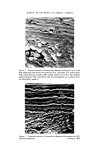
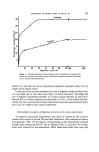
296 JOURNAL OF THE SOCIETY OF COSMETIC CHEMISTS the protein. Taking into account the fact that the cystine concentration of the cuticle cell membrane complex is quite low (2), we have calculated that the order of 1 amino acid residue in 3.7 is present as « cystine in the combined exocuticle. and A-layer. In our previous paper (2) we also presented evidence for suspecting that the cystine of the A-layer may not be as high as electron histochemical observations had led us to believe. In this case it is interesting to speculate that there might therefore be as much as 1 amino acid residue in 3.3 as « cystine in the proteins of exocuticle and inner-layer. Notwithstanding this latter speculation it is clear that the exocuticle, A-layer and inner-layer as a whole are remarkable for their high cystine content. (c) Endocuticle fraction A In the neck of the hair follicle those cells derived from the follicle matrix which will eventually be transformed into cuticle are compressed into a sheet-like form at this stage the cells contain recognizable nuclei that are compressed into disc-like units within each cell. During the subsequent hardening the cystine-rich exocuticle and A-layer are laid down in laminae at one side of the cell (i.e. that side of the cell at the greater radius from the fibre axis) and the nucleus is further compressed along with other effete cell organelles into that part of the cell later identified as the endocuticle. No distinct entity corresponding to this effete cuticle nucleus can be identified under the electron microscope in metal-stained sections of untreated hair, although recently Kassenbeck (6) has reported that he has observed under the optical microscope entities corresponding to this effete nucleus in the cuticle of hair treated with p-toluene sulphonic acid in ethylene glycol. About 20•o by weight of human hair cuticle dissolved after long term trypsin treatment, and from electron microscope observations it was established that this material was derived from the endocuticle. Since the zones of digestion were usually sheet-like in form we therefore believe that it was the effete nucleus of the cuticle which had been dissolved. This fraction comprises about 57•o by weight of the whole endocuticle and the amino acid analysis for it is shown under the title ENDO A in Table I. It evidently contains significantly more glycine, alanine, leucine, methionine and phenylalanine and less serine, proline and cystine + cysteic acid than the whole endocuticle. Since the proportion by weight of cuticle which dissolves after long-term trypsin treatment (c. 20•o) is similar to that proportion which dissolves very rapidly within the first hour of pronase treatment (c. 22•o), we conclude that both these enzymes under their respective conditions are dissolving the same com- ponent, i.e. the endocuticle nucleus. The extreme rapidity of the pronase digestion precluded the possibility of obtaining a good corresponding sample for analysis,
Purchased for the exclusive use of nofirst nolast (unknown)
From: SCC Media Library & Resource Center (library.scconline.org)