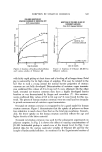
570 JOUBNAL OF THE SOCIETY OF COSMETIC CHEMISTS used on each side. This was followed by a thorough rub in for approximately 3 min and then a thorough rinse. A wet comb evaluation was followed by a set and drying. The curlers were removed and a final evaluation of the hair was carried out. Results-Both rinses applied equally well and rinsed out well. The left (Stearalkonium Chloride) side was preferred by all in the wet evaluation for ease of combing and amount of slip on the hair. In some cases, the right (LanBAC) side yielded a lesser amount of tangles. After setting and drying, the right (LanBAC) side was preferred by 5 out of the 6 females for sheen, fiuhtlness of the hair, manageability, feel, and body. As in the shampoo study, the lanolin quaternary was preferred in the final evaluation, although it suffered somewhat in the wet comb evaluation. SUnIMARY In this paper, we presented two nexv quaternary compounds derived from lanolin acids. We discussed their method of preparation and described other derivatives that could be prepared. It was demonstrated that their use in shampoo and creme rinse formulas compared with commercially available compounds of this type. Lower eye irritation scores and higher germicidal activity were presented along with an experiment demonstrating greater com- patibility with anionic surfactants. (Received July 15, 1975) (lO) (11) (1•.) (13) (14) (15) REFERENCES (1) H. F. Mark, J. J. McKeppa, Jr., and D. F. Othmer, Encyclopedia of Chemical Tech- nology, 2nd ed., Vol. 16, John Wiley & Sons, N.Y.C. New York, p. 864, 1968. (2) M. Ginn et al., J. Amer. Oil Chem. Soc. 42, 1084 (1965). (3) W. M. Linfield et al., J. Amer. Oil Chem. Soc. 35, 590 (1958). (4) A. Scherr and E. Vitales, Ind. Eng. Chem. Prod. Res. and Devel., 2, 97, (1963). (5) Vale, W. H., Brit. Pat. 775981 (1957). (6) A. Kluge, The Properties of Quaternary Ammonium Salts and their uses as Cosmetic Products for Treatment of Hair, Parrum. Kosmet., 42, 341 (1961). (7) G. Barker, Cationic Lotions, Cosmet. Per., 89, 9.5-34 (1974). (8) J. K. Finnegan and J. B. Dienna, Toxicological Observations on Celtain Surface Active Agents, Proc. Sci. Sec. Toilet Goods Ass., 20, 16 (1953). (9) R. C. Heald, Shampoo Bases Containing Cationic Hair Conditioners, Norda- Schimmel Briefs No. 416, Jan. 1970. Bio-Toxicology Labs., Private Rep. to Maimstrom Chemical Corp. E. Kraft and M. Schlossman, U.S. Pat. Application •P156,102. AS•M method D-2074. L. D. Metca]re et al., J. Amer. Oil Chem. Soc., 43, 355 (1966). T. G. Schoenberg, New Look at Cationic Surfactants for Today's low pH Shampoos, Cosmet. Per., 90, (1975). J. H. ,Draize, Appraisal of the safety of chemicals in foods, .drugs and cosmetics by Association of Food and Drug Officials of the United States, Topeka, Kansas, 1965, Pg. 49.

1. Soc. Cosmet. Chem., 27, 571-578 (November 1976) Hair Body PATRICIA S. HOUGH, B. Sc., J. ELAINE HUE¾, B. Sc., and WILLIAM S. TOLGYESI, Ph.D.* Presented, May 29, 1975, SCC Seminar, St. Louis, Mo. Synopsis: HAIR BODY can be defined as the STRUCTURAL STRENGTH and RESIL- IENCY of a HAIR MASS. The definition conforms to the qualities assessed subjectively by hair cosmetic users. Five groups of fundamental parameters govern the mass structural strength of hair: hair density on the scalp, material stiffness, diameter, configuration of the fibers, and fiber-fiber interactions. The •otenti,al influence of hair cosmetics on hair body can be systematically analyzed by deducing their effects on these separate funda- mental parameters. It is proposed that current cosmetic products are effective in modify- ing hair body through only the last two factors: fiber configuration and fiber-fiber in•ter- actions. I. INTRODUCTION Terms like body and texture have gained greatly in their importance to hair cosmetics during the last few years. All major hair care product categories- shampoos, conditioners, setting aids, sprays, waves, bleaches, and dyes-tend to promise these characteristics to the consumer. The •erms have magic qualities because they represent much sought after properties and because they refer to some intangible characteristics which have not yet been defined. The aim of this paper is to offer a physical deftni- hon for hair body, analyze its component parameters, and discuss how differ- ent types of products assist in realizing it. II. D•scussIo• A. Definition Women tend to iudge hair body either by visual or tactile characteristics. According to the visual evaluation, a head of combed-out hair has body if it shows high elevation over the crown and significant lateral displacement at the sides, conversely, when the mass of hair closely follows the shape of the skull on the top and sides under its own weight, it is interpreted as lacking *Gillette Research Institute, 1413 Research Boulevard, Rockville, Maryland 20850. 571
Purchased for the exclusive use of nofirst nolast (unknown)
From: SCC Media Library & Resource Center (library.scconline.org)