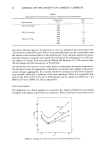
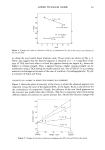
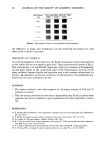
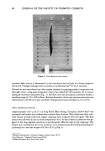
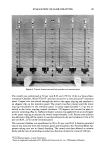
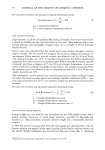
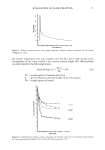
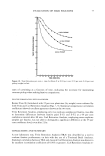
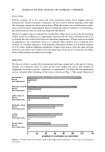
78 JOURNAL OF THE SOCIETY OF COSMETIC CHEMISTS quired a large sample population (i.e., 7 to 15 replicates) while TRA sample population could be as small as two replicates. It is suggested that sources of error in Curl Retention Analysis are primarily a result of physical handling of curls during test preparation and the use of visual observations to record results. The technique of swatch preparation in the TRA procedure is felt to provide a sample with greater uniformity. Additionally, the TRA method maintains precise control of air flow and an automated output of sample response. Twist Retention method of analysis was shown to give statistical correlation (after 90 to 100 rain) to long-term (5 to 21 hr) Curl Retention testing. Use of this new test significantly decreases the testing time required to evaluate fixative performance on hair. Valid conclusions of fixative differences (to 95 per cent and 99 per cent confidence) were made much faster by Twist Retention Analysis. Twist Retention Analysis was able to distinguish statistical differences between fixa- tives (i.e., Formulations E1 and E2 compared to Resin E) where Curl Retention Analysis could not. It is felt that fixative differences that heretofore might have been overlooked can now be determined. This paper confirms Bogaty's (5) findings that torsional forces are important in the set- ting of hair on the head. The statistical correlation of the new test, which induces solely torsional.stresses to a hair swatch, to the performance of curled hair swatches seems to imply, in fact, that torsional stress is one of the most important factors determining the performance of set hair. Modern day life-styles have required curl holding performance of hair fixatives to func- tion over extended periods of time. More and more consumers are requiring a hair fixative to hold a set with one application or less per day. Until the development of the described test it could take up to 24 hr to evaluate hair fixative performance under humid conditions. With the TRA method, meaningful results can be obtained in less than 2 hr. REFERENCES (1) A. B. Reed,Jr. and I. Bronfein, Curl retention with hair sprays, Drug Cosrot. Ind., 94, 178 (1964). (2) A. L. Micchelli and F. T. Koehler, Polymer properties influencing curl retention at high humidity, J. Soc. Cosmet. Chem., 19, 863-80 (1968). (3) R. Ayer and J. Thompson, Scanning electron microscopy and other new approaches to hair spray evalua- tion, J. Soc. Cosmet. Chem., 23,617-36 (1972). (4) S. Takada, Possibilities of improving the qualities of hair spray, AerosoIRep., 11, 12-25 (1972). (5) H. Bogaty, Torsional properties of hair in relation to permanent waving and setting, J. Soc. Cosmet. Chem., 18, 575-89 (1967). (6) J. Gillham, Torsional braid analyzer. A semi-micro thermomechanical approach to polymer characteriza- tion, Crito Rev. Mac. Sci., 1 (1) 83-172 (1972).

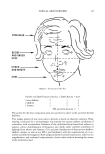
J. Soc. Cosmet. Chem., 29, 79-90 (February 1978) Topical moisturizers: quantification of their effect on superficial facial lines ELIAS W. PACKMAN'*, Philadelphia College of Pharmacy and Science, 43 rd Street, Woodland Avenue and Kingsessing Mall, Philadelphia, PA 19104 and EUGENE H. GANS'*'*, Dermatology/Toiletry ROD, Vick Divisions Research and Development, One Bradford Road, Mount Vernon, NY 10553. Received June 14, 1977. Synopsis This single-blind study was designed to test a new method of QUANTITATIVE EVALUATION as used by trained judges to visually assess changes in SUPERFICIAL FACIAL LINES (SFL's) following the application of topical MOISTURIZERS. The method consists of a system for reproducible scoring of these lines, based on ratings for their frequency times their depth, by component area of the face. Controlled half-face com- parisons in five test series involving no treatment, water, and four moisturizers revealed that: 1. The method provided good reproducibility of baseline SFL values, and of changes in these values through time upon repetition of the same treatment in different series. 2. The method also provided values for the distribution of SFL's by facial area, and values indicating a differ- ing response of facial areas to applications of moisturizers. The greatest per cent reductions were noted for SFL's around the eyes, followed by lines around the cheek and mouth. Lines on the forehead and chin changed noticeably less. 3. With quantitative evaluation, trained judges can produce a reliable rank ordering of more effective treat- ments, less effective ones, and control treatments such as water or no treatment. INTRODUCTION Recent articles (1,2) attest to the growing importance of regulatory and consumer interest in regard to cosmetic products. Current focus primarily pertains to the substantiation of safety. However, it is plausible to expect that a requirement such as declaration of ingredients will cause the consumer to be more conscious than pre- viously of these ingredients' contribution to performance. Thus, demonstrated proof of performance may well come to play a greater role in product differentiation. In that interplay between the market shaping the product and the product shaping its market, *Professor of Pharmacology. **Vice President & Director. 79
Purchased for the exclusive use of nofirst nolast (unknown)
From: SCC Media Library & Resource Center (library.scconline.org)