j. Soc. Cosmet. Chem., 30, 67-71 (March/April 1979) A method to evaluate the safety of an OTC ophthalmic solution in normal human volunteers D. R. CALLAHAN, Medical Department, Norwich-Eaton Pharmaceuticals Inc., Norwich, NY 13815 L. C. PARISH Department of Dermatology, Dubring Laboratory, Hospital of the University of Pennsylvania School of Medicine, 3600 Spruce St., Philadelphia, PA 19104 and H.J. NEVYAS Department of Ophthalmology, University of Pennsylvania, School of Medicine, Philadelphia, PA 19104. Received June 23, 1978. Synopsis The RABBIT model for ocular irritation and safety testing is much used and well documented, but HUMAN ocular irritation studies are not as available. A DOUBLE-BLIND, accelerated, one-day, human ocular irritation study was conducted prior to medical release of a reformulated proprietary ophthalmic preparation. Clinical SIGNS and SYMPTOMS were rated using a numerical severity scale. INTRODUCTION Methods of evaluating eye preparations from a human safety standpoint have remained somewhat obscure. Toxicology and predictive irritancy studies in animal models can be readily retrieved from the literature (1-4), but methods for human testing are not as available. The rabbit is the species of choice for the preliminary evaluation of potential ocular irritation from toiletties, cosmetics and household products, as well as for proprietary and ethical ophthalmic preparations because the rabbit eye is more sensitive to irritation than the human eye (5). In addition, the standardization which exists for rabbit ocular irritation studies is well documented (6). Although the data generated in the rabbit model can prove most interesting and is extremely useful for predicting the potential for human ocular irritation, every eye product should be subjected to subsequent human safety testing prior to release to the marketplace. The reformulation of an over-the-counter ophthalmic solution (Ocusol © Norwich- Eaton Pharmaceuticals) created the need for the evaluation of its ocular irritation potential. 67

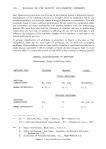
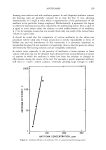
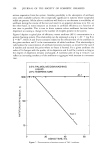
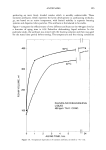
68 JOURNAL OF THE SOCIETY OF COSMETIC CHEMISTS Methods for evaluating human ocular irritation have been described for detergents (7) and cosmetic (8) preparations, but a lack of published methods exists for over- the-counter ophthalmic preparations we therefore devised a one-day acute ocular irritation study. Sixty subjects were selected as being a large enough statistical sample. The evaluations by the investigators and the symptoms of the participants were all given numbers relative to the degree of severity. EXPERIMENTAL PROCEDURE We selected 61 normal men and women volunteers between the ages of 18 and 29 for the study. Each subject signed an informed consent after which a medical history was obtained. Then each subject underwent an ear, nose and throat examination as well as a slit lamp ophthalmological examination. Vital signs were also taken. All study subjects were found to be free from overt symptoms or clinical findings of ocular disease. The subjects were not allowed to smoke, wear contact lenses or eye make-up the day of the test. Any subject exhibiting signs or symptoms of an active upper respiratory infection, suffering from allergic thiniris, or having taken antihistamines within seven days was excluded. The study was conducted in a double-blind fashion. Each subject received the active solution (containing .05Vo tetrahydrozoline) in one eye and the placebo (the same vehicle but without the tetrahydrozoline) in the other eye. Neither the investigator nor the subject knew which eye had which solution. Prior to dosing, each subject's eyes were examined by the investigator and a baseline rating was obtained. The following clinical findings were rated on a scale from 0-5 (0 = none, 1 •--- mild, 2 = mild-moderate, 3 = moderate, 4 = moderate-severe, 5 = severe), for lacrimation, palpebral and bulbar conjunctival hyperemia, and lid edema. Each subject also gave his or her subjective opinion as to whether there was any burning, stinging or itching. The same numerical rating system was used by the subjects. Each subject was randomly assigned two bottles of solution, both numbered by the subject number and labeled either A or B in such a manner that they could be readily distinguished, but the bottles and solutions appeared exactly alike. The investigator or a trained technician placed two drops of solution A in the right eye and two drops of solution B in the left eye of each subject. After administration the investigator waited 5 min and rated the clinical findings. The investigator also solicited the subjective evaluation of the subject as to the degree of discomfort, if any, he or she was experiencing. This was done after he had rated each eye. This procedure was repeated every 3 hr for a total of four doses. The last dose was 9 hr from the first (i.e., 0, 3 hr, 6 hr, 9 hr). Thus each eye was rated by the investigator and the subject a total of four times. RESULTS For each clinical parameter, a scale of 0 to 5 was used to evaluate a reaction, with 5 being the most severe. Four such parameters were evaluated by the investigator at each of the four dosing periods a cumulative maximum grade of 80 was possible per
Purchased for the exclusive use of nofirst nolast (unknown)
From: SCC Media Library & Resource Center (library.scconline.org)