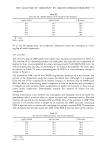
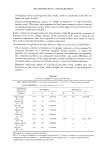
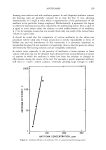
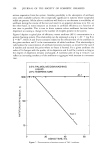
74 JOURNAL OF THE SOCIETY OF COSMETIC CHEMISTS however. For example, polarographic analysis of 2MP in the presence of a large excess of OM, or of PDS in the presence of a large excess of OMDS (for which additional problems exist) are difficult due to the close proximity of the corresponding polarographic half-wave potentials. Accurate analysis of low concentrations of 2MP and PDS in OMDS shampoos is thus not feasible polarographically. The iodimetric determination of OMDS in clear shampoos involves the prior conversion of OMDS to OM and is, therefore, subject to interference from this compound. On the other hand, in the colorimetric analysis of OM, PDS is an interferent. The present study describes the analysis by reverse-phase LC of the compounds listed above, with the exception of OM. This compound, because of its strong complexing ability, ease of oxidation and poor ultraviolet stability, presents severe obstacles to direct LC analysis. Reverse-phase LC with UV detection is particularly attractive for the present application for several reasons: The compounds of interest are water soluble and are present in a largely aqueous medium. There are very few UV-active components present in most clear shampoo formulations and the separation of functionally very similar compounds (e.g., OMDS and PDS, OMSA and PSA), which are difficult to distinguish by other means, are achievable. Those other UV-absorbing components, such as fragrance and color components, present in the shampoos studied here are easily separated from the compounds of interest. In addition, LC analyses can be easily automated using automatic sample injectors. EXPERIMENTAL APPARATUS Chromatograms were obtained using a Waters Associates Model ALC/GPC 244 high pressure liquid chromatograph equipped with a Model U6K injector and Model 440 ultraviolet absorbance detector operated at 254 nm. A Waters Associates/.t Bondapak C•, reverse-phase column was used for all separations. REAGENTS 2-Pyridinethiol, 2,2'-dithiobis-pyridine, 2-pyridinesulfonic acid, 2-pyridinesulfonic acid 1-oxide and 2,2'-dithiobispyridine-l,l'-dioxide were prepared and purified by the Biocides Group, Chemicals Division, Olin Corporation. Acetonitrile (UV) was obtained from Burdick & Jackson Laboratories and the tetrabutylammonium hydrox- ide, 40% aqueous, from Aldrich Chemicals. All other reagents were analytical reagent grade. PROCEDURES Mobile phase was prepared by dissolving in 1 1 of the appropriate acetonitrile/water mixture (as discussed below): 5 ml of a 40% aqueous tetrabutylammonium hydroxide solution 4 ml of glacial acetic acid and 0.5 ml of a saturated Na2EDTA solution. Standard solutions were prepared in the appropriate mobile phase. All shampoo samples were prepared by weighing approximately 1 g to __+ 0.1 mg of shampoo into a 10-ml volumetric flask and bringing to volume with mobile phase. Quantitation was accomplished by peak height measurements for 10/.tl injections in all analyses.

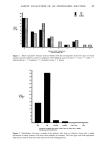
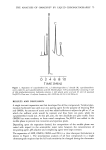
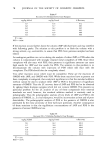
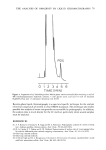
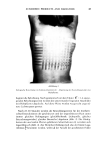
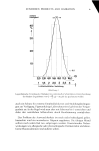
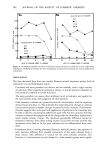
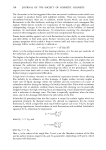
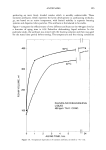
THE ANALYSIS OF OMADINE © BY LIQUID CHROMATOGRAPHY 75 B A D 0246810 TIME (MIN) Figure 1. Separation of 2-pyridinethiol (A), 2,2'-dithiobispyridine-l,l'-dioxide (B), 2-pyridinesulfonic acid-l-oxide (C), and 2-pyridinesulfonic acid (D). Mobile phase: 15:85 acetonitrile/H20 containing 5 ml/l of 40% tetrabutylammonium hydroxide solution, 4 ml/1 glacial acetic acid and 0.5 ml/l of saturated Na2EDTA. Flow rate: 1.5 rnl/min. Sensitivity: 0.01 AUFS for A,C,D 2.0 AUFS for B. RESULTS AND DISCUSSION A single isocratic separation was first developed for all five compounds. Tetrabutylam- monium hydroxide was used as an ion pairing agent for the purpose of retaining PSA and OMSA. An amount of acetic acid was added sufficient to adjust the pH to 3.7, at which the sulfonic acids would be ionized, and thus form ion pairs, while the 2-pyridinethiol would not. At this pH, also, the two disulfides are quite stable. Since OMDS has some tendency to form metal complexes, Na2EDTA was added to the mobile phase to prevent low recoveries and spurious peaks. Depending upon the separation desired, the composition of the mobile phase was varied with respect to the acetonitrile: water ratio however, the concentration of ion-pairing agent, pH adjustor and complexing agent were kept constant. The separation of 2MP, OMDS, OMSA and PSA in a clear shampoo formulation is shown in Figure 1. The simultaneous analysis of all four compounds in a single chromatogram requires that the full scale sensitivity be changed during the chromato-
Purchased for the exclusive use of nofirst nolast (unknown)
From: SCC Media Library & Resource Center (library.scconline.org)