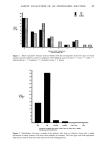
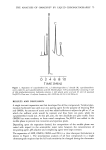
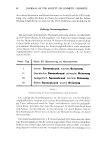
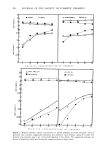
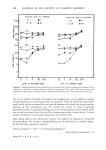
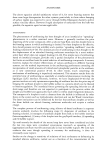
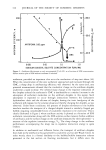
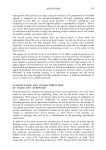
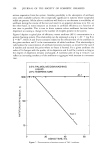
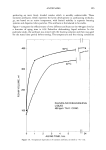
122 JOURNAL OF THE SOCIETY OF COSMETIC CHEMISTS lead to lasting reduction of the foaming power of a given system. For certain process or product applications, the foam inhibition or control requirement may be only temporary and subsequent regeneration of foaming characteristics is either highly desirable or essential. For example, during handling of liquid surfactant systems such as shampoos or dishwashing liquids or in plant operations such as filling, temporary foam inhibition would significantly aid overall processing efficiency, but restoration of foaming power is essential thereafter. Transient antifoams have been developed with these applications in mind: after use and exerting their action they destroy themselves 1000 ß , , lOO lO ß ß 23øC TAr-1 ....... 400 ppm 0.5% PALMOLIVE DISHWASHING LIQUID ß 75øC 50øC I I I I 0 10 2o 3o AGING TIME, hrs Figure 9. Effect of aqueous aging temperature on the performance of the transient antifoam.

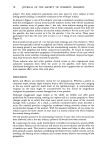
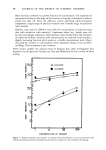
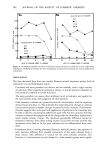
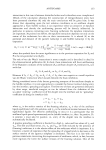
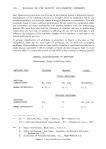
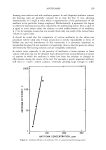
ANTIFOAMS 123 producing an inert, finely divided residue which is sensibly undetectable. These transient antifoams, which represent the latest development in antifoaming technolo- gy, are based on an active component, with limited stability in aqueous foaming systems and dispersed silica particles. The antifoam is formulated to be stable. Figure 7 compares the effectiveness of two different antifoams at the 400 ppm level as a function of aging time in 0.5% Pahnolive dishwashing liquid solution. In this particular study, the antifoam was mixed with the foaming solution and then was aged for the stated time period before testing. The temperature and the mixing conditions 400 300 200 lOO PALMOLIVE DISHWASHING LIQUID 400 pprn TAr-1 CONC. 0 1 2 3 4 5 24 AGING TIME, hrs. Figure 10. Temperature dependence of transient antifoam, as tested in "T-2" test.
Purchased for the exclusive use of nofirst nolast (unknown)
From: SCC Media Library & Resource Center (library.scconline.org)