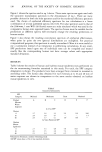
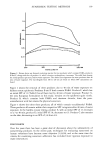
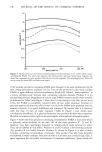
108 JOURNAL OF THE SOCIETY OF COSMETIC CHEMISTS suspending agents can be used to adjust the medium viscosity (2). However, particies larger than colloidal size will still eventually sediment and possibly cake. The second approach uses a structured vehicle. The particles are dispersed in a vehicle whose viscosity approaches an infinite value under low shear, as at storage. Gums and other polymers that impart plastic and thixotropic flow properties to the suspension are needed when this approach is chosen (3). Perhaps the most widely used approach to prevent caking is the controlled fioccula- tion of suspended particles induced by the addition of electrolytes, polymers and other additives (4). A fiocculated suspension contains a network of loosely aggregated particles held together by Van der Waals' forces or interparticle bridges. Sedimenta- tion results in systems with a voluminous, porous sediment that is easily redispersed to yield a homogeneous suspension. Suspensions of this type exhibit good shelf life stability. Surfactants, both ionic and nonionic, are widely used for the purpose of wetting hydrophobic powders to be dispersed into aqueous suspension. Although it is known that the flocculation state of suspended particles can be affected by surfactants (4), little detailed work in this area has been reported. In a recent study, the adsorption of nonionic polyethoxylated octyl- and nonylphenols of sulfathiazole and naphthalene in relation to flocculation was investigated (5). It was found that surfactants with longer hydrophilic chain length improved the fiocculation state of sulfathiazole, but there was very little significance of hydrophilic chain length on naphthalene. In the present study, two local anesthetics, benzocaine and butamben, were used as model compounds to investigate the effect of surfactants on suspension flocculation. A homologous series of ployoxyethylene nonylphenols was studied in order to assess the effect of polyoxyethylene chain length on suspension properties. Flocculation was measured by three different techniques and adsorption studies were conducted as an aid in determining flocculation mechanism. EXPERIMENTAL MATERIALS Benzocaine (N.F. powder, Ruger Chemical Inc., Irvington, NJ.) and butamben (reagent, powder, MC&B Co., East Rutherford, N.J.) were the solid drugs studied. The nonionic surfactants, polyoxyethylene nonylphenols (GAF Co., N.Y., N.Y.), were used as received. Water used to prepare suspensions was deionized first by passing through two ion exchange columns and then distilled in an all glass still. SURFACTANT SOLUTIONS Surfactant solutions were prepared on the molar basis. Molecular weights obtained from the average hydrophilic chain length were used to calculate the molar concentra- tion. Surface tensions were measured by the Welhelmy plate method using a Rosano surface tensiometer (Pacific Scientific Co., Newark, NJ.). Water was used as a standard.

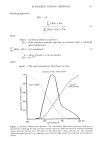
EFFECT OF POLYOXYETHYLENE ON FLOCCULATION 109 CRITICAL SURFACE TENSION Critical surface tension of the local anesthetics was measured on compacts as described previously (6). Solutions of the polyoxyethylene nonylphenols were used as the probe liquids in contact angle measurement. SOLID PARTICLE PREPARATION A portion of the benzocaine powder was broken down into fine particles by a jet mill (Helme Products, Inc. Helmetta, N.J.). The mean particle size of the resulting fractions was monitored by a sub sieve sizer (Fisher Scientific Co., Pittsburgh, Pa.). Surface area of each benzocaine fraction was determined by a single point BET measurement (Quantasorb, Quantichrome Co., Greenvale, N.Y.). PREPARATION OF SUSPENSIONS A 3.50-g portion of drug was weighed into a cylindrical snap-cap vial (Opticlear, 12 dram, Owens-Illinois Inc., Gas City, Ind.) and 35.0 ml of prepared surfactant solution was pipetied in. The capped vials were placed horizontally in a gyratory shaker (Model G-76, New Brunswick Scientific Co., New Brunswick, NJ.) and shaken for 24 hr at 180 RPM. After preparation, suspensions were stored in two ways. One group was allowed to sediment undisturbed. The second group of suspensions was permitted to stand for 24 hr and then shaken vigorously until redispersed. This process was repeated every day. ADSORPTION AND SOLUBILIZATION Adsorption and solubilized drug were determined by analysis of the supernatant liquid after equilibration with the suspended particles. The concentrations of surfactant and benzocaine in solution were determined by spectrophotometric analysis. The absor- bance peak wavelength for the surfactants was 276.5 nm the value for solubilized benzocaine was 286 nm. Absorbance values were obtained at both wavelengths. Simultaneous Beer's Law equations for absorbance based on the assumption of additive contributions by benzocaine and surfactant were solved to yield concentration data for both substances. This technique was verified by studies utilizing known concentrations of the two components. SEDIMENTATION CHARACTERISTICS The sedimentation process was monitored by observing the height of the sediment expressed as a fraction of the total suspension height, with time. When sedimentation is complete (i.e., no further change in sediment height is observed), the sedimentation volume, F, can be defined: F - Vo
Purchased for the exclusive use of nofirst nolast (unknown)
From: SCC Media Library & Resource Center (library.scconline.org)