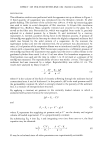
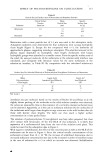
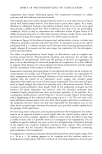
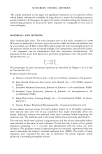
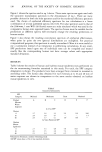
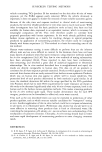
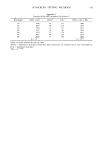
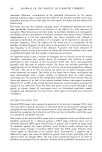
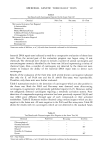
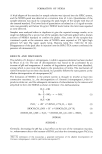
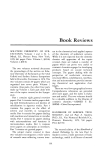
MICROBIAL GENETIC TOXICOLOGY TESTS 147 Table I Test Results with Carcinogens Detected by the Ames Test (10) • Chemical PolA Test Rec-assay D-4 Test Microsomal Activation Not Required 9-Aminoacridine Daunamycin Methyl Methanesulfonate N-Methyl-N'-Nitro-N-Nitrosoguanidine 4-Nitroquinoline-N-Oxide Microsomal Activation Required Aflatoxin-B1 2-Aminofluorene Benzo(a)pyrene + + + + + + -1- + + 1Ames test results of McCann, et aL, (10) with these chemicals confirmed in this laboratory. bacterial DNA repair tests indicated a need for a co•nparative evaluation of these three tests. Thus, the second part of the evaluation program was begun using 24 test chemicals. The chemicals were chosen to include a number of animal carcinogens and noncarcinogens correctly identified by the Ames test (10) and representing a variety of chemical types. Also, a number of carcinogens not detected by the Ames test were chosen to evaluate the ability of the bacterial DNA repair tests to detect such carcinogens. Results of the evaluation of the three tests with several known carcinogens indicated that only the E. coli PolA test and the B. subtills Rec-assay were reproducible. Therefore, only these tests were further evaluated. Table I summarizes results in the detection of carcinogens which are also positive in the Ames test. Both the PolA and Rec-assay tests detected most direct-acting carcinogens, in agreement with previously published reports (16,17). However, neither test adequately detected carcinogens requiring a metabolic activation system. Poor detection of compounds requiring activation has been previously reported (19,20) and may reflect poor diffusion through agar of such compounds or their activated metabolites. Table II illustrates results obtained using noncarcinogens which are also negative in the Ames test. All were negative in the PolA and Rec-assay tests. Table III shows the results with ten carcinogens which are not detected in the standard Ames Table II Test Results with Noncarcinogens Also Negative in the Ames Test (10) Chemical PolA Test Rec-assay D-4 Test Chloramphenicol - - - Dimethyl sulfoxide • - - - Diphenylnitrosa•nine - - NT Ethanol 1 - _ _ Penicillin G, Potassium -- - - Pyrene - - NT NT = Not Tested. 1Ames test results of McCann, et al., (10) with these chemicals confirmed in this laboratory.

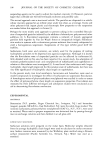
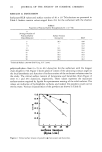
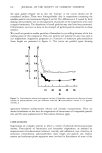
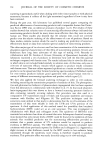
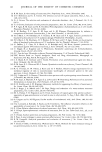
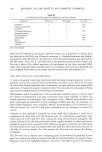
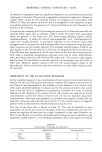
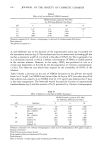
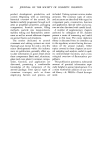
148 JOURNAL OF THE SOCIETY OF COSMETIC CHEMISTS Table III Test Results with Carcinogens Not Detected in the Ames Test (10) Chemical PolA Test Rec-assay D-4 Test Auramine + - NT Carbon tetrachloride - - NT p,p'-DDE - - - 1,2-Dimethylhydrazine + - NT Diethylnitrosamine + + - Diethylstilbestrol - - NT p-Rosaniline - - NT Safrole - - NT Thioacetam•de - -- - Thiourea - - - NT = Not Tested plate test. In contrast to previously reported results (21), p-rosaniline or safrole were not detected in the PolA test. However, auramine, 1,2-dimethylhydrazine and diethyl- nitrosamine were detected by the PolA test. Only diethylnitrosamine was detected by the Rec-assay. Thus, the E. co/i PolA test is the preferred bacterial DNA repair test because it detects the widest spectrum of carcinogens of the three bacterial DNA repair tests evaluated. Improved detection of carcinogens when results of the PolA test are combined with results of the Ames test has been recently documented (21). TESTS WITH EUKARYOTIC MICROORGANISMS A variety of genetic toxicology tests have been developed using eukaryotic microor- ganisms, such as the common yeast Saccharomyces cerevisiae (22,23). Since the cell type of yeast more closely resembles that of mammals, an assay utilizing yeast might allow detection of chemicals missed by bacterial tests. Yeast also has the advantage of being easy to grow using standard microbiological techniques. The literature search revealed that, of the several tests available using S. cerevisiae, tests for mitotic recombination and gene conversion have been reported to detect the widest spectrum of carcinogens and mutagens (24,25). Mitotic recombination and gene conversion are indicators of direct damage to DNA and they are observed at a much higher frequency than mutations. Mitotic recombination can be measured in S. cerevisiae strains D-3'and D-5 and gene conversion can be measured in strain D-4 (22,23). Analysis of the published literature on these tests also indicated a need for a comparison of these tests with the bacterial tests. In a preliminary experiment, tests with strains D-3, D-4 and D-5 were conducted using several known mutagens. The results indicated that the three tests were about equally sensitive in detecting known mutagens, as previously reported (23,26). However, the gene conversion test with strain D-4 was found to be more convenient than tests with the other two strains because of the ease of scoring results. For this reason, the D-4 test was chosen for further evaluation. The D-4 test uses a diploid yeast containing pairs of nonidentical mutations in two gene loci causing the strain to require both adenine and tryptophan for growth. These mutations revert at a negligible frequency. However, cells able to grow in the absence
Purchased for the exclusive use of nofirst nolast (unknown)
From: SCC Media Library & Resource Center (library.scconline.org)