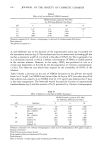
154 JOURNAL OF THE SOCIETY OF COSMETIC CHEMISTS reagent 99% grade (Mallinckrodt, Inc. OR 1908), diethanolamine (Baker Chemical Co. AR 9227), monoethanolamine 95% (Aldrich Chemical Co., Inc. 11,016-7), citric acid monohydrate (Baker Chemical Co. AR 1-0110), L (--) sorbose (Sigma Chemical Co. S-2001), sorbitol solution 70% (I.C.I. United States, Inc.), and disodium EDTA (J. F. Henry Chemical Co.) were used as received. Propyl gallate was purchased as Tenox S-1 (Eastman Chemical Products, Inc. PM 1771). Deionized water was used as the solvent throughout the study. PROCEDURE Ten ml of aqueous ethanolamine solution (20% w/v) was pipetted into a 150-ml beaker. To the ethanolamine solution was added approximately 35 ml of water and the pH was adjusted to neutrality by the dropwise addition of hydrochloric acid (1.0N or 0.1N). The pH was monitored with a digital pH meter (Corning Model 125). Ten ml of aqueous 2-bromo-2-nitropropane-l,3-diol stock solution (1%) was pipetted into the neutral ethanolamine solution. Other materials were added at this point and the pH was further adjusted to the desired value by the dropwise addition of hydrochloric acid. The solution was quantitatively transferred into a 100-ml volumetric flask and made to volume with water. The volumetric flask was immersed in a constant temperature (50 ø + 0.2øC) waterbath (Magni Whirl, Blue M Electric Co.). At the appropriate intervals aliquots were assayed for NDE1A concentration. ANALYTICAL METHOD Commercial distilled-in-glass solvents (Burdick and Jackson Labs.) and analytical reagent grade anhydrous sodium sulfate were used. The high-pressure liquid chromatography unit consisted of a chromatography pump Model 6000A (Waters Associates), a constant volume injection valve Model 7120 (Rheodyne, Inc.), a precolumn of pellicular silica gel (H. C. Pellosil, Whatman Column Survival Kit) and a silica gel column (25 cm x 4.6 mm i.d., LiChrosorb SI-100, 5/am, Rheodyne, Inc.). This system was connectd to a Thermal Energy Analyzer detector Model 502 (Thermo Electron Corp.) set at a pyrolyzer temperature of 550øC, vacuum of 1.0 mm Hg, oxygen pressure 10 psi. Argon pressure 15 psi and an attenuation factor of 16 or 32. A dry ice-acetone cold trap was used. The mobile phase, acetone-hexane-methanol (50:50:1 v/v), was pumped through the column at a flow rate of 2 ml/min. The temperature was ambient. One to five ml aliquots of the aqueous sample solutions were mixed with 35 ml ethyl acetate and 35 g anhydrous Na2SO 4 and allowed to stand overnight. The supernatant solution was passed through a silica gel column (25 cm x 1.2 cm i.d.) packed with Woelm 100-200/am, activity grade I (ICN Pharmaceuticals). The column was washed with 75 ml ethyl acetate, and the nitrosamine was eluted with 100 ml acetone. The acetone solution was evaporated under vacuum at 40øC, and the residue was dissolved in 1 ml acetone. The external standard was a solution of NDE1A (Columbia Organic Chemicals Co., Inc.) in acetone prepared at a concentration of approximately 1/ag/ml.

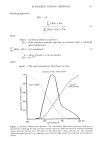
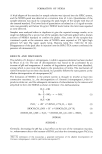
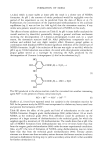
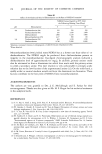
FORMATION OF NDE1A 155 A 30 •tl aliquot of the standard or sample solution was injected into the HPLC system, and the NDE1A peak was detected at a retention time of 4 min. Quantitation of the sample solutions was made by comparing the peak height of the sample with that of the external standard. The lower limit of quantitation calculated at a 3:1 signal-to-noise ratio was generally well below 50 ng/ml. NDE1A levels below this limit were reported as none detected. Samples were analyzed either in duplicate to give the reported average results, or in single run followed by a second run of the samples that had been spiked with a known amount of NDEIA standard to confirm the peaks. Also, some of the samples that contained a peak at the retention time of NDE1A were exposed to UV light (high pressure 325 watt Hg vapor quartz lamp, Hanovia lamp No. 7420) for 30 min. Disappearance of the peak after re-injection into the HPLC-TEA system confirmed the presence of nitrosamine (4). RESULTS AND DISCUSSION The stability of 2-bromo-2-nitropropane-l,3-diol in aqueous solutions has been studied by Bryce et al. (5). The rate of decomposition was found to be accelerated by an increase of pH and temperature. A number of degradation paths have been identified, among which is one route that leads to the production of nitrite. The mechanism of nitrite formation has not been elucidated, but possibly follows the same pattern as the alkaline decomposition of nitropropanes (6). 1 The formation of NDEIA in the present system is thought to involve at least two consecutive reactions, i.e., the decomposition of 2-bromo-2-nitropropane-l,3-diol to produce nitrite ion, and the subsequent nitrosation of ethanolamine by the nitrous acid anhydride to form the NDE1A as shown in Scheme 1 for diethanolamine. H2C--O}-•[ Br--C--NO2 -•- -•- NO2-- (1) I H2C--OH 2NO 2- + 2H + • 2HNO2 • N20 3 + H20 (2) (HOCH,CH,),NH + H + • (HOCH,CH,)2N+H, (3) (HOCH2CH2),NH + N,O3----(HOCH2CH2),N--NO + HNO2 (4) (NDE1A) SCHEME Generally, decreasing the pH has a dual effect on the rate of the nitrosation reaction, i.e., enhancement due to the increase of HNO 2 and thus the nitrosating agent N20 3 (eq •After the submission of this manuscript, a proposed mechanism of the alkaline decomposition of 2-bromo-2-nitropropane-l,3-diol to yield nitrite was reported (7).
Purchased for the exclusive use of nofirst nolast (unknown)
From: SCC Media Library & Resource Center (library.scconline.org)