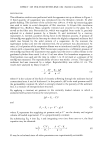
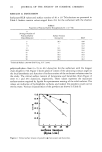
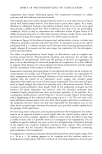
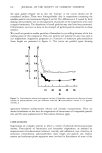
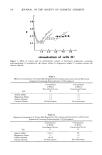
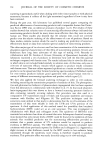
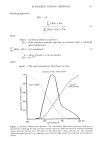
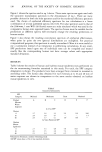
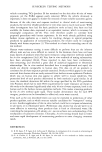
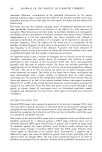
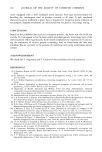
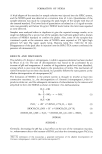
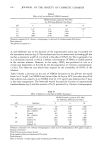
156 .JOURNAL OF THE SOCIETY OF COSMETIC CHEMISTS Table I Effect of pH on the Rate of NDEiA Formation • NDE1A Formed (ng/ml) at 50øC After the Following Heating Time (Days) pH 6 13 20 25 2.0 n.d. 2 n.d. n.d. 1,7453 4.0 291 2,320 3,260 -- 5.0 663 3,220 3,190 -- 6.0 3,069 8,750 9,860 -- •Solutions contained 0.1% 2-bromo-2-nitropropane-l,3-diol and 2% triethanolamine (85% grade). 2None detected. 3The pH was increased to 6. 2), and inhibition due to the decrease of the unprotonated amine (eq 3) available for the nitrosation reaction (eq 4). The resultant rate thus increases with decreasing pH but reaches a maximum at pH of 3.4, which is the pKa of HNO2 (8). This is generally true in a nitrosation reaction in which a definite concentration of HNO 2 is initially present in the reaction mixture. However, in this study, HNO 2 was produced in situ, at a certain rate dependent on the pH, by the decomposition of 2-bromo-2-nitropropane- 1,3-diol. The observed rate would then depend on the availability of HNO 2 in the solution. Table I shows a decrease on the rate of NDE1A formation as the pH was decreased from 6 to 4. At pH 2 no NDE1A was formed after 20 days at 50øC, but when the pH of that solution was raised to 6, an NDE1A level of 1,745 ng/ml was detected after 5 days at the same temperature. The lower pH would decrease the fraction of unprotonated triethanolamine (eq 3) and the amount of N203 produced by 2-bromo-2-nitropropane- Table II Effect of Additives on the Rate of NDEIA Formation • NDEIA Formed (ng/ml) at 50øC After the Following Heating Time (Days) pH Additives 6 13 20 4.0 Control2 291 2,320 3,260 Citrate buffer 0.1M 1,540 5,560 10,520 PG + EDTA 3 n.d. 4 n.d. 125 5.0 Control 663 3,220 3,190 PG + EDTA 124 310 357 6.0 Control 3,069 8,750 9,860 Sorbose 5% 1,922 5,120 13,900 4.05 Control 182 250 450 Sorbitol 7% 208 487 473 •Solutions contained 0.1% 2-bromo-2-nitropropane-l,3-diol and 2% triethanolamine (85% grade) except as denoted in footnote 5. 2Only HCI was used to adjust the pH. 3propyl gallate (0.03%) and disodium EDTA (0.1%). 4None detected. 5Same as footnote 1 except reagent grade triethanolamine (99%) was used.

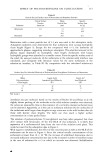
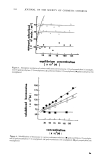
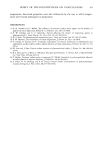
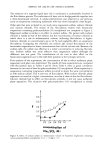
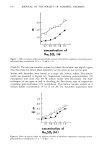
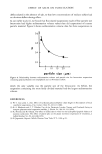
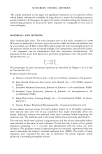
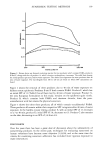
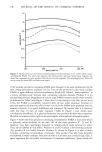
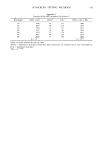
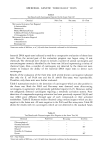
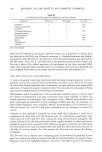
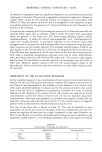
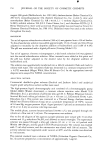
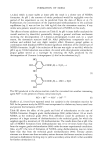
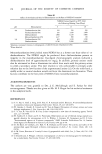
FORMATION OF NDE1A 157 1,3-diol, which is more stable at lower pH the result is a slower rate of NDE1A formation. At pH 2 the amount of nitrite produced would be negligible over the period of the experiment, as can be predicted from the data of Bryce et al. (5). Furthermore, the concentration of the unprotonated triethanolamine in the acid-base equilibrium (eq 3) was so low (ca. 0.66 ng/ml) that the nitrosation reaction, if any nitrite were present, would not yield a detectable level of NDE1A in this study. The effects of some additives are seen on Table II. At pH 4 citrate buffer catalyzed the overall reaction by three-fold, presumably through a general acid-base mechanism involving the decomposition of 2-bromo-2-nitropropane-l,3-diol and, to a small extent, the nitrosation reaction itself (9). Alkyl polyhydroxy compounds such as sorbose and sorbitol had very slight catalytic effect. However, propyl gallate in combination with disodium EDTA showed significant inhibition of the overall rate of NDEIA formation. At pH 5 the reduction of the rate was eight- to ten-fold, while the pH 4 up to 25-fold reduction was evident. As noted with other phenolic antioxidants, propyl gallate served as a scavenger by removing the N20 3 produced by the decomposition of 2-bromo-2-nitropropane-l,3-diol in the solutions (eq 5). HO HO%COOC3H7N203--•+HO (5) o O%COOC3n 7 -¾ 2NO + H20 HO The NO produced in the above reaction could be converted into another nitrosating agent NO * in the presence of heavy metal ions (eq 6). NO + M n+ • NO + + M (n-•)+ (6) Challis et al., (10,11) have reported metal ion catalysis in the nitrosation reaction by NO. In the present study the EDTA was incorporated to chelate any heavy metal ions and prevent the formation of NO + . Table III shows the effect of the grade and kind of ethanolamine on the rate of NDE1A formation. Reagent grade triethanolamine (99%) yielded about 13% as much NDEIA as the technical grade (85%). This difference could be attributed to the presence of a larger amount of diethanolamine in the technical grade, for which the suppliers specify a maximum of 15% diethanolamine. The results show that at pH 4 the rate of NDEIA formation from diethanolamine was 10 to 20 times faster than that from the reagent grade triethanolamine (99%) under the same experimental conditions. Also, at pH 5 the rate of formation of NDE1A using diethanolamine was ten times faster than that from the technical grade triethanolamine (85%). Tertiary amines nitrosate at a slower rate than secondary amines because the former reaction involves a nitrosative dealkylation limiting step to yield a secondary amine which is then available for further nitrosation (12).
Purchased for the exclusive use of nofirst nolast (unknown)
From: SCC Media Library & Resource Center (library.scconline.org)