68 JOURNAL OF THE SOCIETY OF COSMETIC CHEMISTS formation of an obstructive mass or plug at some point in the gland's duct as proposed by Relier and Leudders for AICl 3 and an aluminum zirconium solution (5). This ductal blockage could occur anywhere ranging from its deepest region all the way up to its outermost poral opening in the stratum corneum. To determine at which level of the sweat gland an antiperspirant is functioning, specific experiments, both histological and physiological, can be designed and performed. For the most part, however, such studies are extensive and involved despite their high value. Alternatively, a first step in the approach to the problem is to identify the antiperspirant's site of action without prior regard to any proposed mechanism. The sweat gland secretory coil is located in the dermal layer of the integument, but its duct passes through the viable epidermis and then the outermost stratum corneum. Techniques are available to remove those latter two layers. Blistering the skin, by occlusively patching with cantharidin, separates the dermal and epidermal layers (6). Removing the blister cap exposes the dermis. Alternatively, Scotch © tape stripping is a technique that has been widely used to remove the stratum corneum layer, thereby exposing the stratum granulosum layer of the viable epidermis. In so removing one or both of the layers, one can determine whether a given sweat gland, previously inhibited by an antiperspirant, now resumes normal firing. If firing is restored, then the site of action within the gland is at the level within the layer which had been removed. In this fashion, one at least approximates the depth in the sweat gland to which the inhibition is occurring. The technique of Scotch © tape stripping has been used previously to determine the site of action of several antiperspirants. Papa and Kligman first demonstrated that human forearm sites, made anhidrotic by the overnight occlusive application of 20% aluminum chloride, still failed to sweat after the stratum corneum layer had been removed by stripping. They concluded that the site of action was deeper than within that layer (4). Their findings were subsequently confirmed by Gordon and Maibach (7). The findings of a later report by Zahejsky and Rovensky on aluminum chloride's site of action were somewhat inconsistent with the previous investigations. Their results indicated that anhidrosis is much more readily removable by stripping (8). However, the authors used a less agressive method of application of the test agent. The purpose of the studies in this communication was to determine at which skin layer sweat glands had been inhibited following treatment with the marketed conventional antiperspirant salts, aluminum chlorohydrate (ACH) and aluminum zirconium chloro- hydrate glycine complex (AZAP), as well as to repeat the observations by others for aluminum chloride (A1C13). MATERIALS AND METHODS Both male and female adults participated in these studies. Four sites, two on the volar surface of each forearm, were selected. The sites, measuring •-in. square, were marked with indelible ink. A template was used in order to ensure subsequent precise relocation of the sites. The subjects then entered an environmental chamber set at 100øF and 30-35% RH for thermal stress. A mixture of starch, castor oil and 2% iodine in ethanol, a modification of the original method described by Wada and Takajaki (9), was applied to the forearm sites to visualize the sweat droplets. At 20, 40 and 60 min

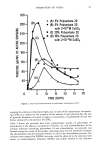
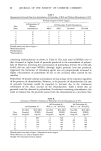
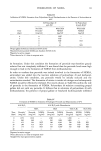
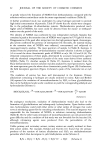
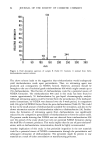
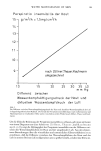
ANTIPERSPIRANT ACTION OF ALUMINUM SALTS 69 after the appearance of the first sweat droplets, photographs of each of the sites were taken. The subjects then left the environmental chamber and the starch mixture was removed. Next, 0.35 ml of the antiperspirant solution was used to saturate the cotton pad portion of an impermeable mylar-backed bandage (10). The occlusive patches were applied to the skin sites and remained in place overnight. The patches were removed at not less than 3 h prior to the subjects' re-entry into the environmental chamber on the following day. The antiperspirant test solutions were 20% aqueous ACH and 10% aqueous AZAP (each obtained as the dry powder from Wickhen Products, Inc., Hugeuenot, N.Y.), and 8% aqueous aluminum chloride (obtained as the hexahydrate salt from Fisher Scientific Co.). In each instance, the choice of concentration was based on the desire to use that concentration which could be expected to inhibit virtually all sweat glands in the test site, but which would not be so high as to irritate the skin and thus interfere with the determination of the agent's site of action. All four test sites on a subject were treated with the same solution. At the conclusion of the treatment regimen, the subjects were again thermally stressed and photographic records of the sites were taken as described above. They then returned to ambient temperature and the starch mixture was removed. Each site was stripped to the "glistening" layer (i.e., the entire stratum corneum layer was removed, exposing the stratum granulosum layer of the epidermis) using Scotch © brand high tack tape (11). After the stripping procedure, the subjects were immediately thermally stressed again and, as before, photographic records of the sites were made. As indicated above, at each of the three thermal stress periods, three photographs (20, 40 and 60 min after sweating had begun) were taken. The 20- and 60-min photographs, however, were principally precautionary only (i.e., to safeguard against the possibility that either coalescence of individual sweat droplets or an inadequate sweating pattern would be manifest at the 40-min interval). In the overwhelming number of instances, the evaluations discussed below were made using the 40-min photographs. For the most part, however, it was observed that the 20- and 60-min gland counts closely agreed with those seen for the 40-min period. Using these photographs, the number of actively firing sweat glands, each indicated by the black dot resulting from the starch/iodine--sweat reaction, was counted for each site before treatment, after treatment, and after stripping. With this approach, the number of sweat glands which had been inhibited by the given antiperspirant, but then had been restored to active function because of the Scotch tape stripping procedure, could be determined. A representative series of photographs is presented in Figure 1. The data are expressed as the percentage of inhibited glands which have been restored to firing after stripping. These values are calculated as follows: A = Number of glands observed before treatment minus the number of glands observed after treatment. B = Number of glands observed after stripping minus the number of glands observed after treatment but before stripping. B -- x 100 = Percent of those inhibited glands which were restored to firing. A
Purchased for the exclusive use of nofirst nolast (unknown)
From: SCC Media Library & Resource Center (library.scconline.org)