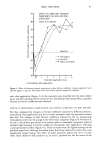
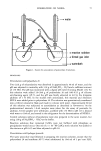
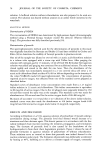
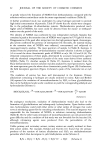
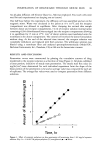
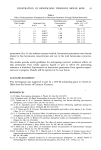
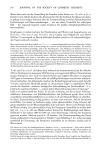
FORMATION OF NDEIA 77 water water air - reaction solution - -, fritted gas inlet waterbath Figure 1. System for autoxidation of polysorbate 20 solutions. PROCEDURE Peroxidation with polysorbate 20 Two (2.0) g of ethanolamine was dissolved in approximately 30 ml of water, and the pH was adjusted to neutrality with 1.38 g of NaH2PO 4 - H20 and a sufficient amount of ! N HCI. The pH was monitored with a digital pH meter (Corning Model 125). To this solution were added 3.0-20.0 g of polysorbate 20 and 0.05-0.15 g of silicone anti-foaming agent AF-72, and the pH was finally adjusted to 6.0 by the dropwise addition of ! N HC1. In the studies with antioxidant, this material and disodium EDTA were added prior to polysorbate 20. The solution was quantitatively transferred into a 100-ml volumetric flask and made to volume with water. Approximately 80 ml of this solution was subjected to autoxidation as described in APPARATUS. At the predetermined intervals, 1.0-ml samples were taken for the assay of peroxide. In addition, 5.0-ml samples were withdrawn, acidified with ! N HCI to pH 1.8-2, diluted with water to 10.0 ml, and stored in the refrigerator for the determination of NDE1A. Control solutions without ethanolamine were also prepared in the same manner, but using 2.68 g of Na2HPO 4 ß 7H20 as the buffer. Reaction solutions that contained CuSO4 were not buffered with phosphate as precipitation would occur. One ml of 2 x 10⁻²M CuSO 4 stock solution was added to the mixture at pH 6-6.5 and then adjusted to pH 6.0. Peroxidation with hydrogen peroxide The same procedure was followed in preparing the reaction solution, except that the polysorbate 20 and antifoam AF-72 were substituted by 10.0 ml of 3 per cent H202

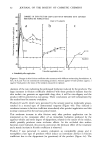
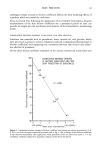
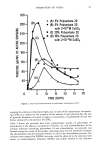
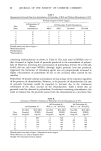
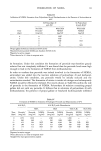
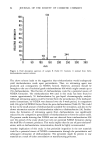
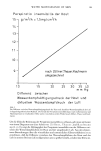
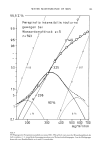
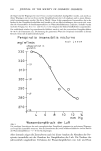
78 JOURNAL OF THE SOCIETY OF COSMETRo CHEMISTS solution. A buffered solution without ethanolamine was also prepared to be used as a control. The solution was heated without aeration in an amber bottle immersed in the waterbath. ANALYTICAL METHOD Determination of NDEIA The concentration of NDEIA was determined by high-pressure liquid chromatography method using a Thermal Energy Analyzer model 502 detector (Thermo Electron Corp.). The procedure was fully described previously (10). Determination of peroxide The spectrophotometric method used for the determination of peroxide in this study was originally described by Banerjee and Budke (17) and later modified by Gruber and Klein (18) to determine the stability of benzoyl peroxide in pharmaceuticals. One ml of the sample was diluted to 25.0 ml with 2:1 acetic acid-chloroform solution in a culture tube equipped with a screw cap with Teflon liner. After purging the solution with nitrogen gas for 1.5 minutes, 1.0 ml of fresh 50% KI (iodate free) aqueous solution was added and purging was continued for an additional minute. The tube was closed tightly and stored in the dark for one hour. Then the absorbance of the liberated iodine was immediately measured in a 1-cm covered silica cell versus a 2:1 acetic acid-chloroform blank at either 470, 410 or 360 nm depending on the intensity of the color (VARIAN model 635 spectrophotometer). The concentration of peroxide, reported as active oxygen, was obtained from one of the standard curves prepared as described below. Standard curves of absorbance versus concentration were made from a 1.27 mg/ml iodine solution in 2:1 acetic acid-chloroform. This iodine concentration is equivalent to 80 mcg/ml of active oxygen. One to five ml aliquots were separately diluted to 25.0 ml and then treated the same way as the samples. This standard curve was made for absorbances at 470 nm and used for the active oxygen levels of 80-400 mcg/ml. By means of successive 1 to 10 and then 2 to 5 dilutions of the above iodine solution, standard curves were also made for absorbances at 410 (active oxygen levels 8-80 mcg/ml) and 360 nm (active oxygen levels below 16 mcg/ml), respectively. RESULTS AND DISCUSSION According to Donbrow et al. (16), aqueous solution of polysorbate 20 would undergo autoxidation during storage. The peroxide level thus formed would increase to a maximum and then decrease again. This kinetic pattern is in accordance with the free radical mediated chain reaction involving the initiation, propagation, and termination steps. The decrease of peroxide level is also caused by the breakdown of the hydroperoxides to form short chain degradation products. Figure 2 shows the rate of peroxide formation in aqueous solution of polysorbate 20 without ethanolamine. These solutions serve as control to show that peroxide was indeed formed in the reaction solutions under study. The formation of peroxide was deliberately accelerated by heating at 50øC, bubbling air to deliver a constant supply of oxygen, constantly
Purchased for the exclusive use of nofirst nolast (unknown)
From: SCC Media Library & Resource Center (library.scconline.org)