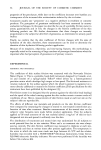
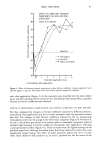
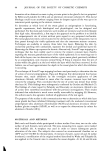
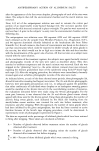
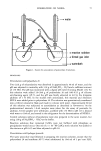
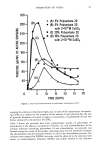
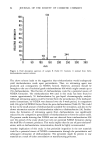
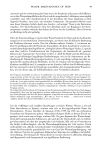
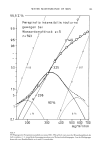
SKIN FRICTION 57 Figure 1. Newcastle friction meter being applied to the volar forearm. SENSORY EVALUATION All samples were evaluated on a blind basis by a group of trained judges (sensory panel) who routinely grade attributes of various topical products several times weekly. Perceived greasiness associated with the application of each product or sample was measured on a 6-point interval scale, from "not at all greasy" to "very greasy," after randomized applications of samples to the inside of the left or right volar forearm. The associated attributes of stickiness/tackiness and skin penetration (absorption) were also graded (Table I). Additionally, overall preference was elicited. Applications were randomized to eliminate test bias and standardized in the following manner: Equal amounts (0.2 cm 3) of each product were applied. Subjects applied products using the middle and index fingers of the appropriate hand to rub in a circular motion twenty (20) times. After cleansing their fingertips with facial tissue, subjects evaluated their tactile perceptions monadically (one sample at a time) by gently tapping and stroking the treated surface with their fingertips. RESULTS AND DISCUSSION SENSORY EVALUATION WITH LUBRICANT COSMETIC INGREDIENTS Table II shows the mean scores obtained in blinded evaluation of petrolatum, heavy mineral oil, and glycerin (water served as a positive control). All of these commonly utilized cosmetic raw materials generated high greasiness scores. In comparison,

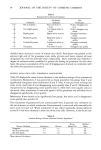
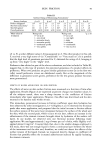
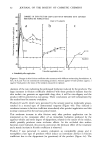
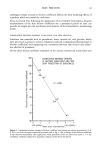
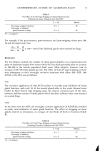
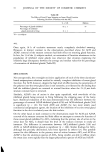
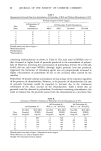
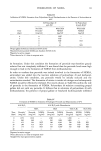
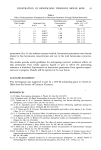
58 JOURNAL OF THE SOCIETY OF COSMETIC CHEMISTS Table I Rating Scales for Sensory Evaluations Stickiness/ Skin Greasiness Tackiness Penetration 0 l 1-- 2-- 3-- 4-- 5-- Not at all greasy Not at all sticky or Product disappears not tacky at all Very slightly greasy Very slightly sticky or Product disappears very tacky slowly Slightly greasy Slightly sticky or tacky Disappears somewhat slowly Moderately greasy Moderately sticky or Disappears somewhat tacky quickly Considerably greasy Considerably sticky or Disappears moderately tacky quickly Very greasy Very sticky or tacky Disappears very quickly distilled water received a score of almost zero (0.05). Petrolatum was graded at the extreme high end of the greasiness scale, while glycerin and heavy mineral oil were designated one and two intervals lower, respectively. These materials also imparted a degree of tackiness which paralleled in general the feeling of greasiness. On the other hand, the sensory assessments of the rate of disappearance showed no correlation with the other two parameters evaluated. SENSORY EVALUATION WITH COMMERCIAL MOISTURIZERS Table III displays the mean scores obtained in the attribute ratings of six commercial moisturizers. Moisturizer A was perceived as being somewhat less greasy than C and significantly less greasy than moisturizers E and F. Also, A was perceived as being less tacky to the touch than E and disappearing more quickly than E and F. Moisturizer A was perceived as disappearing more quickly than C, while both were equally tacky to the touch. Also, moisturizer A was rated equal to B for greasiness and tackiness, but it disappeared significantly more quickly. Moisturizer B was found to be significantly less greasy, less tacky, and it disappeared more quickly than product D. The evaluations of greasiness by the sensory panel were, in general, very consistent. In the two instances in which moisturizer B was assessed, it was rated with essentially the same score (1.0 and 1.2). When moisturizer A was tested repeatedly, almost identical scores (0.7-0.8) were obtained in three out of the four cells. However, in the fourth test Table II Attribute Ratings of Some Lubricant Cosmetic Ingredients' Sensory Attributes Heavy Distilled Petrolatum Glycerin Mineral Oil Water Disappears 0.4 2.1 2.2 1.5 Skin feels sticky/tacky 3.5 2.5 1.2 0.8 Skin feels greasy 4.9 3.9 3.0 0.05 'Mean values of 20 subjects
Purchased for the exclusive use of nofirst nolast (unknown)
From: SCC Media Library & Resource Center (library.scconline.org)