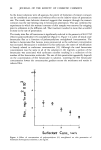
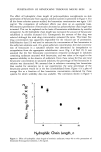
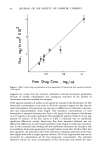
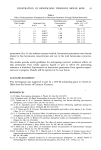
88 JOURNAL OF THE SOCIETY OF COSMETIC CHEMISTS by nonionic surfactants, it is necessary to know the relevant physical chemical properties of the drug in the system and to identify the rate limiting step in the penetration process. Passage across the stratum corneum is usually rate limiting in percutaneous absorption (1) in the case of semisolid vehicles, such as creams and ointments, drug release from the vehicle may be the slow step. Surfactants can alter the kinetics of drug permeation through skin by a direct effect on the skin barrier, through complexation or solubilization of the drug or by improving wetting of the membrane (9). This paper reports the penetration of benzocaine through hairless mouse skin from aqueous solutions in the presence of nonionic surface active agents (polyoxyethylene nonylphenols) using an in vitro diffusion cell. Hairless mouse skin was chosen because of its similarity to human skin as a permeability barrier (10,11). Several studies have established the validity of diffusion studies in predicting in vivo behavior (12-14). The purpose of this study was to evaluate the possibility of surfactant-skin interactions, and the effect of surfactant polyoxyethylene chain length and concentration on benzocaine permeation. EXPERIMENTAL MATERIALS Benzocaine N.F. (Ruger Chemicals Inc., Irvington, NJ) polyoxyethylene nonylphenols (Igepal CO Series, G.A.F. Co., N.Y.., NY), sodium chloride (Reagent-grade, J.T. Baker Chemical Co., Phillipsburg, NJ), chlorobutanol USP (Mork & Co., Inc., Rahway, NJ), were used as received. The water used to prepare formulations was deionized (Barnstead D 8901 Cartridge, Fischer Sci., Inc., MA) and distilled in an all glass still. PREPARATION OF SOLUTIONS Deionized and distilled water used for the preparation of solutions was thoroughly boiled and cooled before use to eliminate dissolved gases. Surfactant solutions were prepared on a molar basis. Molecular weights obtained from average hydrophilic chain length were used. Stock solutions were prepared and appropriate dilutions made when preparing the benzocaine solutions. Every donor solution prepared was analyzed for its benzocaine content. For the saturated solutions, a moderate excess of benzocaine was added to each premeasured solvent system and using a temperature controlle•d waterbath shaker (Eberbach, Ann Arbor, MI), it was shaken for 7 days at 30 _+ 0.1øC. At the end of the shaking period, the solution was filtered, first through a paper filter and then through a 3•tm membrane filter (SSWP 013 000, Millipore Corp., Bedford, MA). The resulting saturated solution was analyzed for benzocaine content and stored at 30øC. IN VITRO PENETRATION STUDIES Six-week-old hairless mouse skin (Jackson Labs., Bar Harbor, ME) was utilized. A separate fresh skin sample was used for the each individual run. After removal from the animal, each skin sample was inspected under the microscope for intactness of the stratum corneum.

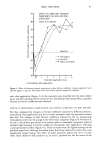
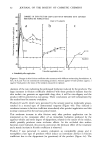
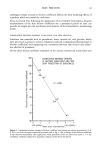
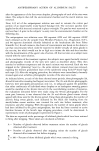
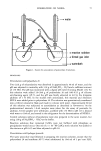
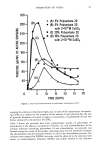
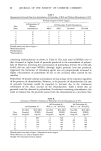
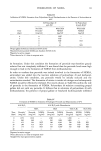
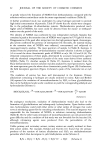
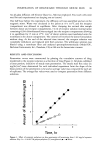
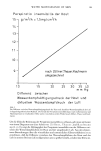
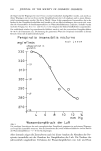
PENETRATION OF BENZOCAINE THROUGH MOUSE SKIN 89 An all glass diffusion cell (Crown Glass Co., NJ) was employed. Four such cells were used for each experimental run keeping one as control. One half hour before the experiment, the diffusion cell was assembled and set on the magnetic stirrer. Water was circulated in the jacket at 37_+ 0.1øC and the receptor compartment was allowed to equilibrate. After clamping the excised skin sample between donor and receptor compartments, 7.4 ml of receptor solution (normal saline containing 0.25% chlorobutanol) was syringed into the receptor compartment allowing it to equilibrate for 15 rain at 37øC. 3cm 3 of donor solution was transferred onto the membrane in the donor compartment. The control cell received the donor formulation without drug. At the end of the selected time interval, the receptor solution was completely withdrawn and replaced with fresh solution. The withdrawn solution was filtered using a membrane filter and analyzed spectrophotometrically (Model-DU, Beckman Instruments, Inc., Pasadena, CA) at 286 nm for benzocaine content. RESULTS AND DISCUSSION Penetration curves were constructed by plotting the cumulative amount of drug transferred to the receptor solution as a function of time (Figure 1). All plots exhibited a linear portion, indicative of steady state penetration. The steady state flux value (in mg/hr/cm 2) were determined for each individual experiment from the slope of the linear portion of the penetration curve and an average value was computed for each set of replicates. The average flux values were used to compare penetration from different solutions. 9 • I I i 3 6 9 Time, hr Figure 1. Effect of nonionic surfactant on skin penetration of benzocaine from 1.262 mg/ml aqueous solution. Key: (2)•D 0.0227 M polyoxyethylene (15) nonylphenol • Water.
Purchased for the exclusive use of nofirst nolast (unknown)
From: SCC Media Library & Resource Center (library.scconline.org)