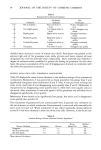
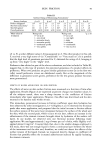
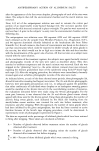
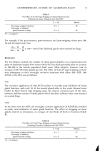
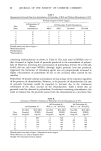
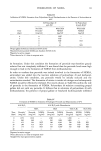
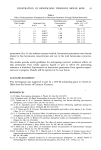
FORMATION OF NDEIA 81 Table III Inhibition of NDEIA Formation from Polysorbate 20 and Diethanolamine in the Presence of Antioxidants at 50øC 3% Polysorbate 20 3% Polysorbate with PG • 20 with BHA 2 No DEA With DEA With DEA Time Peroxide3 NDEIA NDEIA (days) (mcg/ml) (ng/ml)' (ng/ml) 0 0 ND 4 -- 6 0 ND -- 13 0 ND ND 20 0 72 -- 27 0 92 ND •Propyl gallate (0.02%) and disodium EDTA (0.1%) 2Butylated hydroxyanisole (0.04%) and disodium EDTA (0.1%) 3Reported as active oxygen 4None detected at 3:1 noise-to-response ratio its formation. Under this condition the formation of peroxide was therefore greatly reduced but not completely inhibited. It was found that the peroxide levels were high enough to lead to the formation of NDE1A from diethanolamine. In order to confirm that peroxide was indeed involved in the formation of NDE1A, antioxidant was added into the reaction solutions of polysorbate 20 and diethanoi- amine. Under this condition, any peroxide would be initially reduced and the autoxidation retarded. The formation of nitrite or oxides of nitrogen and subsequently NDEIA would be effectively inhibited. The results shown in Table III confirm the role of peroxide in the formation of NDEIA. Polysorbate 20 solution containing propyl gallate did not yield any peroxide. It follows that in solutions of polysorbate 20 with diethanolamine, the presence of propyl gallate or butylated hydroxyanisole inhibited Table IV Formation of NDEIA in Solutions of Hydrogen Peroxide and Ethanolamine at 50øC 0.3% H202 0.3% H202 with Ethanolamine MEA DEA TEA (A.R.) TEA (85%) Time Peroxide • Peroxide NDEIA Peroxide NDEIA Peroxide NDEIA NDEIA (days) (mcg/ml) (mcg/ml) (ng/ml) (mcg/ml) (ng/ml) (mcg/ml) (ng/ml) (ng/ml) 0 1,570 1,520 -- 1,560 -- 1,560 -- -- 6 860 860 -- 830 1,094 1,000 -- -- 13 455 564 ND 2 590 4,582 780 ND ND 20 280 415 ND 417 3,600 620 ND ND 27 175 312 ND 307 5,3003 510 ND ND 40 ........ •Reported as active oxygen 2None detected at 3:1 noise-to-response ratio 3Sample B for mass-spectrometric analysis

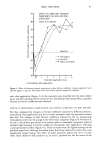
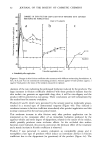
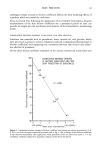
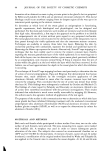
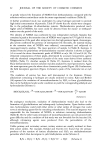
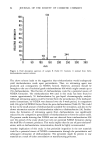
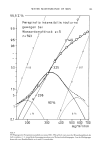
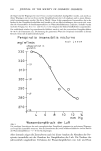
82 JOURNAL OF THE SOCIETY OF COSMETIC CHEMISTS or greatly reduced the formation of NDEIA from diethanolamine, compared with the solutions without antioxidant under the same experimental conditions (Table II). A further accelerated study was undertaken by using hydrogen peroxide to provide high initial concentration of peroxide. Table IV shows that the results were compara- ble to the polysorbate 20-ethanolamine systems. Diethanolamine produced much higher yield of NDEIA, but none could be detected from the mono- or triethanol- amine over the period of the study. The identity of NDEIA was confirmed by two independent methods. Samples that contained a peak at the retention time of NDEIA were exposed to UV light for 30 min. Disappearance of the peak after reinjection into the high-pressure liquid chromatogra- phy system confirmed the presence of nitrosamine (19). Secondly, the material eluting at the retention time of NDEIA was collected, concentrated, and subjected to mass-spectrometry analysis. The mass spectrum of sample A (Table II, footnote 3) isolated from the polysorbate 20-diethanolamine reaction solution is shown in Figure 3A to reveal the three characteristic peaks of NDEIA at m/e 104, 103 and 91 (6). The elemental compositions of these peaks, determined by accurate measurement, agreed with the elemental compositions of peaks of the same mass derived from authentic NDE1A (Table V). Another sample B (Table IV, footnote 3) isolated from the H202-diethanolamine reaction solution was also analyzed by mass-spectrometry. Again the mass spectrum gave the above three characteristic peaks (Figure 3B). Furthermore, the field desorption spectrum (Figure 4) showed a peak of the molecular ion at m/e 134. The oxidation of amines has been well documented in the literature. Primary alkylamines containing o• hydrogen are usually oxidized to oxime. Kahr and Berther (20) reported the oxidation of monoethanolamine by H202 to form glycolaldoxime that can be hydrolyzed under acidic condition to yield the corresponding aidehyde and hydroxylamine (Scheme 1). [01 [0l HOCH2CH2NH 2 , HOCH2CH2NHOH ' HOCH2CHNOH H• H•NOH (Scheme 1) By analogous mechanism, oxidation of diethanolamine would also lead to the formation of glycolaldoxime and subsequently hydroxylamine. Upon further oxida- tion, hydroxylamine could yield either nitrite or other oxides of nitrogen that could serve as nitrosating agents for the remaining ethanolamine. This reaction sequence was responsible for the formation of NDEIA in solutions containing diethanolamine (Table II). On the other hand, nitrosation of monoethanolamine can only proceed with great difficulty and the condition of this study was not favorable for the reaction (10), although nitrosating agents were produced from the peroxidation of the monoethanolamine. Unlike primary and secondary amines, tertiary amines are usually oxidized to form their amine oxides. For example, Oswald and Guertin (21) found that the primary products of the reaction of tertiary alkylamines and H202 are trialkylammonium peroxides which then decompose to yield trialkylamine oxide (Scheme 2). R3N + H202--* R3N ß H202---* R3N+O - d- H20 (Scheme 2)
Purchased for the exclusive use of nofirst nolast (unknown)
From: SCC Media Library & Resource Center (library.scconline.org)