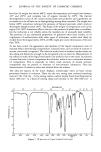
THE PARABENS 77 Because of its strong dependence on both the inoculum size and the solubility of the paraben we first thought that regrowth might be due to depletion of the preservative because of its partitioning into the cytoplasm of both the declining number of survivors and the growing volume of dead bacteria. We had quantitatively predicted such an effect from the reported bulk/cytoplasm partition coefficient (see the Discussion) on the assumption that the rates of growth and reproduction of the survivors is unaffected by the presence of the antimicrobial. We found, however, that the concentration of preservative (methyl and propyl parabens) in the bulk phase does not change detectably by analysis of the supernatant (UV spectrophotometry and high pressure liquid chromatography) after removing the bacteria by centrifugation from samples taken frequently over the entire course of the kill-minimum-regrowth sequence. Adaptation was confirmed as the causative mechanism by using the survivors of the regrowth process in 90% saturated propyl paraben as inoculum into a fresh propyl paraben solution they grew out promptly while a naive inoculum reenacted the kill-minimum-regrowth sequence. In later experiments we found that the survivors of a single exposure to propyl paraben retained their immunity completely after forty one days of repeated culturing in the absence of the preservative to this extent the adaptation is permanent and, as such, it may help explain why extraordinarily refractory strains are occasionally encountered in cosmetic manufacture. Butyl paraben at high saturation fraction in water initially kills E. coli (but not Pseudomonas aeruginosa) much more rapidly than the lower esters. An inoculum of 103 to 105 appears to have been extinguished completely after only an hour or so of exposure to a 90% saturated solution and for several tens of hours no survivors are recovered but as with propyl paraben this may be followed by explosive regrowth. In this case, however, survivors transferred to fresh butyl paraben solution did not fare much better than the naive culture. Because its performance was poor for practical purposes against E. coli and even poorer against other bacteria as reported in this paper, we did not pursue further the interesting matter of its distinctive, non-Ferguson behavior. Finally, we found benzyl paraben at near saturation in water so feebly antimicrobial even against S. aureus, that we omitted it from consideration as a useful preservative after only a few further trials. In this paper we report on some additional experiments in water and on more recent work in prototype products designed to simulate a wide range of real cosmetics. MATERIALS AND METHODS Both ATCC strains and wild isolates from products or processing equipment were used. The bacteria were grown at room temperature (ca. 23øC) for 48 hours in a nutrient-buffer salts-glucose solution, pH 6.7, adapted from that of Rye and Wiseman (8) shown in Table I. For convenience, it was prepared as a stock solution at twenty times the concentrations shown. The fungi were grown on Sabouraud Dextrose Afar (BBL) for seven days. The spores were harvested and suspended in saline.

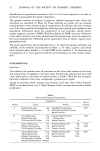
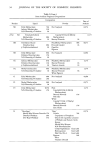
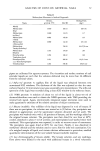
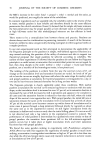
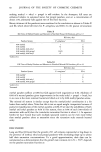
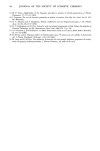
78 JOURNAL OF THE SOCIETY OF COSMETIC CHEMISTS Table I Nutrient-Buffer Solution, pH 6.7 NH4C1 0.05M MgC12 0.0005M Na2SO 4 0.0005M Na2HPO4 0.05M KH2PO 4 0.05M Glucose 1 g/l The compositions of the prototype products, a mineral oil emulsion, a vegetable oil emulsion and a shampoo, are given in Tables II, III and IV. They were prepared from ordinary cosmetic raw ingredients without special efforts to avoid contamination. Usually, a one-kilogram batch was prepared without preservative, withholding a few per cent of the water. The desired amount of preservative was weighed into a 100-g Table II Mineral Oil Emulsion Ingredient Per kg Light mineral oil 200 g Oleyl alcohol, 10 mole ethoxylate 30 g Nutrient-Buffer Stock Solution • 5.0 ml Preservative q.s. Water to 1 kg •20 times concentrations in Table I. Table III Peanut Oil Emulsion Ingredient Per kg Peanut Oil (Planters', 100%) 200 g Stearyl alcohol, 2 mole ethoxylate 15 g Stearic acid, 40 mole ethoxylate 20 g Nutrient-Buffer Stock Solution • 5.0 ml Preservative q.s. Water to 1 kg •20 times concentrations in Table I. Table IV Shampoo Ingredient Per kg Sodium lauryl sulfate, 100% Sodium lauryl ether (2 mole) sulfate, 30% Lauroyl diethanolamide Linoleoyl diethanolamide Sodium chloride Orthophosphoric acid, 85% Nutrient-Buffer Stock Solution • Preservative Water 75g 100g 35g 10 g 2.0 g 3.0 g 5.0 ml q.s. to 1 kg •20 times concentrations in Table I.
Purchased for the exclusive use of nofirst nolast (unknown)
From: SCC Media Library & Resource Center (library.scconline.org)