j. Soc. Cosmet. Chem., 33, 85-92 (March/April 1982) A simple method for measurement of hair volume MAW-SHENG WU, Personal Care Division, The Gillette Company, Gillette Park, Boston, MA 02106. Received August 31, 1981 Synopsis An Air Comparison Pycnometer was adapted for measurements of the volume of hair under ambient conditions. This method is simple, rapid and can be used over a wide range of relative humidities. Using this technique, the effect of moisture on virgin caucasian hair was examined. Below about 75% RH, the increase in hair volume is less than the volume of water absorbed. Above this humidity, they are equal. It may be that below 75% RH, the water absorbed interacts with the keratinous material and induces the molecular volume changes. Above this humidity the keratin is saturated with water therefore, further increases in the volume would just be equal to the volume of water absorbed. INTRODUCTION Certain attributes of human hair depend on its physical and chemical properties. Atmospheric moisture, which is readily absorbed by the hair, plays an important role in determining these properties. To examine the interaction between keratinous fiber and water, Watt and Leeder (1) studied the moisture absorption isotherms of virgin and various modified wool fibers. They found that, at low humidity, the water molecules absorbed bind to the specific functional groups in the keratinous fibers. Breuer et al (2) also obtained the same conclusion from a study on polypeptides containing various polar side chains. The binding of water molecules to keratin can induce dimensional changes in the protein and, therefore, change the volume of the keratinous fibers. An early study by King (3) showed that while the density of wool fiber increased at a lower weight gain (water absorption) region, it decreased continuously at the higher weight gain region. To determine if such interaction also takes place in hair fibers, it is necessary to have a method which directly measures the volume of fibers in the atmosphere of interest. Some methods exist today to determine the diameter of fiber and, thus, the volume of a fiber. The International Wool Secretarist uses optical microscopy to inspect hair fibers mounted on slides others use an electron beam, such as scanning electron microscopy for the same purpose. Breuer (4) et al determined the hair fiber diameter under ambient atmosphere from a diffraction pattern of a hair fiber produced by a laser beam. Since all the above are microscopic methods, only a small section of a fiber is examined at one 85

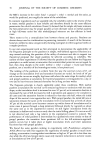
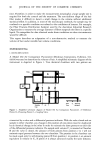
86 JOURNAL OF THE SOCIETY OF COSMETIC CHEMISTS time. Therefore, in order to make the measurements meaningful, a large sample size is required for both the control and the treatment. The non-uniform shape of the hair fiber makes it difficult to detect a small change in the volume without additional statistical effort. In addition, in most of the microscopic methods, the sample may be confined to a specific condition not related to the conditions of interest. For example, the Fiber Fineness Distribution Analyzer used by the Australian Industrial Research Organization to measure the average diameter of fibers suspends the fibers in a specific liquid. To extrapolate the data obtained under these conditions to other circumstances would be difficult. This report describes an adaptation of a non-destructive method to measure the volume of hair under variable hair volume conditions. EXPERIMENTAL I. INSTRUMENTATION A Model 930 Air Comparison Pycnometer (Beckman Instruments, Fullerton, CA. 92634) was used to determine the volume of hair. A simplified schematic diagram of the instrument is depicted in Figure 1. Two identical chambers with two pistons are Stop A -•- Stop Sample -' Cup Figure 1. Simplified schematic diagram Piston B--Pressuring Piston C--Coupling Zero V• Starting dx Tare Number of Model 930 Air Comparison Pycnometer. A--Reference Valve. connected by a valve and a differential pressure indicator. With the valve closed and no sample in either chamber, any change in the position of one piston must be duplicated by an identical change in the other in order to maintain the same pressure on each side of the differential pressure indicator. If a sample with volume Vx is inserted in Chamber B and the valve is closed, the advance of both pistons from position 2 to 1 will not maintain equal pressure between the two chambers. The pressure in the chambers can be made equal only by withdrawing piston B from position 1 to position 3, an amount equivalent in volume to Vx. If piston A is always advanced exactly the same distance,
Purchased for the exclusive use of nofirst nolast (unknown)
From: SCC Media Library & Resource Center (library.scconline.org)