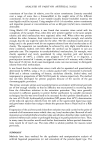
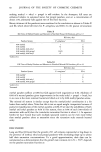
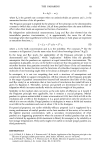
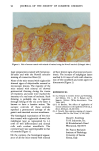
Letter to the Editor 95 To the editor: It is well documented that substantial modification of the high sulfur protein fractions of wool can be attained by enrichment of the animal's diet with sul- fur-containing amino-acids and/or with gelatin) -5 Oral ingestion of gelatin by humans has been claimed to result in improved fingernails 6 and a recent report 7 suggests that it may also lead to an increase in the diameter of hair. These effects of gelatin are thought 6'7 to be linked to increased rate of protein meta- bolism brought about by the specific dynamic action of its constituent amino acids. We now wish to report some new data supportive of the beneficial effect of the gelatin/cystine diet .supplement on the growth of human halr. Ours was a double blind study, lasting 3 months (December- March) and involving 40 volunteers (aged between 20-40). The diet of the latter was supplemented with either 2 grams of gela- tin and 0.8 grams of l-cystine or with a placebo (starch tablets). The scalp of each participant was carefully examined and the number of follicular sites as well as the number of individual hairs emerging from each site was determined. 8 The area (lcm x lcm) chosen for the count was between the rear and front vertex accord- ing to the Moretti 9 subdivision. For the diameter assay, the hair (-200 mg) was sampled from around the count area with the fibers cut off as close to scalp as possible. The sulfur content of hair was determined by the oxygen-flask method •ø and its thiol content was measured po- larographically. TM The results summarized in Table I suggest that the gelatin/cystine diet supplement promotes more intense hair growth and leads to substantial increase in the diameter of the fibers. The corresponding increase in the sulfur con- tent of hair implies that it is the high sulfur protein fraction of hair that is affected the most. vv•

96 JOURNAL OF THE SOCIETY OF COSMETIC CHEMISTS REFERENCES (1) J. M. Gillespie, The dietary regulation of the synthesis of hair keratin, in Symposium on Fibrous Proteins, (Butterworths, Sidney, Austra- lia, 1968)p. 362. (2) A. Broad, J. M. Gillespie and P.J. Reis, The incidence of sulphur-containing amino acids on the biosynthesis of high-sulphur wool pro- teins, Austr. J. Biol. Sci., 23, 149-164 (1970). (3) M. Frenkel, J. M. Gillespie and P.J. Reis, Factors influencing the biosynthesis of the tyrosine-rich proteins of wool, Austr. J. BioL Sci., 27, 31-38 (1974). (4) P.J, Reis and P. G. Schinckel, The growth and composition of wool. II. Effect of casein, gelatin, and sulphur-containing amino acids given per abomasum, Austr. J. BioL Sci., 17, 532-547 (1964). (5) P. J. Gillespie and P. J. Reis, The dietary- regulated biosynthesis of high-sulphur wool proteins, Biochem. J., 98, 669-677 (1966). (6) J. B. Michaelson and D. Huntsman, New aspects of the effects of gelatin on fingernails, J. Soc. Cosmet. Chem., 14, 443 (1963). (7) J. Scala, N. R. S. Hollies and K. P. Sucher, Effect of daily gelatin ingestion on human scalp hair, Nutr. Report Inter., 13, 579-592 (1972). (8) E. M. Cottington, R. H. Kissenger and W. S. Tolgyesi, Observation of female scalp hair population, distribution and diameter, J. Soc. Cosmet. Chem., 28, 219-229 (1977). (9) G. Moretti, A. Baccaredda-Boy and A. Rebo- ra, Biochemical aspects of hair growth, in Advances in Biology of The Skin, Vol IX, W. Montagna and R. Dobson, Eds., (Pergamon, Oxford, 1969)p. 538. (10) A.M. G. McDonald, The oxygen-flask meth- od: Determination of sulphur, Industr. Chem., 35, 33 (1959). (11) S.J. Leach, The reaction of thiol and disul- phide groups with mercuric chloride and methyl mercuric iodide, Austr. J. Chem., 13, 547-566 (1960). P. Morganti Cosmetic Research Center, Mavi Via F. Bernardini n.22 00165 Rome, Italy S. Randazzo Experimental Dermatology Institute University of Catania, Italy C. Bruno Institute of General Physiology University of Urbino, Italy
Purchased for the exclusive use of nofirst nolast (unknown)
From: SCC Media Library & Resource Center (library.scconline.org)