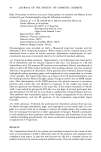
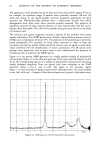
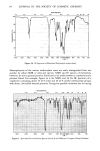
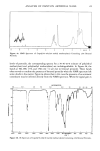
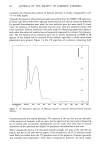
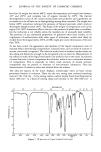
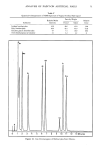
ANALYSIS OF PAINT-ON ARTIFICIAL NAILS 59 of its methods, and skills in their use, were being developed and improved as the work was in progress. The scheme was tested in three ways: (1) Some of the methods were used for every product, and each method was used in the analysis of at least one product. (2) A kit of Lee Nails was selected at random from stock, its components subjected to analysis using the complete scheme, and its batch history then traced through manufacturing and quality control records. The results were then checked against the batch history records. (3) Mixtures were prepared in the laboratory and subjected to relevant portions of the scheme, the results being compared with the known compositions of the mixtures. Taken all together, the evidence is that the methods and scheme are reliable. The nature and reliability of the results may be illustrated by reference to a particular example. A retail kit of Product C was purchased at a large drug and variety store on or about June 1, 1981. The liquid and powder components were subjected to nearly the complete scheme as outlined. The results were as follows: The powder was a white, fine granular material with a slippery feel. Its IR spectrum was typical of poly(ethyl methacrylate), and also showed bands characteristic of benzoyl peroxide. Its NMR spectrum was also typical of poly(ethyl methacrylate), with an indication of the presence of some aromatic material. The aromatic material was assumed to be benzoyl peroxide, and was calculated from integrated signal intensities to be present at a level of 3-4%. Iodimetric determination of peroxide gave a value of 2.23% (as benzoyl peroxide). Extraction of the powder with methanol and subsequent evaporation of the filtered solution yielded a small amount of a white solid. The NMR spectrum of the solid indicated it to be benzoyl peroxide, with no other signals detectable. Upon thermogravimetric analysis the powder left a white residue amount- ing to 0.23% of its original weight. Upon electron bombardment this powder emitted the x-ray lines characteristic of titanium, and no other x-rays of elements with atomic number 11 or greater. The liquid was clear, with a barely detectable yellowish tinge. It was of low viscosity, and had a pronounced methacrylate ester odor. Its density was not determined. Its IR spectrum suggested that it was a mixture of methacrylates, possibly including the isobutyl and ethylene glycol esters, and probably containing one of more aromatic ingredients. The NMR spectrum unambiguously indicated the presence of isobutyl methacrylate, ethylene dimethacrylate, and N,N-dimethylamino-p-toluidine. From the integrated NMR signal intensities the relative amounts were calculated to be 77.7%, 16.5%, and 5.8% respectively. There was no hexane-insoluble material. Gas chromatog- raphy corroborated the NMR results, and in addition showed the presence of a small amount of n-butyl methacrylate. From relative peak areas, together with relative sensitivity factors based on ethyl methacrylate, the composition was calculated as 76.5% isobutyl methacrylate, 1.3% n-butyl methacrylate, 16.2% ethylene dimethacrylate, and 6.0% N,N-dimethyl-p-toluidine. (In the NMR spectrum in this case, the normal butyl ester would be reckoned as isobutyl.) Injection of the neat liquid resulted in a chromatogram showing four minor peaks, one of which was identified as being due to BHT present at a level too low to be quantitatively determined under these conditions. No attempt was made to identify the other peaks, although in sum they represented about 0.6% of the total material present. The identity of the amine was so clearly established from the NMR spectrum and the GC results that extraction of the liquid with HC1 was omitted. There was no indication of any dyes or UV absorbers.

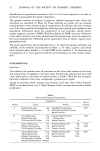
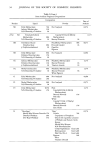
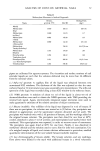
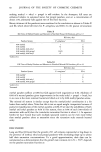
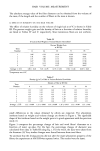
60 JOURNAL OF THE SOCIETY OF COSMETIC CHEMISTS POWDERS The powders were without exception white or pink, essentially odorless, finely granular materials, with a slippery feel. The infra-red and NMR spectra showed the major constituents of the powders to be only three: poly(methyl methacrylate), poly(ethyl methacrylate), and copoly(methyl and ethyl methacrylates). Any one powder was usually found to contain but one of these three polymers. Simple fractional precipita- tion experiments indicated that when both methyl and ethyl groups were present, the material was most likely a copolymer rather than a blend or a physical mixture. The only initiator found in the powders was benzoyl peroxide. Plasticizers identified included diethyl and dibutyl phthalates, and methyl phthalyl ethyl glycolate. Methylene chloride insolubles and residues from thermogravimetric analysis generally provided the same information, the one result confirming the other. In combination they allowed identification and approximate quantitation of inorganic opacifiers such as titanium dioxide, and flame retardants such as antimony oxide. LIQUIDS The liquids were colorless or pink to pinkish orange. With the exception of the SI liquids, they all had pronounced methacrylate ester odors. In a few cases the ester odor was at least partly masked by a fragrance. The SI Developer smelled of methyl ethyl ketone peroxide the Base smelled strongly of styrene. The liquids were of low to moderate viscosities. The few densities determined were in the range 0.9-1.1 g/ml, as would be expected from the compositions of the liquids (see Tables ! and IT). With but two exceptions, the major components of the liquids were methacrylate esters. Those found are listed in Table TT. Two amine accelerators were found. Most of the products contained N,N-dimethyl-p-toluidine. Three products contained N,N- di(2-hydroxyethyl)-p-toluidine (also called p-tolyliminodiethanol). In a few cases, solvents or plasticizers in the liquids were also identified, but their presence was not common. Hexane-insoluble material was seldom encountered. Where present, it was poly(methyl methacrylate), used as a viscosity-builder. Gas chromatography, where used, corroborated the spectrometric results and generally increased the precision of quantitative determinations. It did not reveal the presence of any major constituents not already found by the other methods. Gas chromatography Table III Minor Constituents of Nail Extender Liquids Name Function Boiling Point, deg C Dichloromethane iso-Amyl Acetate N,N-Dimethylformamide N,N-Dimethyl-p-toluidine Butylated Hydroxytoluene N,N-Di(2-hydroxyethyl)-p-toluidine Dibutyl Phthalate Methyl phthalyl ethyl Glycolate solvent 39.75 solvent 142 solvent 153 accelerator 210-21 inhibitor, 265 anti-oxidant accelerator 338 plasticizer 340 plasticizer
Purchased for the exclusive use of nofirst nolast (unknown)
From: SCC Media Library & Resource Center (library.scconline.org)