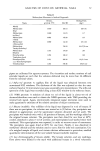
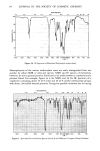
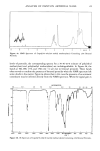
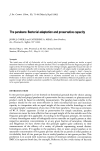
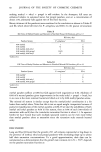
ANALYSIS OF PAINT-ON ARTIFICIAL NAILS 57 Table II Methacrylate Monomers in Artificial Fingernails Density, Boiling Point, Name g/ml @ 25øC Mol Wt deg C Methyl Methacrylate 0.939 100.13 100-101 Ethyl Methacrylate 0.909 114.15 117 iso-Butyl Methacrylate 0.883 142.20 155 n-Butyl Methacrylate 0.889 142.20 163-164 2-Ethoxyethyl Methacrylate 158.20 64-67/8 torr Tetrahydrofurfuryl Methacrylate 1.033 170.20 265 Ethylene Dimethacrylate 1.050 198.22 260 Triethylene glycol Dimethyacrylate 1.072 286.18 162/1.2 torr 1,1,1-Trimethylolpropane Trimethacrylate 1.056 338.44 185/5 torr pipets are calibrated for aqueous systems. The viscosities and surface tensions of nail extender liquids are such that the volumes delivered may be more than 3% different from the nominal values. (c) Infra-red spectrum. A capillary film of the liquid was obtained between two unmounted KC1 windows. The thickness of the film was adjusted so that the ester carbonyl band at 5.8 micrometers just gave essentially zero transmittance. The infra-red spectrum of the liquid was recorded using a clean KC1 window in the reference beam. (d) NMR spectrum. A solution of about 0.2 ml of the liquid in about 0.8 ml of deuterochloroform was used to obtain the NMR spectrum, with TMS providing the internal lock signal. Again, electronically integrated signal intensities were used to make quantitative estimates of the relative amounts of major constituents. (e) Hexane insolubles. One milliliter of the liquid was dispersed in 5 ml of hexane. If there was no precipitate, the solution was treated as in (f) below. Any precipitate was allowed to agglomerate, and the supernatant solution decanted and set aside. The precipitate was washed twice with 2 ml portions of hexane, and the washings added to the original hexane solution. The precipitate was then dried for one hour at 80øC, cooled, dissolved in about 5 ml of acetone, and reprecipitated and washed twice with methanol. This reprecipitation was repeated, in order to remove traces of monomers. The precipitate was again dried at 80øC for one hour. Finally, it was dissolved in methylene chloride and the solution used to cast a film for infra-red examination. Use of a weighed sample of liquid, and certain obvious refinements in procedure, enabled quantitative determination of the non-volatile hexane-insoluble material. (f) Gas chromatography of hexane solubles. The hexane solution, and any washings, from above were diluted to the mark with additional hexane in a 10-ml volumetric

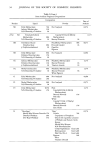
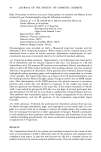
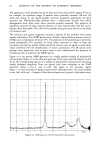
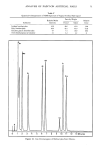
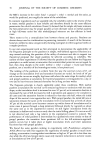
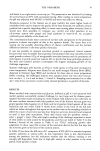
58 JOURNAL OF THE SOCIETY OF COSMETIC CHEMISTS flask. If necessary to remove any traces of precipitate, the solution was filtered. It was analyzed by gas chromatography using the following conditions: Column: •4" x 6' SS, 10% SE-30 on 100/120 mesh Gas Chrom Q. Carrier: Helium, at 50 ml/min. Column Oven: 80-280øC, at 15 deg/min. Post-Injection Interval 2 min. Upper Limit Interval 5 min. Injection Port: 220øC. Detector: Thermal conductivity. Detector Oven: 250øC. Column-Detector Auxiliary Block: 260øC. Detector Bridge Current: 150 ma. Chromatograms were recorded on both a Honeywell strip-chart recorder and the Shimadzu C-R1A computing integrator. Where needed, relative response factors were determined from a series of known mixtures. Quantitative determination of trace constituents was most conveniently done by the method of standard additions. (g) Extraction of amine accelerator. Approximately 2 ml of the liquid was mixed with 8 ml of chloroform, and the solution extracted with four 2-ml portions of 2 M (7%) hydrochloric acid. The aqueous HC1 extracts were combined, filtered, and adjusted to pH 9-11 with 6 M (20%) sodium hydroxide. The resulting solution was then extracted with four 2-ml portions of chloroform. These portions were combined, filtered through hydrophobic phase separating paper, and evaporated at room temperature in a stream of dry nitrogen. The residue was taken up in about 0.8 ml of deuterochloroform, and the resulting solution filtered through a plug of surgical cotton into an NMR sample tube. After determination of the NMR spectrum, the solution was run in successive portions onto a KCI disc and allowed to evaporate. If the residue was liquid, its infra-red spectrum was obtained in the usual way. If the residue was partly or wholly solid, it was melted by placing the KCI disc on a hot plate. A second, pre-heated, disc was then placed over the first so as to obtain a capillary film of liquid between the two. This sandwich was immediately placed in the sample compartment of the infra-red spectrophotometer, and the IR spectrum of the (sometimes supercooled) liquid recorded. (h) Other substances. If desired, the acid-extracted chloroform solution from (g) may be filtered through hydrophobic paper and evaporated over the steam bath or a hot plate in a current of dry air or nitrogen to remove all volatile matter. Any residue may then be investigated by spectral or other appropriate techniques. Possible constituents in such residues are dyes, polymers, ultra-violet absorbers, and monomers of very low volatility (including pre-polymers). Any amine accelerator remaining would obviously complicate the UV spectrum. RESULTS The compositions found for the various nail extenders analyzed in the course of this work are summarized in Table I. Obviously some of the products were analyzed more completely than others. In part this was because the idea for a complete scheme of analysis evolved as the various analytical problems arose. Thus the scheme itself, certain
Purchased for the exclusive use of nofirst nolast (unknown)
From: SCC Media Library & Resource Center (library.scconline.org)