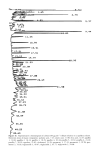
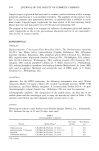
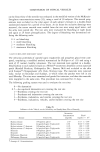
EFFECTS OF HUMECTANTS ON EMULSION OCCLUSIVITY 267 Figure 5. Microscopic views of emulsions and ternary mixtures prepared from mineral oil and ester surfactants of HLB 9.5 (a,c) and 1 1.5 (b,d). support our previous work (8). Our results do not permit us to demonstrate the rela- tionship of the presence of lameliar organization of lipid to the occlusivity of emulsions as described by Handjani-¾ila et al. (7). Moreover, since emulsions were applied at a dose of 3 mg/cm 2, after evaporation of more than 90% of their water the residual non-volatile part was a very small amount. That is why our prepared non-volatile parts applied at the same dose (3 mg/cm 2) were more occlusive than their corresponding emulsions (with the exception of perhydro- squalene and ester surfactant of HLB 11.5). This can be explained by the inability of non-volatile parts to spread on the surface of our gelatin model. Anyway, microscopic study proved that an emulsion having a greater isotropic oily phase formation capacity left a uniform oily residual "film" on the surface of application and thereby showed greater occlusivity. Of course, the initial occlusivity of the lipophile phase itself is important in the efficacy of emulsions (16-18). On the basis of our experiments, the following lipophile phases are listed in increasing order of occlusivity: oleyl alcohol sweet almond oil mineral oil miglyol 812 perhydrosqualene.

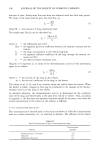
268 JOURNAL OF THE SOCIETY OF COSMETIC CHEMISTS However, for a particular ternary system, water-surfactant-lipophile phase, it is the isotropic oily phase formation capacity of emulsions which regulates their occlusivity. The isotropic oily phase formation depends largely on the HLB value of the surfactant (19). Thus, emulsions made with surfactant of such an HLB that the emulsions form an isotropic oily phase most easily manifest the greatest occlusivity. Any additive modifying isotropic oily phase formation capacity of emulsions could eventually modify their occlusivity as we observed in the presence of humectants. By chemical nature, humectants are close to electrolytes. They may change HLB value of surfactants (20) and consequently modify isotropic oily phase formation capacity. A relationship between the formation of an isotropic oily phase and the occlusivity of emulsions has been established. This finding can provide a rapid guide in choosing emulsions of different occlusivities ranging from weaker to strong ones. Thus, it will be possible to simplify cosmetic and dermatological preparations. However, a further study is necessary to prove this relationship by doing experiments either with human subjects or i, vitro using human skin. REFERENCES (1) I. H. Blank, Factors which influence the water content of the human skin, J. Invest. Dermatol., 18, 433-440 (1952). (2) I. H. Blank, Further observations on factors which influence the water content of the stratum comeurn, J. Invest. Dermatol., 21, 259-269 (1963). (3) L. Gaul and G. B. Underwood, Relation of dew point and barometric pressure to chapping of normal skin, J. Invest. Dermatol., 19, 9-19 (1952). (4) G. Barnett, "Emollient Creams and Lotions," in Cosmetic Science and Technology, 2nd ed., M.S. Balsam and E. Sagarin Eds. (Wiley Interscience, New York, 1972), pp. 27-104. (5) F. Tranner and G. Berube, Mineral oil and petrolatum: Reliable moisturizers, Cosmet. Toilet., 93, 81-82 (1978). (6) J. B. Shelmire, The influence of oil-in-water emulsions on the hydration of keratin, J. Invest. Der- matol., 26, 105-108 (1956). (7) R. M. Handjani-Vila, B. Rondot, and F. Lachampt, Perspiratio insensibilis control by specific associations of lipids, Cosmet. Perrum., 90, 39-42 (1975). (8) J. Wepierre, M. Adrangui, and J. P. Marty, Factors in the occlusivity of aqueous emulsions, J. Soc. Cosmet. Chem., 33, 157-167 (1982). (9) D. H. Powers and C. Fox, The effect of cosmetic emulsions on the stratum corneum, J. Soc. Cosmet. Chem., 10, 109-116 (1959). (10) T. Choudhury, M. Adrangui, J.P. Marty, A.M. Orecchioni, M. Sei!,ler, and J. Wepierre, Importance of moisturizing agents on the occlusive properties of emulsions, presented at the 12th Congress of International Federation of Societies of Cosmetic Chemists, Paris, Sept. 13-17, 1982, pp 159-177. (11) R. M. Handjani-Vila, B. Rondot, and F. Lachampt, Measurement of moisturizing effect, Cosmet. Toilet, 91, 25-30 (1976). (12) M. Adrangui, F. Puisieux, M. Selllet, E. Morszanyi, and A.M. Orecchioni, Diagramroes: eau- surfactif-huile • base de perhydrosqual&ne et de Miglyol 812 ©, Pharm. Acta. Helv., 54, 214-219 (1979). (13) A. Delaunois, Biostatistics in Pharmacology (Pergamon Press, Oxford, 1973), Vol. II, pp 911-919. (14) D. Spruit, Interference of some substances with water vapor loss of human skin, Amer. Perf. Cosmet., 86, 27-32 (1971). (15) I. H. Blank, "Emollients," in The Chemistry and Manufacture of Cosmetics, 2nd ed., M. G. de Navarre, Ed. (Continental Press, Orlando, Florida, 1975), pp 15-24. (16) H. Tsutsumi, T. Utsugi, and S. Hayashi, Study on the occlusivity of oil films,J. Soc. Cosmet. Chem., 30, 345-356 (1979).
Purchased for the exclusive use of nofirst nolast (unknown)
From: SCC Media Library & Resource Center (library.scconline.org)