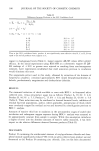
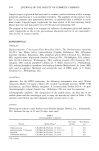
272 JOURNAL OF THE SOCIETY OF COSMETIC CHEMISTS for soiling fabric and measuring the degree of soil removal (8,9) from the fabric after washing in a surfactant solution. This has not been the case with regard to the devel- •opment of a widely accepted procedure for soiling and cleaning of hair. For any method to be accepted by others it must lend itself to the convenience of running a myriad number of test samples over a short period of time. It often is the case that this type of study is considered prohibitive due to the large number of variables beyond the control of the analyst. In addition, it usually requires a large number of samples to determine a significant difference between treatments. This quickly becomes imprac- tical due to the laborious nature of the extraction and analytical procedure. As a result the investigator defers to other means of perceptual panel evaluation of the overall cleaning process. In our study every effort was made to limit the effect of extraneous variables and to develop a simple and consistent analytical procedure. This resulted in fewer samples for analysis, which extends the technology to even modestly equipped laboratories. This paper summarizes a study on relative shampoo detergency and offers a method that will allow the researcher to: 1. Evaluate different shampoo solutions on a hair substrate. 2. Quantitatively determine the amount of soil removal in a reproducible manner. EXPERIMENTAL The evaluatior• procedure and our investigation of the soiling, cleaning, and analysis processes are detailed as follows. HAIR SUBSTRATE One of the most significant problems faced by analysts in the measurement of residual soiling levels on hair is reproducibility of the actual soiling level on the tress. To reduce this problem, we split the soiled samples prior to treatment with surfactant or prototype shampoo. This is done to compensate for tress-to-tress variation in soiling level by using the non-treated soiled sample as an internal control. In addition, this allows for the determination of residual sebum levels relative to the non-washed control. DeMeo hair tresses (New York, N.Y.) of standard 8-inch length were used in all cases. In the single treatment assessments, 3-gram tresses were initially soiled. After soiling, the tress was split into two equal samples: one for surfactant treatment and the other to act as an internal control to compensate for sample-to-sample variances in soiling levels. In the case of repeated soiling and washing studies, single 1.5-gram tresses were soiled and treated. The cyclic nature of this portion of the experiment precluded the use of internal control samples due to the large amount of initial tress required. In this instance 5 replicate samples were soiled and left untreated to serve as experimental control samples. Only virgin tresses were evaluated, but the method is applicable to damaged/bleached/waved hair as well. SEBUM The artificial sebum composition was based on a formulation used in previous work (10).

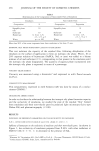
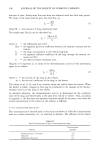
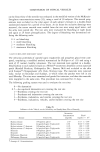
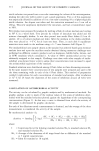
EVALUATION OF SHAMPOO DETERGENCY 273 The rationale for using a synthetic sebum in the study was to obtain a reproducible soil composition and thus eliminate significant sources of variability (11). The sebum formulation was chosen to have a composition with a variety of functional groups similar to that in actual sebum (12). Functional group composition was: 1. Triglycerides-- 35 % 2. Fatty acids--30% 3. Waxes, hydrocarbons-- 15% 4. Esters--20% The actual formula for the Spangler sebum (10) used in our study was: Olive oil Coconut oil Palmitic acid Stearic Acid Oleic Acid Paraffin wax Squalene Spermaceti Cholesterol 20 0% 15 0% 10 0% 5 O% 15 0% 10 0% 5 O% 15 0% 5 O% 100.0% SOILING PROCESS Soiling of the hair tress was accomplished by dipping the tress in a sebum in hexane solution at the concentration under study. The soiled sample was manually agitated every 5 minutes while exposed to the soiling solution and then removed after 20 minutes. The solvent was then allowed to evaporate from the tress at room temperature (approx. 23 degrees C) for a period of 30 minutes. In this study two different soiling levels (2% and 10% sebum in hexane) were contrasted. The 2% solution represented a perceived soiled hair as determined in a panel perception study. The 10% soiling was performed to represent an overload situation. Comparisons of sebum removal at both total and component levels were made. CLEANING PROCESS One Of the greatest problems in a study of this type is the development of consistent methods which are representative of real-life conditions for sample soiling and treat- ment. In our efforts to be as "true to life" as possible, tap water was used for all rinsing. The tap water normally supplied in Hayward, California, is considered soft with an average hardness of 3 to 4 grains (about 60 ppm calcium carbonate). Formulations and single component actives were prepared using deionized water. Three different methods of sample cleaning were evaluated. 1. Bulk process. In this process the soiled hair tress is dipped into a surfactant solution and agitated for 5 minutes, rinsed, and the "clean" hair tress evaluated. In this study a 100-ml bath of 0.1% aqueous surfactant solution was used for each 1.5 grams of hair. Rinsing was accomplished by holding the hair swatch for 10 seconds per side in
Purchased for the exclusive use of nofirst nolast (unknown)
From: SCC Media Library & Resource Center (library.scconline.org)