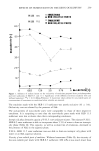
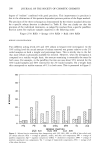
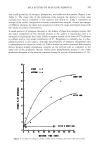
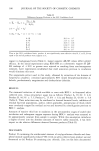
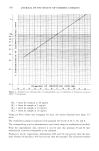
EFFECTS OF HUMECTANTS ON EMULSION OCCLUSIVITY 261 801 SURFACTANT ' ESTER ETHER o EMULSIONS ß NON VOLATILE PARTS [] EMULSIONS ß NON VOLATILE PARTS 70 60- 50- 40- 30- 20 _:3- 10- , , , , , 0 0.62 1.25 2.5 3.75 5 URE % Figure 2. Influence of urea on the occlusivities of emulsions prepared from perhydrosqualene with ester or ether surfactants of HLB 9.25. % humectant values shown for non-volatile parts are concentrations of humectants in emulsions before volatiles are removed. Conductivities of emulsions and their non-volatile parts. The conductivities of emulsions made with ester-type surfactant were less than those made with ether surfactant (Table III). Conductivity increased in both cases in the presence of urea. The conductivities of non-volatile parts of emulsions were lower than those of corresponding emulsions.

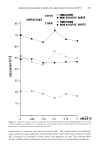
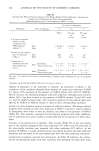
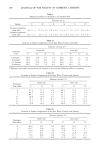
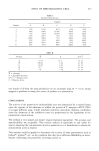
262 JOURNAL OF THE SOCIETY OF COSMETIC CHEMISTS Table III Isotropic Oily Phase Formation Capacity of the Binary Mixture P.H.S.-Surfactant: Viscosity and Conductivity of Emulsions and Their Non-volatile Parts [Perhydrosqualene-ester or ether surfactant (HLB 9.25)-urea] % of Urea in Emulsions Parameters Type of Surfactant 0 2.5 5 % of water or aqueous solution of urea incorporated into PHS-surfactant Ester mixture 1:1 Ether Water 10% aqu. 20% aqu. sol. sol. of urea of urea 1.8--• 10.1 1.7--• 10.1 1.7--•9.9 11.5 11.1 11.1 Viscosity of non-volatile parts of emulsions Ester 206 267 740 (mPa. s.) Ether 334 1516 7266 Conductivity of emulsions and their { Emulsions 7.2 X 10 -3 6 X 10 -3 1.2 X 10 -2 non-volatile parts Ester Non-volatile parts 5 X 10 -5 1 X 10 ¸ 0 (m.S.) Ether { Emulsions 2.4 X 10 -2 6.4 X 10 -2 1.14 X 10 -• Non-volatile parts 0 0 1 X 10 -5 The sign "--•" indicates the interval of percentages of aqueous phase solubilized by the oil surfactant mixture. MINERAL OIL-ESTER OR ETHER SURFACTANT-NAPCA (HLB 9.5) Influence of humectants on the occlusivities of emulsions, As presented in Figure 3, the occlusivity of the emulsion prepared from mineral oil using ester surfactant of HLB 9.5 (about 19%) increased in the presence of NaPCA (about 30% with 5% NaPCA). On the contrary, the emulsions prepared with ether surfactant, although more occlusive (about 36%), lost their activity in the presence of NaPCA (around 16 and 26% with 2.5 and 5% NaPCA respectively). The occlusive characters of non-volatile parts were affected by NaPCA in fashions similar to those of their corresponding emulsions. Isotropic oily phase formation capacity of mineral oil surfactant mixture. The binary mixture prepared from mineral oil with ester surfactant at HLB 9.5 showed a minor tendency to incorporate more water to form an isotropic oily phase in the presence of NaPCA (Table IV). This tendency decreased for the mixture prepared with ether surfactant, and so variations were quite similar to results obtained for occlusivities of these emul- sions. Viscosities of non-volatile parts of emulsions. The viscosity (Table IV) of the non-volatile part of the emulsion prepared with ester surfactant (545 mPa.s) was less than that of the non-volatile emulsion part prepared with ether surfactant (812 mPa.s). In the presence of NaPCA, viscosity increased in the non-volatile part from the ester surfactant emulsions and decreased in the non-volatile part from the ether surfactant emulsions. Conductivities of emulsions and their non-volatile parts. As Table IV indicates, the conduc- tivities of preparations made with ester surfactant were generally less than those made
Purchased for the exclusive use of nofirst nolast (unknown)
From: SCC Media Library & Resource Center (library.scconline.org)