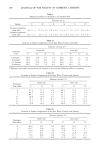
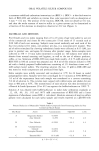
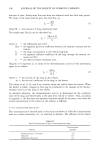
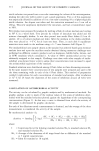
306 JOURNAL OF THE SOCIETY OF COSMETIC CHEMISTS function of time. Steady-state flux was often not observed until the third time period. The slope of the linear portion gave the total flux, JT. dM JT- dt' (1) where M = total amount of drug penetrated (mg). The steady-state flux JT can be described by: AKm CvD JT = , (2) h where A = the diffusional area (cm2). Km = the apparent partition coefficient between the stratum corneum and the vehicle. Cv = the drug concentration in the vehicle (mg/mL). D = the apparent diffusion coefficient of the drug through the stratum cor- neum (cm2/hr). h = the effective barrier thickness (cm). Higu•hi (31) expressed JT in terms of the thermodynamic activity of the penetrating agent in its vehicle: AD a v JT = -- , (3) •/s h where a• = the activity of the drug in the vehicle. •/s = the activity coefficient of the drug in the barrier. The values of •/s, A, D, and h are constant unless the vehicle alters the barrier. When the barrier is stable, changes in flux may be attributed to the changes of the thermo- dynamic activity of the drug in the vehicle. In saturated solutions, the thermodynamic activity is determined by the crystalline state of the drug and theoretically is the same from vehicle to vehicle. Thus, according to equation 3, the flux from the saturated solutions should be the same, even when the actual concentration of the steroid in the vehicles is different. IN VIVO VASOCONSTRICTION STUDY The concentrations of steroids used in this study are shown in Table III (concentrations were at or above saturation, viz., as solutions or slurries). The influence of the vehicle Table III Steroid Concentration Used in Vasoconstriction Assay Concentration Steroid (mg/mL) Hydrocortisone 17-butyrate 1.0 Desonide 0.5 Difiorasone Diacetate 0.5

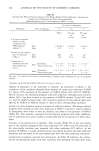
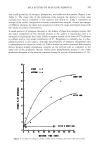
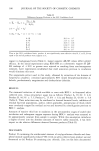
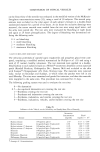
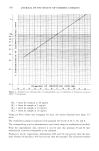
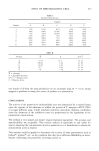
COMPARISON OF TOPICAL VEHICLES 307 on the bioactivity of the steroids was evaluated in the modified version of the McKenzie- Stoughton vasoconstriction assay (32), using a total of 30 subjects. The steroid prep- arations were occluded on the volar aspect of each subject's forearm in a double-blind randomized manner for a period of six hours. At six hours the occlusive dressings were removed, the excess steroids were washed from the test sites using tepid water, and the arms were patted dry. The test sites were evaluated for blanching at eight hours and again at 24 hours postapplication. The degree of blanching was determined uti- lizing the following scale: 0 = no blanching 1 = mild blanching 2 = moderate blanching 3 = maximum blanching 2 •-r)av CUMU•.aT•VF• mR•TaNCY assay The irritation potentials of caprylic/capric triglyceride and propylene glycol were com- pared, employing a modified method summarized by Phillips eta/. (33) and using a total of 25 normal, healthy volunteers. The test materials were applied in a double- blind fashion to each subject's back on a Webril © (nonwoven absorbent cotton material) patch (Kendall Products, Orthopedics Div., Boston, MA) and occluded to the skin with Scanpor © (Norgesplaster A/S. Oslo, Norway) tape. The materials were removed daily, except on Saturdays and Sundays, at which times the patches were left in situ until Monday. The sites were examined and graded for irritation, and then the materials were reapplied to the same sites. This procedure was continued for 21 days. The following grading system was used to evaluate the test sites: 0--No dermatitis 0.5--An equivocal dermatitis not covering the test site 1--Erythema covering the test site 2--Erythema and induration covering the test site 3--Erythema, induration, and vesicles covering the test site 4--Erythema, induration, vehicles, and/or bulla(e) covering the test site Table IV Influence of the Vehicle on the Solubility and Steady-State Flux of Steroids Steroid Vehicle No. Saturation Concentration (mg/mL) Flux* (mg/hr) X 104 Hydrocortisone Hydrocortisone Hydrocortisone 17-butyrate Hydrocortisone 17-butyrate Desonide Desonide Difiorasone Diacetate Diflorasone Diacetate 1-Propylene glycol 2-Caprylic/Capric Triglyceride 1-Propylene glycol 2-Caprylic/Capric Triglyceride 1-Propylene glycol 2-Caprylic/Capric Triglyceride 1-Propylene glycol 2-Caprylic/Capric Triglyceride 1.39 0.81 0.45 O.9O O.4O 0.53 0.07 0.23 17.17 + 4.90 18.49 + 8.00 1.80 + 0.09 2.36 + 0.60 8.34 + 4.30 12.93 + 8.50 0.48 + 0.20 1.89 --- O.4O * Average of 3 determinations.
Purchased for the exclusive use of nofirst nolast (unknown)
From: SCC Media Library & Resource Center (library.scconline.org)