274 JOURNAL OF THE SOCIETY OF COSMETIC CHEMISTS running warm water (40 degrees C). The total rinse volume was approximately 500- 600 mi. The hair was then dried using a hand-held dryer. 2. Finger method. This technique most accurately mimics the "real world" shampoo procedure in that the solution being tested is applied and agitated in a manner con- sistent with actual consumer use. A 1.5-gram soiled tress was wetted under running water for 5 seconds per side (about 250 ml of water). Next 0.1 gram of undiluted shampoo (approximately 10% surfactant) was applied to the length of the tress. The tress was rubbed 15 times between the fingers as evenly as possible. Then the tress was reversed and rubbed 15 more times. Next the tress was rinsed under warm (40 degree C) water for 10 seconds per side and dried as before using a hand-held dryer. This yielded a total rinse volume of approximately 500-600 ml. 3. Sponge method. This technique is a modification of the "finger method" described above. The procedure is modified to provide a more consistent pressure upon the hair tress during the rubbing portion of the sample treatment. A 1.5-gram soiled tress was held under warm (40 degrees C) running water for 5 seconds per side, and then 0.1 gram of 10% surfactant solution was applied to the length of the tress. The tress was drawn 15 times between two prewetted sponges. A 100-gram weight was placed on the top sponge to simulate the approximate pressure applied by the fingers in that method. The tress was rinsed under 40 degree C running water for 10 seconds on each side and dried as previously stated. The sponges were cleaned before each use to prevent any buildup of sebum on them. We felt that this procedure combined the optimum combination of realism and simplicity. ANALYSIS The samples were placed in a forced air draft oven at 60 degrees C for 4 hours. This was to provide a uniform moisture content throughout the sample set. Karl Fischer moisture determinations indicated a residual moisture level of approximately 0.2% after the oven drying step. After samples were allowed to cool to room temperature, they were weighed (about 1 gram of hair) into 50-ml borosilicate serum vials. At this time exactly 20 ml of hexane was pipeted into the vial. The sample vessel was then sealed with a teflon-faced silicone septum and shaken on a mechanical shaker for 30 minutes. Hexane was chosen as the extraction solvent based upon the evaluation of available literature (10,12, 13,15) and on the basis of experimental data which indicates that it provides the best balance in extraction power, low toxicity, and relatively high boiling point compared with other nonpolar solvents. Other solvent systems which were investigated were methanol, isopropanol, methyl ethyl ketone, diethyl ether, carbon disulfide, chloroform, and isopropanol/hexane mixture (50:50). It was deter- mined early on in the course of our study that the hexane solvent system removed 95% of the available sebum from the sample using this procedure. Chromatographic profiles of the hexane extract of soiled hair tresses were comparable to profiles of standard sebum in hexane solutions used for the determination of component retention time. After the samples had been shaken for the set amount of time, the solvent was decanted from the sample. A portion of this was poured directly into an auto-sample vial, while the remaining extract was placed into a sample bottle and sealed for possible later examination. The auto-sampler vials were placed into the sampler and the analysis begun.

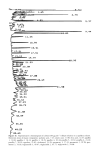
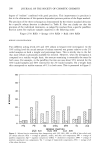
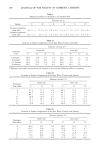
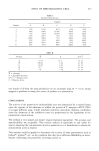
EVALUATION OF SHAMPOO DETERGENCY 275 In the early phases of this project, residual sebum was determined by gas chromatog- raphy using a packed-glass column which contained a high temperature liquid phase (3% Dexsil 300 on Suplecoport). This column provided for the resolution of most of the major sebum components with the exception of spermaceti and cholesterol and some of the minor paraffinic compounds. The column produced some tailing of the acidic sebum components. In order to improve the resolution of the chromatographic system the use of capillary columns (Supelco SPB-1) was investigated. This resulted in the baseline separation of the squalene/cholesterol peaks and the minor paraffinic compounds. The overall reac- tivity of the chromatographic system was also improved so that the acidic components no longer produced tailing peaks. Analyses were conducted on a Hewlett Packard model 5840 equipped with a dual FID and setup for on-column injection. The chromatographic conditions for packed and capillary techniques are listed in Table I. In the normal course of sample analysis 20 characteristic peaks were identified and tracked as a function of sample treatment. Identification was done through the matching of retention times between sample peaks and corresponding peaks in individual sebum fraction standards. This matching technique allowed for the tracking of the various sub-components present in the various sebum formula constituents. This resulted in the collection of more than 15,000 data points in the course of our evaluation. The volume of data which had to be reduced required the use of a micro-computer using Visi-Calc and Lotus 1-2-3 for weight correction and normalization with control samples. Lotus 1-2-3 also provided the ability to prepare visual representations of the data. SINGLE SURFACTANT SYSTEMS The investigation was conducted with three surfactants which represent some of the major actives used in commercial shampoos. The surfactants used were ammonium lauryl sulfate (ALS), sodium alpha olefin C14-C16 sulphonate (AOS), and sodium laureth 2-sulphate (alkyl ethoxy sulfate or AES containing 2 moles ethylene oxide). Each surfactant was evaluated at a use level of 10%. Table I Gas Chromatographic Operating Conditions for Sebum Analysis on Both Packed and Capillary Columns Packed Capillary Liquid phase 3% Dexsil 300 Supelco SPB1 Column length (meters) 2 60 Helium flow rate (ml/min) 30 12 Makeup gas flow (ml/min) not required 40 Injection temperature 320 deg. C 280 deg. C FID Detector temperature 320 deg. C 320 deg. C Initial oven temperature 100 deg. C 180 deg. C Initial temperature hold 4 minutes 8 minutes Oven temperature rate 5 deg./min. 4 deg./min. Final oven temperature 320 deg. C 320 deg. C Attenuation 2/N8 2/•3 On-column injection Volume (microliters) 4 4
Purchased for the exclusive use of nofirst nolast (unknown)
From: SCC Media Library & Resource Center (library.scconline.org)