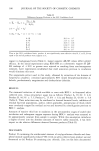
296 JOURNAL OF THE SOCIETY OF COSMETIC CHEMISTS due to SLS treatment than AEOS treatment. Relatively large increases in the sulfur content due to SLS and AEOS treatments (Tables V! and VII) indicate deposition of these surfactants at the skin surface. This skin lipid removal data is consistent with skin swelling and human irritation results obtained with these surfactants (10,19), demonstrating a greater activity for SLS than for AEOS. ACKNOWLEDGEMENTS Thanks are due to Anthony Moskwa for help in taking ESCA spectra. Thanks are also due to Kathy Fernee for supplying skin samples for this study. The author thanks Drs. F. J. Loprest, C. Robbins, and L. Rhein for useful comments and suggestions. REFERENCES (1) F. D. Malkinson, The Epidermis, W. Montagna and W. C. Lobitz, Eds. (Academic Press, New York, 1964), p 435. (2) P.M. Elias, Epidermal lipids, membranes and keratinization, Int. J. Dermatol, 20, 1-19 (1981). (3) H. J. Yardley and R. Summerly, Lipid composition and metabolism in normal and diseased epi- dermis, Pharmac. Ther., 13, 357-383 (1981). (4) R. Scheuplein and L. Ross, Effect of surfactants and solvents on the permeability of epidermis, J. Soc. Cosmet. Chem, 21, 853-873 (1970). (5) G. Swanbeck and N. Thyresson, A Study of the state of aggregation of the lipids in normal and psoriatic horny layer, Acta Dermatovener, 42, 445-457 (1962). (6) R. D. B. Fraser, T. P. MacRae, G. E. Rogers, and B. K. Filshie, Lipiris in keratinized tissues, J. Molec. Biol, 7, 90-95 (1963). (7) P.M. Elias, L. Bonar, S. Grayson, and H. P. Baden. X-Ray diffraction analysis of stratum corneum membrane couplets, J. Invest, Dermatol, 80, 213-214 (1983). (8) P.M. Elias, B. E. Brown, P. Fritsch, Jon Goerke, G. M. Gran, and R. J. White, Localization and composition of lipids in neonatal mouse stratum granulosum and stratum corneum, J. Invest Dervaztol, 73, 339-348 (1979). (9) H. D. Onken and C. A. Moyer, The water barrier in human epidermis, Arch Demi., 87, 584-590 (1963). (10) C. R. Robbins and K. M. Fernee, Some observations on the swelling of human epidermal membrane, J. Soc. Cosmet. Chem., 34, 21-34 (1983). 11) R. J. Scheuplein, Mechanism of percutaneous adsorption. I. Routes of penetration and the influence of solubility, J. Invest. Dermatol, 45, 334-346 (1965). 12) K. Siegbahn, C. Nordling, A. Fahlman, R. Nordberg, K. Hamrin, J. Hedman, G. Johansson, T. Bergmark, S. E. Karlsson, I. Lindgren, and B. Lindberg, ESCA Atomic Moleculees and Solid State Structure Studies by Means of Electron Spectroscopy (Almgvist and Wiksells, Uppsala, Sweden, 1967). 13) M. K. Bahl, ESCA studies on some niobium compounds,J. Phys. Chem. Solids, 36, 485-490 (1975). 14) G. M. Gray, R. J. White, R. H. Williams and H. J. Yardley, Lipid composition of the superficial stratum corneum cells of pig epidermis, British J. Dermatol, 106, 59-63 (1982). (15) J. E. Kirk, Hand washing, Acta Dermato-Venereo Logica, Vol. 46, Supplementurn 57, (1966), p 26. (16) Robert G. Crounse, Keratin and the barrier, Arch. Environ. Health, 11, 522-528 (1965). (17) M. A. Lampe, M. L. Williams, and P.M. Elias, Human epidermal lipids Characterization and modulations during differentiation, J. Lipid Res., 24, 131-140 (1983). (18) Rudolph D. Deanin, Polymer Stucture.' Properties and Applications (Cahners Publishing Company, Inc., Boston, 1972), p 305. (19) Genji Imokawa, Comparative study on the mechanism of irritation by sulfate and phosphate types of anionic surfactants,J. Soc. Cosmet. Chem., 31, 45-66 (1980).

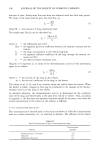
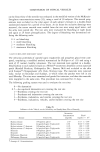
j. Soc. Cosmet. Chem., 36, 297-302 (July/August 1985) Sanguinaria extract, a new agent for the control of volatile sulfur compounds in the oral cavity R. T. BOULWARE and G. L. SOUTHARD, Vipont Laboratories, Inc., Fort Collins, CO 80524,' S. L. YANKELL, University of Pennsylvania, Philadelphia, PA 19104. Received September 4, 1984. Synopsis In addition to its documented antiplaque properties, sanguinaria extract has been demonstrated to be potentially effective in controlling the volatile sulfur compounds (VSC) responsible for bad breath. The relative effectiveness of several commercial oral rinses in controlling VSC was evaluated using incubated salivary samples and a colormetric method of sulfhydryl analysis. This screening method employed 4,4'- bis(dimethylamino)diphenylcarbinol, a thiol-sensitive reagent, and inexpensive instrumentation. Among the four rinses tested, an oral rinse containing sanguinaria extract and zinc chloride was found to be significantly more effective (99% confidence level) in reducing measurable VSC levels than rinses containing zinc ion alone, a mixture of cetylpyridinium chloride and domiphen bromide, or a rinse compounded with a high concentration of "essential oils." INTRODUCTION There has long been an awareness of the presence of volatile sulfur compounds in the oral cavity: it was observed in the late 19th century that the in vivo formation of metal sulfides could produce a phenomenon described as "black gum line" (1). Contemporary methods of quantitative analysis have established that levels of hydrogen sulfide as low as .05 I-tg/10 ml of mouth air are perceived as objectionable (2). Aside from the obvious social implications of breath realodor, the presence of reactive sulfides in the oral cavity may also have significant physiological consequences. Hy- drogen sulfide, a major component of oral realodor, is a pernicious irritant. Oral VSCs have been implicated in the solubilization of gingival collagen and have the potential to alter the permeability of the crevicular epithelium. Other evidence suggests that methylmercaptan, another component of oral realodor, inhibits protein and collagen synthesis at concentrations as low as 10.0 ng/ml. High localized concentrations of VSCs have been identified above the gingival margin (3,4). It may therefore be desirable both for health as well as social reasons to control the levels of volatile sulfur compounds in the oral cavity. Certain criteria for VSC agents have been proposed: low toxicity, the ability to react 297
Purchased for the exclusive use of nofirst nolast (unknown)
From: SCC Media Library & Resource Center (library.scconline.org)