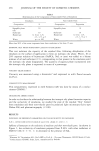
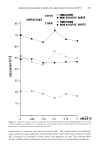
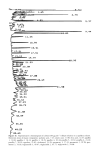
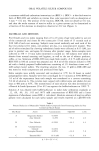
278 JOURNAL OF THE SOCIETY OF COSMETIC CHEMISTS CYCLIC RESOILING AND CLEANING In the course of this investigation an attempt was made to evaluate repeat treatment effects as would occur with cyclic soiling and cleaning of the same hair substrate by actual product. This evaluation was conducted using single-model surfactants and virgin hair tresses which were evaluated at 1, 10, and 20 soiling and washing cycles. In order to model a cyclic soiling/washing system, 20 sample tresses were prepared for each formula to be investigated. A single set of 5 soiled tresses were prepared and left unwashed to act as soiling control samples. The tresses were then washed using the sponge method, with sets of five samples withdrawn at intervals of 1, 10 and 20 cycles. The remaining samples were withheld in the event that additional cycles would be required. RESULTS AND DISCUSSION GC COLUMN COMPARISON It became evident as we progressed in the study that we needed a better separation than our packed glass column could yield. At this point suitable alternatives were examined. The most obvious solution to our program was to extend our analysis to capillary gas chromatography. There are several problems which are normally encoun- tered with this technology. Primary among these is the requirement for either splitting the sample injection or limiting the amount of sample placed at the head of the column. This is due to the limited sample capacity of the column and introduces the possibility that sample discrimination may occur in the sample injection step (13). The solution we found was to use wide-bore glass capillary columns which contained a non-polar methyl silicone bonded to the glass surface. These columns provide high sample ca- pacity, are highly inert, have extended operating temperatures compared to static coated columns, and may be easily adapted for use in any chromatograph with a commercially available adapter kit (Supelco). This allows the analyst to use a column with better than 37,000 effective theoretical plates rather than the 6000 plates normally available with a packed column. This column allows for the separation of characteristic com- pounds from each of the sebum ingredients. The resulting profiles allow for the tracking of the various sebum fractions as a function of treatment. Representative chromatograms from both types of columns appear in Figure la and lb. The peaks are labeled as to their identity so that the two columns may be easily contrasted. It is readily apparent that the resolution achieved with the packed column does not allow the clean separation of all the components of interest. In comparison, it is obvious that the capillary column provides resolution which allows for the tracking of every sebum component of interest. The relatively high capacity of the capillary column, coupled with the low baseline background, allows for improved levels of detection compared to the packed column. CONTRAST OF WASHING TREATMENTS Of the three washing techniques evaluated the finger method technique most closely mimicked the "real life" use situation. Unfortunately, it also experienced the greatest degree of variability due to the high degree of operator dependence found in the

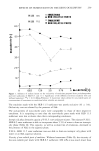
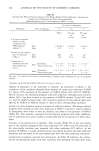
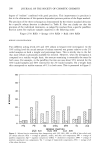
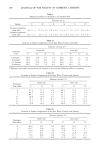
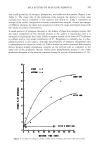
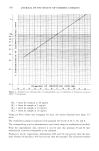
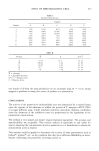
EVALUATION OF SHAMPOO DETERGENCY 279 Table II Precision of the Finger, Bulk and Sponge Washing Techniques Method Replicate Finger* Bulk* Sponge* 1 25 42 37 2 42 37 50 3 23 34 56 4 41 33 54 5 38 34 49 Average 34 36 50 % R.S.D. 27 10 15 * These figures represent the % residue of a specific paraffin fraction across five individual replicates. The numbers for the finger and bulk data were derived through the analysis of finished-product-treated samples, while the sponge data comes from samples treated with single-surfactant-model system. procedure. The bulk process method produced the most uniform results but also is the most removed from real life or actual use-type conditions and resulted in higher overall sebum levels. This is thought to be due to the fact that the samples experienced significantly less agitation in this technique compared with the other two methods. The method of choice became the sponge method procedure. It provides the highest 80 70- ß -r 60- (.,-3 .. 5o- z , • 4.0 o -- o PWl '?%',,, PW2 PW$ PW4. PW5 PW6 PW7 PARAFFIN FRACTION • 10 % SEBUM L"•T'• 2 % SEBUM Figure 2. Paraffinic compounds remaining after shampooing with 10% ALS of hair soiled with 2% or 10% sebum solutions.
Purchased for the exclusive use of nofirst nolast (unknown)
From: SCC Media Library & Resource Center (library.scconline.org)