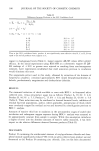
286 JOURNAL OF THE SOCIETY OF COSMETIC CHEMISTS CONCLUSIONS This paper has described an approach to evaluating shampoo efficacy on a hair substrate. The technique is reproducible and practical. It can be ultimately extended to the evaluation of prototype formulations and to the evaluation of commercial products. It can be used to provide information about product effectiveness prior to conducting extensive and expensive i, vivo use testing. The techniques described not only allow for the determination of sebum residue but can be used to profile residual sebum components as a function of treatment. The experimental data collected indi6ate that shampoo effectiveness can be moderated or determined by the surfactant. The inclusion of certain surfactants will reduce the residue of the non-polar sebum fractions which seem to be more tenaciously bound to the substrate surface. The implication of this result should not be interpreted as some surfactants being "bad" or ineffective. On the contrary, these may be the surfactants of choice when a mild detergency is required, such as the case with "dry" hair. The study also describes our findings which indicate that repeated soil/wash cycles can affect the perceived cleaning ability. Repeated soiling and washing cycles accentuate the accumulation of sebum residue remaining on the hair surface. It seems quite feasible that product effectiveness could be perceived as diminishing with use. Additional work will be required to determine how this situation may be remedied or controlled. REFERENCES (1) A.M. Schwartz and J. W. Perry, Surface Active Agents, (Wiley-Interscience, 1949). (2) E. W. Washburn, Phys. Rev. Set., 2, 17, 273 (1921). (3) J. W. McBain, Trans. Farady Soc., 9, 99 (1913). (4) S. K. Durham, Surface Activity and Detergency, (Macmillian, New York, 1961). (5) A.M. Schwartz, Recent advances in detergency theory, J. Amer. Oil Chem. Sot., 48, 566-569, (1971). (6) N. K. Adam, J. Soc. Dyes Colour, 53, 121, (1937). (7) H. L. Rosario and M. Weil, Am. DyestuffRep., 2, 53-56, (1953). (8) A.S.T.M., Annual Book of ASTM Standards, ASTM, 15, 15,04, D3050 (1983). (9) J. C. Harris, Detergency Evaluation and Testing, (Wiley-Interscience, 1954). (10) Spangler, Cross, and Schoafsma, A laboratory method for testing laundry products for detergency, J. Amer. Oil Chem. Soc., 42, 723-727 (1965). (11) M. M. Breuer, Cleaning ofhair, J. Soc. Cosmet. Chem., 32, 437-458 (1981). (12) M. Gloor, Determination and Analysis of Sebum on Skin and Hair, Cosmetic Science Volume 1, (Academic Press, London, 1978). (13) L. S. Ettre, Introduction to Open Tubular Columns (Perkin-Elmer Corporation, Norwalk, Conn. 1976). (14) J. Koch, K. Aitzetmuller, G. Bittorf, and J. Waibel, Hair lipids and their contribution to the perception of hair oiliness: Parts I & II, J. Soc. Cosmet. Chem., 33, 317-343 (1982). (15) H. J. O'Neill and L. L. Gershbein, Analysis of fatty acid and alcholic compounds of sebaceous lipid type, J. Chrom. Sci., 14, 28-36 (1976).

J. Soc. Cosmet. Chem., 36, 287-296 (July/August 1985) ESCA studies on skin lipid removal by solvents and surfactants M. K. BAHL, Colgate-Palmolive Co,, Research Center, 909 River Road, Piscataway, NJ 08854. Received February 14, 1985. Synopsis Electron spectroscopy for chemical analysis (ESCA) provides valuable in vitro information about the ele- mental and chemical composition of the skin surface to a depth of about 50 Angstroms. ESCA is especially useful for evaluating the removal of skin lipid from epidermis due to treatments with solvents and surfactants. This is done by measuring changes in the skin's atomic percentage of nitrogen which increases with lipid removal. Extraction of structural lipid from the skin surface depends on the polarity of the solvent. Ethanol extracts the most lipid, followed by acetone and then ether. Skin lipid removal due to solvents and surfactants is always greater from the inner side of the epidermis compared to the exterior side. Skin lipid removal by sodium lauryl sulfate (SLS), is greater than for sodium laureth sulfate--6.5 (AEOS EO-6.5). This lipid removal activity is consistent with the greater skin irritation and the greater swelling produced by SLS. INTRODUCTION An important function of the stratum corneum of skin is to limit the penetration of substances into the living layers (1,2). Various studies (3,4) have suggested that the barrier property of epidermis is associated with the filamentous protein and the lipids. Indeed, electron microscopic observations (5) have indicated a lipid layer surrounding the fibrous keratin in the stratum corneum. On the other hand, no evidence for such layers could be found in hard keratin such as hair and feathers (6). However, recent studies indicate that stratum corneum lipid is intercellular in location rather than associated with the intracellular filamentous protein (7,8). Requirement of the lipids for the barrier property of the epidermis was further demonstrated by Onken and Moyer (9) who restored the barrier property of the epidermis by adding the extracted lipids back to the extracted original preparation. The barrier property of the skin is generally evaluated from permeability measurements (4). The barrier property of lipid-protein complex in epidermis can be disturbed by a variety of polar organic solvents and surfactants (4, 10). Treatment of the skin with polar organic solvents, surfactants, or detergents removes lipids from the stratum cor- neum (the skin's major rate-limiting permeability barrier) and radically increases its permeability. However, an increase in permeability is not always necessarily due to the 287
Purchased for the exclusive use of nofirst nolast (unknown)
From: SCC Media Library & Resource Center (library.scconline.org)