288 JOURNAL OF THE SOCIETY OF COSMETIC CHEMISTS extraction of lipids, e.g., the permeability of skin increases due to hydradon of the skin. An increase in permeability of the skin can therefore be accounted for on the basis of various factors such as extraction of lipid, membrane expansion, and protein denaturation. We report here for the first time ESCA studies on skin samples with the objective of estimating the relative amount of lipid removal from the skin surface due to subjecting it to certain solvents and surfactants. Electron spectroscopy for chemical analysis (ESCA) (12, 13) involves irradiation of the sample with monochromatic X-rays which causes core electrons to eject from various atoms present in the sample. Only electrons originating from atoms lying within 50fk of the surface have a high probability of escaping from the sample without any energy loss. The binding energy of the core electrons EBE provides information about the chemical composition of the sample surface: EBE = Ex ray -- EKE + Constant The number of electrons with a specific EKE is directly proportional to the concentration of a particular atom within about 50• of the surface. The present investigation demonstrates that ESCA is a sensitive and useful method to study the lipid removal from the surface of the epidermis, due to treatment with solvents and surfactants. It is further shown that ESCA differentiates skin lipid removal from the two sides of the epidermis. It is suggested that skin lipid removal by these solvents and surfactants correlates with changes in skin permeability, skin swelling, and skin irritation due to these solvents and surfkctants. EXPERIMENTAL SKIN SAMPLES Frozen, abdominal cadaver skin samples from hospital autopsy procedures were ob- tained. After partial thawing, the fat layer was completely removed with dissecting scissors. The remaining dermis and epidermis were placed in a water bath, 54 -- 2øC, for 30-60 seconds. The sample was removed from the water and laid with the epidermis side facing up. Carefully the stratum corneum was scraped-rolled-separated from the dermis using a soft, fiat polyethylene spatula. This epidermal membrane sheet was then floated on warm water (20øC) and gently manipulated until it was a single fiat sheet. This sheet was lifted out on screening and air dried. Strips of epidermal mem- branes (1/2 inch X 1/2 inch) were cut from this dried epidermis for treatment and ESCA studies. ESCA MEASUREMENTS ESCA measurements were performed in a Perkin-Elmer 560 ESCA/SAM analysis system. This system is equipped with a dual anode Mg/A1 X-ray tube, differential pumped ion gun and a SIMS II system. The skin samples were clamped between indium foils and in most cases both sides of the epidermal membrane were studied for elemental analysis. Sample size was approximately 1/2 inch X 1/2 inch. All ESCA spectra were taken with a PHI Model 25-270 AR double pass cylindrical mirror analyzer operating in the large aperture mode and at a pass energy of 100 eV for survey scans. High resolution spectra were taken at pass energies of 25 and/or 50eV. The area of the skin

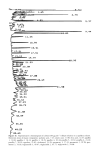
ESCA STUDIES OF SKIN LIPID REMOVAL 289 examined by ESCA was approximately 5ram x 5mm. The vacuum in the main chamber of the spectrometer during accumulation of spectra was typically of the order of 5 x 10 -8 torr. The atomic percentage of each element observed at the surface of the skin sample was calculated by measuring the peak area and using sensitivity factors for these elements. The relative amount of skin lipid removal or non-protein material was estimated by measuring the relative amount of nitrogen present at the surface. As the skin lipid is removed, there is an increase in the relative amount of nitrogen and, therefore, protein. The surface composition and lipid removal from the skin surface varies from source to source. To avoid the error caused by this variation, skin pieces from the same sample are evaluated by ESCA, then treated and remeasured to detect changes caused by solvents or surfactants. For solvent studies, only one replica was analyzed for each sample, while for surfactants, the average of two samples for each condition is reported. RESULTS AND DISCUSSION UNTREATED SKIN Since ESCA is a non-destructive technique, samples can be analyzed before and after treatment. An ESCA survey scan of every untreated skin sample was made from 0 to 1,000 eV, to determine which elements are present at the skin surface. This is shown in Figure 1. Every untreated skin surface contains carbon, oxygen, and silicon, although C AUGER L 0 A•GER 0 Is 0 I I I I I I I -I000 -900 -800 -700 -600 -$00 -400 -$00 Si :•p Si 2s - 200 - I00 0 BINDING ENERGY ,(eV) Figure 1. ESCA survey spectrum of untreated skin.
Purchased for the exclusive use of nofirst nolast (unknown)
From: SCC Media Library & Resource Center (library.scconline.org)