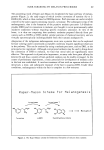
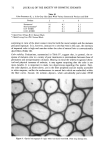
66 JOURNAL OF THE SOCIETY OF COSMETIC CHEMISTS natural melanin pigment and simultaneous color formation. Such shade manipulation is clearly not available in the temporary and semi-permanent products, the function of which is primarily the building up of color intensity. However, while the semiperma- nent colorants lack the versatility of oxidative dyes as well as their durability, they are generally recognized as being gentler to the hair since no peroxide is required in the process. In each hair coloring category a sizeable number of dyes (or precursors) is required to attain a viable palette of shades. These dyes differ not only in their chromophoric char- acteristics but also in their affinity to hair, water solubility, and overall photostability. In color impartation, a delicate balance of constituent dyes is essential to obtain uniform and desirable results. However, subsequent exposure of the dyed hair to shampooing, sunlight, perspiration, and simple wear and tear, often highlights the differences in dye properties which can result in unpredictable color changes. As the natural color of hair is not based on a mixture of dyes, hair care regimens have virtually no effect on hair color, and the latter shows only on-shade fading on prolonged exposure to light (1). It is primarily this wear characteristic of the natural hair pigment that prompted us to explore the feasibility of using melanin as a hair colorant for use under cosmetic conditions. MATERIALS AND METHODS MELANIN PRECURSORS 5,6-Dihydroxyindole, DHI, was prepared by reductive cyclization of the dinitrostyrene as described elsewhere (2,3). The purity of the compound was 99% as determined by tic analysis and Proton NMR. METAL SALTS Reagent quality metal salts were obtained from Fluka Chemical, Switzerland. Unless otherwise specified, the metal salt compositions were prepared by dissolution of the appropriate salt (0.08 M) in a commercial shampoo. If required, the pH of the shampoo was adjusted with either hydrochloric acid to pH 5 or monoethanolamine to pH 9. HAIR TRESSES These were prepared from intact and bleached human hair purchased from DeMeo Brothers, New York. Approximately two grams of hair were used for each tress. The hair was shampooed prior to use, rinsed well with water, and air dried. HAIR DYE!NG Hair coloring involving formation of melanin from DHI was carried out in two consecu- tive steps. First the hair tresses were shampooed with a metal salt-containing shampoo (lathering time was five minutes), rinsed with tap water, and then treated for a specified time with an aqueous composition containing DHI. Both the shampoo and the dyeing steps were carried out at a 1:1 liquor ratio. After coloring, the dyed tresses were thor- oughly rinsed under running tap water and air dried. Commercial hair coloring products were used according to instructions supplied in the kits.

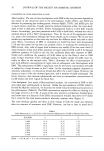
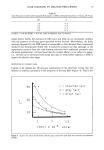
HAIR COLORING BY MELANIN PRECURSORS 67 COLOR EVALUATION OF HAIR Color values and spectral reflectance data were obtained using the LabScan LS-5100 spectrocolorimeter (Hunter Associates Laboratory, Inc., Reston, VA). Two measure- ments (one of each side) were obtained per tress and averaged. The tress configuration and the design of the hair tress holder allowed for the measurement of the same area of the tress before and after treatment. Results are expressed in terms of the Hunter L, a, and b color scale where L is a measure of lightness and varies from 100 for perfect white to 0 for black. The chromicity di- mensions a and b are color designations, with 'a' being a measure of redness when the value is positive and greenness when negative, while 'b' is a measure of yellowness when positive and blue when negative. In some tables the total color change (TCC) is used. TCC is calculated from the L, a, and b values according to the equation, Tcc = ViL,- L) 2 + (a,- a) 2 + (b,- where subscript i denotes the initial value and subscript f the final value of the color parameters. LIGHTFASTNESS This was evaluated by exposing the tresses in an Atlas Fade-O-Meter (Atlas Electric Device Co., Chicago, IL) equipped with a sunshine carbon arc lamp. The lamp is centrally located in a 19«-inch specimen rack which rotates at approximately three revolutions per minute during the exposure period. An area of 2 cm ) 3.5 cm of each tress was exposed for 10 hours at approximately 65% relative humidity in all light- fading studies. At the conclusion of exposure, the hair tresses were evaluated for color changes. WATER BLEEDING The dyed tresses were immersed in a stirred bath containing 2% of a commercial shampoo (active ingredient, sodium lauryl sarcossinate, 6%) at 50øC for 15 minutes and then thoroughly rinsed under running tap water and air dried. Color measurements were taken before and after the water bleeding test. SHAMPOO STABILITY The colored tresses were hand shampooed with undiluted commercial shampoo (active ingredient, TEA lauryl ether sulfate, 5%) for 30 seconds, rinsed, and towel dried. This cycle was repeated four more times. LabScan readings were taken before and after the shampoo treatment. ACID PERSPIRATION A synthetic perspiration composition was prepared from sodium chloride, lactic acid, histidine hydrochloride, and sodium dihydrogen phosphate, adjusted to pH 3.5 with
Purchased for the exclusive use of nofirst nolast (unknown)
From: SCC Media Library & Resource Center (library.scconline.org)