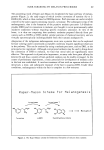
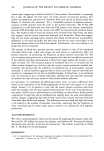
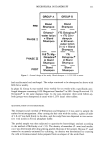
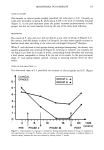
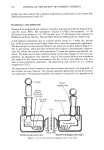
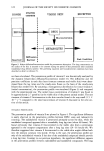
110 JOURNAL OF THE SOCIETY OF COSMETIC CHEMISTS seems very unlikely that dandruff is simply an infection by a pathogenic yeast since it is recovered from normal scalps. An alternative explanation is that increased scaling is the result of an underlying inflammatory process (7), throwing up clumps of thickened, but porous, horny layer in which P. ovale flourishes. Mediators produced by a greatly ex- panded population of P. ovale could then percolate downward, aggravating the inflam- matory process. Indeed, it is known that P. ovale can induce inflammation through activation of the complement (8), leading to the release of chemotactic factors. The latter would then attract neutrophils into the epidermis, disturbing keratinization. In this scenario, P. ovale would function in a secondary role. The response of scalp psoriasis to ketoconazole has similarily been ascribed to the pro-inflammatory activity of a large population of P. ovale (9). Neither we nor others have found a way to induce dandruff in non-dandruff subjects. We assume that the etiology is complex and is influenced by various constitutional factors, including heredity. We lack a good understanding of why a minority of persons exhibit clinical dandruff when all individuals produce some scales. The difference between dandruff and non- dandruff seems to be merely quantitative, greater and larger scales (10). We undertook this study with several questions in mind: 1) Since the dandruff scalp also richly harbors P. acnes and cocci, can these aggravate scaling? 2) In view of improved methods of assessment, how good are the correlations between (a) weight of collected scales, (b) clinical grades, (c) P. ovale counts, and (d) the index of inflammation, based on the percentage of nucleated cells in scales? (3) Finally, Octopirox © (ethanolamine salt of 1, hydroxy-4-methyl-6-(2,4,4 trimethyl pentyl)-2-(1H)-pyridinone) and Magnesium Omadine © (magnesium salt of 2-pyridinethiol-1-oxide) are fungistatic agents included in popular shampoos, at least in the European countries. Can these be discriminated in regard to efficacy with the more sensitive methodology now available (10)? MATERIALS AND METHODS GENERAL DESIGN Twelve white males, aged 24-43, with moderately severe dandruff served as paid volunteers. By clinical criteria none had seborrheic dermatitis. During a preparative period of three weeks, they shampooed their scalps thrice weekly with non-medicated 6.25% lauryl ether sulfate (LES) provided by us. Scale production was measured ac- coMing to our recently published method (10). Basically, scales were harvested by voluminous shampooing and the wash water filtered to collect all the scales. These were dried and weighed. Scales were always harvested two days after shampooing, when scale production nears a plateau. The severity of dandruff was assessed on a 0 to 10 clinical scale. Grades 2 and below designate non-dandruff. Grade 3 is marginal dandruff. Grades 4, 5, and 6 reflect respectively mild, moderate, and severe dandruff. Our sub- jects were chiefly grade 5. The plan of the study is shown in Figure 1. Two groups, A and B, comprising six subjects each were compared. In the three weeks pretreatment phase the scalps were shampooed thrice weekly with 6.25 LES. In phase I, lasting four weeks, Group A received 5 ml of an ethanol:water solution (1:1), 5 ml/scalp, thrice weekly. Group B received an ethanolic solution (1:1), 5 ml/scalp, containing 1% clin- damycin hydrochloride and 1% Octopirox ©, thrice weekly. The latter formulation was

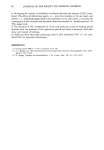
MICROFLORA IN DANDRUFF 111 GROUP A GROUP B Bland Bland Shampoo Shampoo Ethanol- 1% Octopirox e water lotion + 1% Clin- + Bland damycin Shampoo in Ethanol- water lotion (1:1) + Bland Shampoo , 0.8 •/o Ug- 1% Omadinee Octopirox e in bland in Bland Shampoo Shampoo Bland Bland Shampoo Shampoo PRE PHASE ]• PHASE Tr POST Figure 1. General design of the study. Bland shampoo = 6.25% LES •n water. both antibacterial and antifungal. The scalps continued to be shampooed as above with LES thrice weekly. In phase II, Group A was washed thrice weekly for ten weeks with a specifically anti- fungal shampoo containing 0.8% Magnesium Omadine © in LES. Group B received 1% Octopirox © in the same shampoo base. In the post-treatment three-week follow-up, both groups were shampooed as usual with 6.25% lauryl ether sulfate. QUANTIFICATION OF THE MICROFLORA The detergent-scrub method of Williamson and Kligman (11) was used to sample the surface for microorganisms. After cutting the hair trim with the surface, a glass cylinder of 3.8 cm 2 was held firmly to the skin, and the scalp flora was dispersed in two succes- sive 1-ml scrubs in Triton phosphate buffer. The pooled sample was then subjected to quantitative bacteriologic analysis according to the method of McGinley et al. (12). The density of anaerobes (P. aches) and aerobic cocci was determined after drop-plating graded dilutions of the sample. Because P. ovale cannot be accurately estimated by culturing, its density was determined by counting the cells in Giemsa-stained slides prepared from an aliquot of the scrub fluid.
Purchased for the exclusive use of nofirst nolast (unknown)
From: SCC Media Library & Resource Center (library.scconline.org)