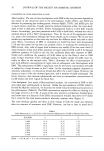
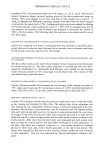
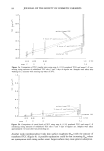
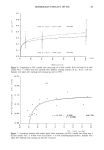
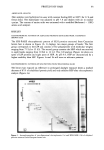
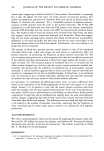
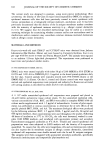
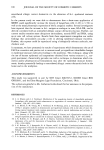
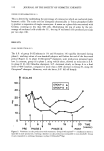
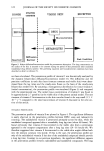
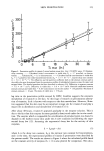
112 JOURNAL OF THE SOCIETY OF COSMETIC CHEMISTS INDEX OF INFLAMMATION (I. I.) This is derived by establishing the percentage of corneocytes which are nucleated (para- keratotic cells). The scales are first disrupted ultrasonically in Triton phosphate buffer to produce a suspension of single corneocytes. A smear on a glass slide was stained with Giemsa, counting no less than 500 cells. Multiplying the mg of scales by the per- centage of nucleated cells yields the I.I., the mg of nucleated cells produced per scalp per two days (10). RESULTS SCALE PRODUCTION (S. P.) The S.P. of group B (Clindamycin 1% and Octopirox 1%) quickly decreased during phase I, reaching values of non-dandruff subjects well before the end of the four-week period (Figure 2). In phase II (Octopirox © shampoo), scale production remained quite low. In contrast, group A in phase I, using vehicle alone, showed no reduction in S.P. In phase II (0-8% Omadine shampoo), S.P. decreased slowly in Group A to a final level of 40% baseline, compared to more than a 60% decrease in Group B, using the Octopirox © shampoo. Moreover, with the latter, S.P. fell off sharply. 50 40 SCALES GROUP A ß GROUP B ß 3O lO o 2 6 lO 15 20 TIME : (weeks) PRE PHASE T PHASE Tr POST Figure 2. Variations in scale production with treatments. Group B (Octopirox © + clindamycin) shows a rapid fall in scale production, reaching a baseline in scale production (comparable to non-dandruff). Group A only responded to antifungal shampoo in phase II (Omadine © Mg).

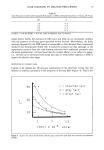
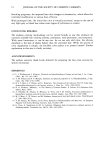
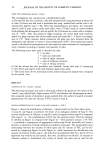
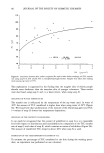
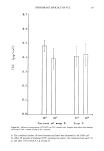
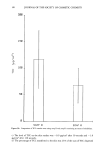
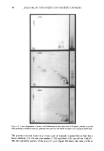
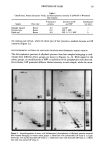
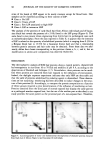
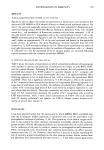
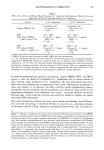
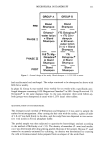
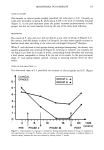
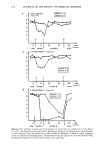
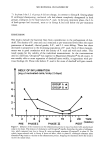
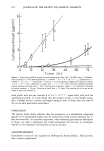
MICROFLORA IN DANDRUFF 113 CLINICAL GRADES The decrease in clinical grades roughly paralleled the reductions in S.P. Virtually no scales were detectable in group B, while group A fell to the level of threshold dandruff (Figure 3). In the post-treatment phase the grades increased proportionately in both groups, but did not reach baseline levels by the end of the three-week followup. MICROFLORA The counts ofP. acnes and cocci did not decline at any time in Group A (Figures 4,5). By contrast, both fell sharply in phase I of Group B, but then rather rapidly returned to baseline levels after switching to the selectively antifungal Octopirox © shampoo. While P. ovale declined in both groups during antifungal shampooing, the density very quickly approached zero in Group B (Figure 6). In Group A, however, the numbers did not begin to go down for a couple of weeks, diminishing slowly thereafter and reaching a level almost comparable to Group B by the end of ten weeks. In the post-treatment phase, P. ovale sprang sharply upward, nearing or attaining baseline levels by three weeks. INDEX OF INFLAMMATION (I.I.) The downward slope of I.I. paralleled the decrease in clinical grades and S.P. (Figure 6 3 CLINICAL GRADES GROUP A ß GROUP B ß ß TIME PRE PHASE I PHASE Tr POST Figure 3. Clinical grades in response to treatments. Scaling diminishes slowly in Group A compared to the rapid decline in Group B. Further, after ten weeks, the latter group showed a complete absence of clinical scaling, whereas this was not achieved by Group A after 17 weeks.
Purchased for the exclusive use of nofirst nolast (unknown)
From: SCC Media Library & Resource Center (library.scconline.org)