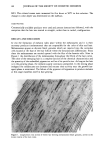
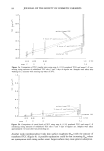
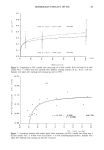
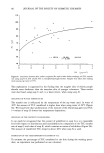
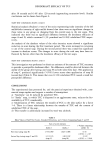
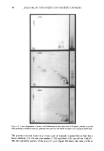
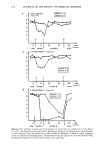
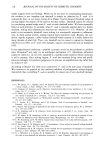
114 JOURNAL OF THE SOCIETY OF COSMETIC CHEMISTS 5 3 2 1- COCCI DENSITY IGROUPA :1 (Iog/½m 2) GROUP B I • ' ' I ' ' • I • ' ' ' I ' • ' ' I 0 •' 2 6 10 15 2 TIME (weeks) PRE PHASE T PHASE Tr POST P, ACNES DENSITY (Iog/cm 2) GROUP A ß] GROUP B ß [ I I I I I I I [ I I [ I I I [ [ [ l 2 6 10 15 20 TIME (weeks) PRE PHASE I PHASE Tr POST õ P. OVALE DENSITY (log/cm 2} 7 5 4 3 2 i [ [ I [ )" 6 TIME (weeks) PRE PHASE I PHASE ]I POST Figures 4, 5,6. Influence of treatments on the densities of, respectively, cocci (Figure 4), P. acnes (Figure 5), and P. ovale (Figure 6) on the scalp surface. The mixture Octopifox and clindamycin is clearly bacterias- tic and fungistatic, while the vehicle has no effect. Antifungal shampoos, in phase II, appear fungistatic and do not influence bacterial population. Octopifox © more quickly supresses P. ovale than Omadine © Mg. Stopping the treatment restores the initial density of the scalp flora.

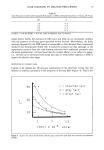
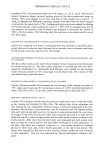
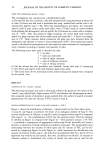
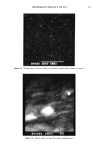
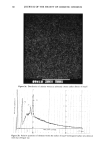
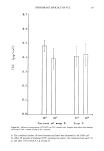
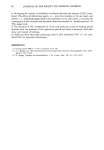
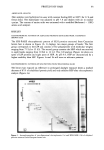
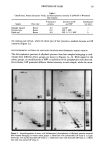
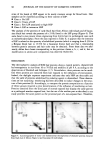
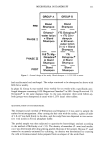
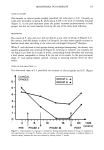
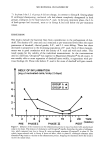
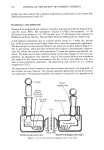
MICROFLORA IN DANDRUFF ! 15 7). In phase I the I.I. of group A did not change, in contrast to Group B. During phase II antifungal shampooing, nucleated cells had almost completely disappeared in both groups, analogous to the final values for P. ovale. In the post-treatment phase, the I.I.s of both groups had increased, more so in Group A but still below the pre-treatment values. DISCUSSION The results exclude the bacterial flora from consideration in the pathogenesis of dan- druff. The density ofP. acnes and cocci remained at pre-treatment levels when the major parameters of dandruff, clinical grades, S.P., and I.I. were falling. These last three decreased in proportion to the decreasing population of P. ovale. Each of these measure- ments was in good correlation with the density of P. ovale and with each other. This result speaks for the validity of the individual measurements. At the concentrations used in a LES base, Octopirox © was superior to Magnesium Omadine © by all counts. It was notably able to cause regression of dandruff more swiftly, in agreement with pre- vious findings (4). Those who believe P. ovale is the cause of dandruff will gain consid- INDEX OF INFLAMMATION (mg of nucleated cells/scalp/2 days) 5 [GROUP A ß 4 • ß G R 0[•.•..•. ß 3 2 1 o (weeks) PRE PHASE • PHASE Tr POST Figure 7. Influence of the treatments on the inflammatory process (in mg of nucleated cells produced per scalp in two days). The mixture of clindamycin and Octopirox © rapidly diminishes the index of inflamma- tion, which remained very low in Group B, using antifungal treatment (Octopirox ©) in phase II. The vehicle (water-ethanol) used in Group A shows no effect, while in phase II, antifungal treatment alone (Omadine © Mg) leads to a decline in the inflammatory process. Stopping the treatments shows the trend to recover the initial values.
Purchased for the exclusive use of nofirst nolast (unknown)
From: SCC Media Library & Resource Center (library.scconline.org)