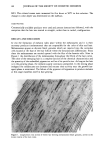
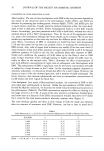
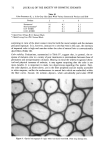
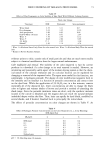
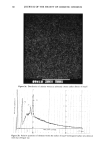
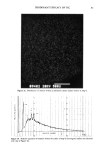
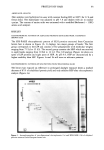
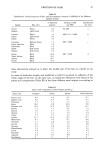
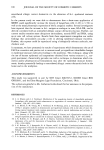
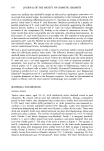
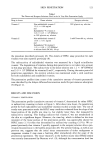
72 JOURNAL OF THE SOCIETY OF COSMETIC CHEMISTS Table III Color Parameters (L, a, b) for Grey Hair Dyed With Various Commercial Products and DHI Product L a b Permanent a 14 0.7 2.1 Semi-permanent b 26 0.2 4.2 0.07 M DHI 13 0.1 0.1 0.013 M DHI 12 0.3 --0.2 Clairol Nice N'Easy # 122 Natural Black. Clairol Loving Care #83 Natural Black. surprising in view of the short contact time for both the metal catalyst and the melanin precursor exposure. It is, however, instructive to see that even in this case, the intensity of imparted color is high and matches either the color of natural hair or conventionally dyed fibers (Table III). Color stability. Evaluations, summarized in Table IV, suggest that, in general, the re- sponse of melanin color to a variety of post treatments is intermediate between those of permanent and semipermanent colorants. Bearing in mind the widely recognized chem- ical and physical inertness of melanin, it may appear surprising that the color is not more durable. It is important to make two observations regarding this matter. First, the color deposits, as shown above, are in the fiber periphery and are readily accessible to other reagents, unlike the melanosomes in natural hair which are embedded within the fiber cortex. Second, the melanin deposits, while undoubtedly particulate (TEM Figure 4. Optical micrograph of virgin white hair dyed with DHI. Note ring dyeing only.

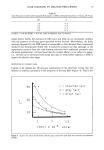
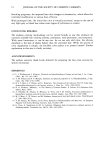
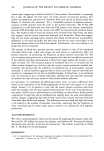
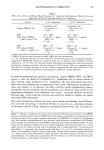
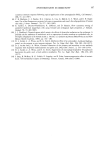
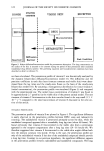
HAIR COLORING BY MELANIN PRECURSORS 73 Table IV Effects of Post-Treatments on Color Stability of Hair Dyed With Different Coloring Systems Total color change Treatment DHI Permanent Semi -permanent Water bleed 3.35 3.11 10.7 Five shampoos 2.63 3.25 13.23 Acid perspiration 5.89 0.95 10.8 Fade-O-Meter 10 hours 3.20 0.41 2.07 Wave 1 a 7.70 2.44 11.12 Wave 2 a 8.08 2.86 9.93 3% H202 17.2 2.25 3.38 Relaxer b 3.26 1.16 4.74 • Wave 1 is Kindness Extra Curly Perm for hair. b Relaxer is Revlon Realistic Relaxer. color-treated hair. Wave 2 is Kindness Body Wave for natural evidence points to this), consist only of small particles and thus are much more readily subject to chemical modification than the larger natural melanosomes. Color modulation and removal. The stability of the color imparted to hair by current products is a drawback if a color change or its total removal is needed. However, an interesting and potentially useful aspect of the melanin dyeing system is that the chem- ical nature of the colorant (melanin) and its cuticular location can be exploited for changing or removal of the imparted color. The agent most useful for this function, not surprisingly, is hydrogen peroxide. The degree of color modification (apparent both in the intensity and its tonality) is a function of peroxide concentration and contact time on the dyed hair. While the application of 3% H202 can, in a few minutes, remove essentially all of the deposited dye, lower concentrations are able to change the black color to lighter and warmer shades of brown and provide a method of extending the shade range. Since the peroxide treatment times are short, only the synthetic melanin located in the cuticle is bleached and the reagent does not reach the natural melanin imbedded deeper within the fiber. Thus, hairs can rapidly be dyed black, modified by several shades, and if desired, bleached back to principally the initial shade. The effects of peroxide concentration on color changes are shown in Table V. As Table V Effect of Hydrogen Peroxide Concentrations on the Color Parameters (L, a, b) by Bleaching DHI-Dyed Hair [H2021% L a b DHI-dyed 17.3 0.0 0.4 0.1 20.6 0.0 2.6 0.5 26.3 0.9 5.5 1.0 27.3 0.5 5.8 3.0 32.8 0.7 7.9 6.0 33.1 0.8 7.8 Undyed grey 33.0 - 0.5 9.1 pH = 10 bleaching time 10 minutes.
Purchased for the exclusive use of nofirst nolast (unknown)
From: SCC Media Library & Resource Center (library.scconline.org)