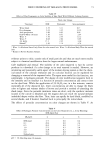
74 JOURNAL OF THE SOCIETY OF COSMETIC CHEMISTS bleaching progresses, the imparted hair color changes its chromaticity, which allows for controlled modification to various hues of brown. With prolonged time, the initial hair color is virtually recovered, except in the case of very light grey or blond hair where some degree of yellowness is evident. CONCLUDING REMARKS The melanin coloring methodology can be viewed broadly as one that embraces all currently available hair coloring systems, permanent, semi-permanent, and temporary. With some limitations, it can be any one. As we can only add color, the obvious drawback is the lack of shades lighter than the untreated hair. While the process of color impartation is simple, the available color palette is at present limited. Further exploration in this area is clearly necessary. ACKNOWLEDGMENTS The authors sincerely thank Linda Albrecht for preparing the hair cross sections for optical microscopy. REFERENCES (1) L. J. Wolfram and L. Albrecht, Chemical and photobleaching of brown and red hair, J. Soc. Cosmet. Chem., 38, 179-191 (1987). (2) T. M. Schultz and B. P. Murphy, Synthesis and physical properties of 5,6-dihydroxyindole, J. Org. Chem., 50, 2790-2791 (1985). (3) R. J. S. Beer, J. P. Brown, and A. Robertson, The chemistry of the melanins. Part IV: Some dihy- droxyindoles substituted in the benzene nucleus, J. Chem. Soc., 2426-2430 (1951). (4) R. A. Nicolaus, "Melanins," in The Chemistry of Natural Products, E. Lederer, Ed. (Hermann Pub- lishers, Paris, 1964). (5) A. Palumbo, M. d'Ischia, G. Misuraca, G. Prota, and T. M. Schultz, Structural modifications in biosynthetic melanins induced by metal-ions, Biochim. Biophys. Acta, 964, 193-199 (1988). (6) M. S. Masri, F. W. Reuter, and M. Friedman, Interaction of wool with metal cations, Textile Research J., 298-300 (1974). (7) T. M. Schultz, M. d'Ischia, and G. Prota, Reactivity of Dihydroxyindoles with Metal Ions, 1st European Pigment Cell Society Meeting, Sorrento, Italy, October 1987. (8) G. Prota, A. Napolitano and M. G. Corradini, Oligomers from the metal-ion catalyzed reaction of dihydroxyindoles, Tetrahedron Lett, 26(23), 280- 284 (1985).

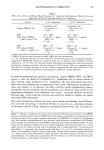
J. Soc. Cosmet. Chem., 40, 75-90 (March/April 1989) A simple method to avoid sandiness and enhance deodorant efficacy of soaps containinD TCC G. SAUERMANN, U. HOPPE, M.-C. LENEVEU, M. R•CKL, O. STELLING, Beiersdorf AG, Unnastrasse 48, D-2000, Hamburg 20, Federal Republic of Germany. Received October 12, 1988. Synopsis The "sandiness" of soap can be caused by TCC. This is shown in that the TCC-content of "sand" grains is very high compared to its microenvironment within the soap and by EDXA-analysis of C1. The bioavail- ability of TCC of "sandy" soap (sandiness is caused by agglomerated TCC) is considerably lower than that of regular smooth soap. This was shown by analytical determination by HPLC of the TCC-level at the skin surface. Solubilization of TCC by means of nonylphenolether enhances the transfer of TCC. The amounts of TCC deposited on the skin surface while using soaps containing 1.3% powdered or 0.26% solubilized TCC are comparable. The amount of TCC transferred to the skin surface is approximately linearly proportional to the content of soap of TCC. Addition of wool wax alcohols as refattening agents increases the bioavailability of TCC. An excess of solubilizer decreases the transfer rate of TCC. Sniff tests prove the equivalence of deodorant soaps containing either 0.26% solubilized or 1.3% powdered TCC. INTRODUCTION This publication presents a simple method to avoid sandiness and to increase the biolog- ical availability of TCC, i.e., the amount of germicide that can be transferred from the soap-water mixture to the skin surface during normal use. The basic method used to avoid a gritty surface structure is to solubilize TCC and to add the mixture to the soap base in amounts necessary for effective deodorant action. MATERIALS AND METHODS PREPARATION OF THE SOAP CAKE 0.5 kg of TCC was solubilized in 3.0 kg of nonylphenolpolyglycol ether (Marlophen 814, Chemische Werke, HiSis, FRG) having an average degree of ethoxylation of 14 (1). This mixture was added in portions to 100 kg of soap base in noodle form, together with perfume and 1.65 kg of color paste which may contain 0.6 kg of wool wax alcohols as well as other ingredients. After thorough mixing, the homogenized mixture was processed in the usual manner and finally pressed. COMPOSITION OF THE SOAP CAKES TO BE TESTED Soap cakes prepared in the manner described above (with different contents of TCC and wool wax alcohols) were examined: 75
Purchased for the exclusive use of nofirst nolast (unknown)
From: SCC Media Library & Resource Center (library.scconline.org)