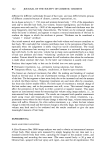
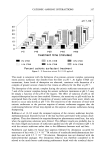
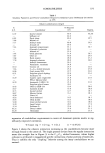
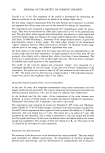
J. Soc. Cosmet. Chem., 42, 361-368 (November/December 1991) In vitro effectiveness of several whitening cosmetic components in human melanocytes KAZUHISA MAEDA and MINORU FUKUDA, Shiseido Research Center, Yokohama, Japan. Received March 20, 1991. Synopsis The inhibitory action of arbutin, kojic acid, and ascorbic acid on tyrosinase activity in human melanocytes was compared. These substances are active whitening cosmetic components. Hydroquinone was used as a positive control. The depigmenting effect of linoleic acid, which has been reported to inhibit melanin synthesis, was compared with those of arbutin, kojic acid, and ascorbic acid. Human melanocytes were cultured with each agent in multiwell plates for three days, and the tyrosinase activity was assayed using L-DOPA as a substrate. In addition, cell viability of three-day cultures was evaluated by the MTT test. Arbutin dose-dependently reduced tyrosinase activity at final concentrations between 0.0! mM and 1.0 mM, at which no change in cell viability was seen. This action was about 1/100 that of hydroquinone, and was stronger than that of kojic acid and ascorbic acid. Linoleic acid did not reduce tyrosinase activity at non-cytotoxic ranges. Furthermore, at concentrations of 0.5 mM, the amount of melanin was reduced significantly by arbutin. These results suggest that arbutin inhibits melanin production in humans by reducing tyrosinase activity and that the depigmenting action of this agent is stronger than that of kojic acid or ascorbic acid. INTRODUCTION In Japan various whitening beauty cosmetics that contain arbutin (hydroquinone-[3-D- glucopyranoside Figure la), kojic acid (5-hydroxy-2-(hydroxymethyl)-4-pyrone Figure lb), or ascorbic acid as their principal components are commercially available for clinical use. These cosmetics are considered to be effective for preventing freckles due to ultra- violet exposure. Arbutin, the active component of the crude drug uvae ursi folium described in the Japanese Pharmacopoeia, is a hydroquinone glycoside. Kojic acid is a substance ex- tracted from the fermentation fluid of koji mold. Mishima et al. suggested that this agent inhibits tyrosinase activity by chelating the copper in tyrosinase [EC. 1.14.18.1] (1), the key enzyme for melanin formation. Shono et al. reported that the long-chain fatty acid, linoleic acid, also inhibits melanin production (2). Pigmentation, such as freckles, in the skin is caused by enhanced melanin production 361

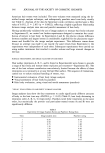
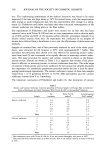
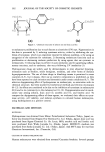
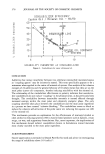
362 JOURNAL OF THE SOCIETY OF COSMETIC CHEMISTS HOCH 0 ¸ OH H H I HO H OH 0 CHOH (a) (b) Figure 1. Chemical structures of arbutin (a) and kojic acid (b). or melanocyte proliferation due to such factors as ultraviolet (UV) rays. Pigmentation in the skin is prevented by 1) reducing tyrosinase activity, either by inhibiting the syn- thesis of tyrosinase, which is an important enzyme for melanin synthesis, or by using an antagonist of the substrate for tyrosinase 2) decreasing melanocyte functions such as proliferation or decreasing melanin production by using agents that are cytotoxic to melanocytes 3) reducing dopa to prevent its auto-oxidation and 4) suppressing inflam- matory reactions, such as erythema, that occur following UV irradiation (3). Hydroquinone drugs are widely used by dermatologists to treat abnormal hyperpig- mentation such as freckles, senile lentigines, melasma, and other forms of melanin hyperpigmentation. The use of these drugs in bleaching creams is permitted in some countries (4,5), but in Japan, their use as cosmetic components is prohibited, as they have been reported to cause irritation and dermatitis under certain conditions (6,7). The selective depigmenting effect of hydroquinone on melanocytes, in association with its chemical structure, has been studied by biochemical methods and electron microscopy (8-12). Its effects are considered to be due to the inhibition of tyrosinase in melanocytes (8,9) and to its cytotoxicity to the melanocytes (10-12). Depigmentation and its mech- anism vary among arbutin, kojic acid (1), ascorbic acid (1), and finoleic acid. To compare the depigmenting effects of these agents, we evaluated their effects on tyros- inase activity, cell viability, and melanin synthesis in cultured human melanocytes, using hydroquinone as a positive control. MATERIALS AND METHODS MATERIALS Hydroquinone was obtained from Mitsui Petrochemical Industries (Tokyo, Japan) ar- butin was obtained from Nippon Fine Chemical Co. Ltd. (Osaka, Japan) kojic acid was purchased from Sigma Chemical Co. (St. Louis, MO) ascorbic acid and linoleic acid were purchased from Wako Junyaku Co. (Osaka, Japan). MCDB153 medium was purchased from Sanko Junyaku Co. Ltd. (Tokyo, Japan). And MTT assay kit was from Chemicon International, Inc. (Temecula, CA). CULTURE OF HUMAN MELANOCYTES Human melanocytes were obtained from neonatal Caucasian foreskins. Seventh passage
Purchased for the exclusive use of nofirst nolast (unknown)
From: SCC Media Library & Resource Center (library.scconline.org)