j. Soc. Cosmet. Chem., 42, 379-383 (November/December 1991) Functional changes of the stratum comeurn associated with aging and photoaging SHINOBU SAIJO, KUMIKO HASHIMOTO-KUMASAKA, MOTOJI TAKAHASHI, and HACHIRO TAGAMI, Department of Dermatology, Tohoku University School of Medicine, Sendal (S.S., K. H-K. H.T. ), and Shiseido Basic Research Laboratories, Yokohama (M. T. ), Japan. Received February 1, 199 I. Synopsis To evaluate the effect of photoaging on the function of the stratum corneum (SC), we measured conductance (Gx) to high frequency current of 3.5 MHz, which is a parameter for the hydration state of the skin surface transepidermal water loss (TEWL), which is a parameter for the water barrier function of the SC and the size of corneocytes, a parameter for epidermal proliferation, on the dorsa of the hand (DH) and foot (DF) in individuals of various ages. Gx and TEWL tended to decrease with age, and this tendency was more clear on the relatively protected skin of the DF than on the exposed skin of the DH. The corneocytes of elderly persons were larger than those of children and, in both groups, those of the DF were larger than those of the DH. The age-associated alterations in the SC function seem to occur relatively uninfluenced by chronic sun exposure. INTRODUCTION Recently it has been clarified that, in addition to intrinsic aging, actinic damage contributes to the aging process on chronically sun-damaged areas such as the face and the dorsum of the hand (1). To study the effect of chronic actinic damage on skin function, we need to compare the skin sites with similar regional properties such as the dorsa of the hand (DH) and foot (DF). Although the DH and DF share a similar embryogenetic background, the DH is an exposed area in contrast to the DF, which is relatively protected from sun exposure by socks and shoes. In this paper, we investigate the stratum corneum (SC) function on the DH and DF. The hydration state of the SC, which can be assessed by electrical conductance (Gx) to high frequency, is an important factor in influencing skin plasticization (2). Evaporation of water from the skin, which checks a vital channel for the maintenance of heat balance in the human body, is indicative of the barrier function of the SC in transepidermal water loss (TEWL) when measured in a cool non-sweating environment (3). As a consequence, we measure both Gx and TEWL to estimate the SC function. Contrary to 379

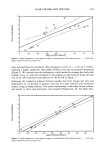
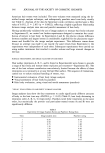
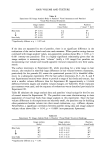
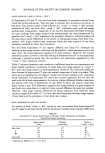
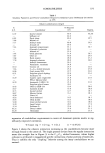
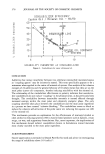
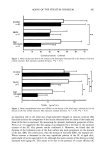
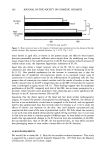
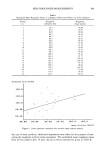
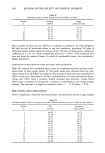
380 JOURNAL OF THE SOCIETY OF COSMETIC CHEMISTS our expectation, the DF, which has less sun exposure, has demonstrated more remark- able age-associated changes of the SC function. MATERIALS AND METHODS We measured the functions of the stratum corneum (SC) and the size of the corneocytes on the dorsa of the hand (DH) and foot (DF) in individuals of various ages. MEASUREMENT OF THE SC FUNCTION Forty-six healthy volunteers were investigated at ambient temperatures of 18-20øC and 25-35% relative humidity in order to eliminate sweating. The subjects consisted of 16 children (mean age 3 years, range 1-5), 17 adults (mean age 27 years, range 21-34), and 13 elderly persons (mean age 70 years, range 63-78). We measured electrical conduc- tance (Gx) using a Skicon-200 © high-frequency (3.5 MHz) hygrometer (lBS, Hama- matsu, Japan) (2). We measured transepidermal water loss (TEWL) using an Evapo- rimeter © (Servo Med EP-1, Stockholm, Sweden) (3). These were carried out in the winter in Sendai, Japan. MEASUREMENT OF CORNEOCYTE SIZE Twenty healthy volunteers [ten children (mean age 2 years, range 1-3) and ten elderly persons (mean age 76 years, range 65-88)] participated in the study. We obtained surface samples of SC by a single Post-it Tape © (3M) stripping to analyze the size of corneocytes with a computer (4). STATISTICS The statistical significance of the results was evaluated using Student's t-test. RESULTS Both conductance (Gx) and transepidermal water loss (TEWL) of the dorsum of the foot (DF) tended to decline with age (Figures I and 2). Regarding the dorsum of the hand (DH), though TEWL in aged individuals was lower than that in children (p 0.05) and that in adults (p 0.01), there was no significant declining tendency with age in Gx. In aged individuals, therefore, both Gx and TEWL of the DF were significantly lower (p 0.01) than those of the DH. The corneocytes of the DF were larger than those of the DH in children and aged individuals, and at both sites the corneocytes in aged individuals were larger than those in children (Figure 3). DISCUSSION The key finding in the present study has ruled out the possibility that photoaging plays
Purchased for the exclusive use of nofirst nolast (unknown)
From: SCC Media Library & Resource Center (library.scconline.org)