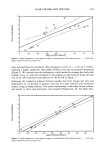
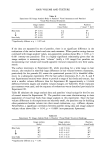
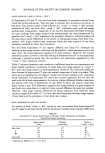
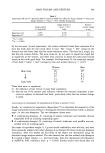
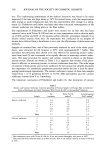
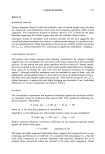
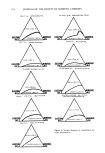
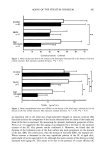
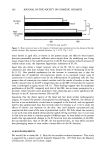
AGING OF THE STRATUM CORNEUM 381 Children n=16 Adults n=17 Aged individuals n=13 0 10 20 30 40 50 60 70 Conductance (/•m ho) Figure l. Mean conductance (Ox) on the dorsum of the hand (open columns) and on the dorsum of the foot (closed columns). Bars represent standard deviation. **p 0.01. Children n=16 Adults n=17 Aged indivi•als n=13 0 5 10 TEWL (g/m2/h) Figure 2, Mean transepidermal water loss (TEWL) on the dorsum of the hand (open columns) and on the dorsum of the foot (closed columns). Bars represent standard deviation. *p 0.05 **p ( 0.01. an important role in the induction of age-associated changes in stratum corneum (SC) functions as far as the comparison of the results obtained from the dorsa of the hands and those of the feet is concerned. By measuring the dynamic mechanical properties of skin, Potts et al. (5) suggested that skin aging is accompanied by a decrease in the moisture content of the SC. Our present results confirmed it. Moreover, we found that the decrease of the hydration state of the skin surface was more prominent on the dorsum of the foot (DF), the covered area, than the dorsum of the hand (DH), the exposed site. Water content is decreased in the very superficial portion of the SC of aged skin, particularly ofxerotic aged skin (6-8), although the water content of the dermis is rather increased with aging (6). This seems to be due to the presence of a more efficient SC

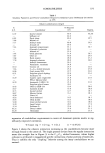
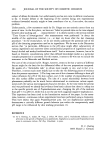
382 JOURNAL OF THE SOCIETY OF COSMETIC CHEMISTS Children n=10 Aged individuals n=10 500 1000 Corneocyte area (pm:) Figure 3. Mean corneocyte area on the dorsumofthe hand (open columns)and on the dorsumofthefoot (closed columns). Bars represent standard deviation. *p0.05 **p0.01. water barrier in aged skin, as shown in the present study the effective water barrier function presumably prevents sufficient water supply from the underlying wet living tissue of aged skin to the superficial portion of the SC that contains reduced amounts of soluble amino acids, the important hygroscopic substances of SC (9). Aged skin also shows a longer turnover time of the SC (10,11) and a larger mean corneocyte area than does younger skin (4,8), despite the lack of thickening of the SC (8,11,12). One possible explanation for the increase in corneocyte size is that the decreased rate of epidermal cell production results in an increased transit time of corneocytes (11) and a greater time for the differentiation of epidermal cells (8). Our present data of corneocyte size indeed correlate with the results of studies to date that the SC turnover time on the DF is longer than that on the DH (13) and that the turnover time is prolonged as aging occurs (10, 11). These findings suggest that the epidermal proliferation of the DF, compared with that of the DH, has an innate propensity for a decrease, which becomes more prominent with advancing age to show significant dif- ferences in the SC function between DH and DF. Assuming that the dorsal aspects of the hand and foot share similar embryogenetic origins, we started the present investigations for photoaging. However, the dorsum of the foot is not an absolutely covered area as compared to the buttock, and our approach itself is less sophisticated than that recently taken by Leveque et al. (14) to study the effects of chronic sun exposure on the skin they used adjacent sun-protected and unprotected skin zones of the arms of professional cyclists. We fully admit the necessity to use such close areas sharply demarcated by tightly fitting outerwear, but it is not easy to find such test areas in common people of different ages. At least based on the present results that age-associated changes in the SC function were less remarkable on the DH, the sun-exposed skin, than on the DF, the sun-protected skin, we may safely conclude that photoaging seems to exert rather a minor effect on the SC function. ACKNOWLEDGMENTS We would like to thank Ms. C. Shoji for her excellent technical assistance. This study is supported by a grant-in-aid for Scientific Research No. 12557044 from the Ministry of Education, Science and Culture, Japan.
Purchased for the exclusive use of nofirst nolast (unknown)
From: SCC Media Library & Resource Center (library.scconline.org)