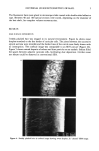
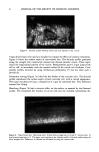
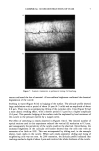
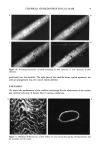
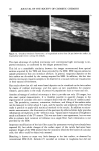
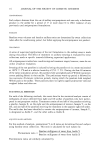
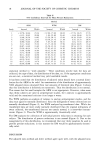
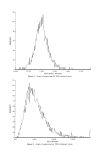
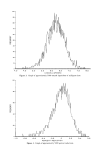
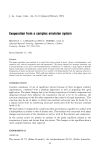
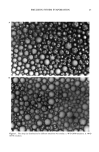
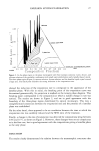
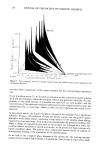
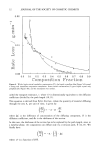
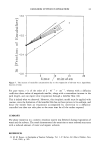
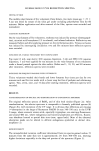
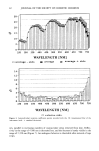
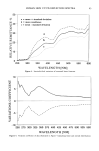
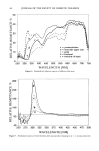
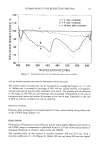
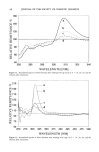
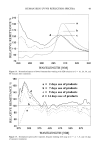
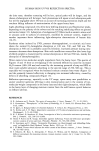
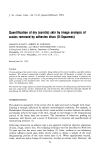
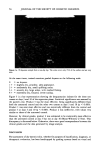
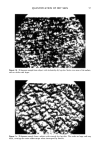
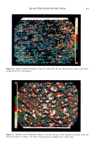
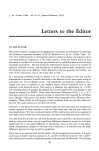
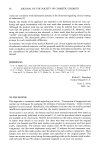
HUMAN SKIN UV/VIS REFLECTION SPECTRA 49 210-- 190- -- a •170 b 150 - c 130 110 70 250 265 280 295 310 325 340 WAVELENGTH [NM] Figure 14. Normalized spectra of lower forearms after washing with SDS solution (a-d -- 10, 20, 40, and 80 minutes after treatment). 180 160 140 120 100 ,,• a = 2 days use of products •l" ".• b = 7 days use of products ,v, .. ,,Md• c = 9 days use of products ,' .: ".. ",,Q•,_ d = 14 days use of products r,/ • ". • ''', .'7-..'-' .-'."•" . ,". ' ', •-.".'. • :, ,:':.-,:" _."L'•".".', ,..-z.,. // -- x .) (.•.•.' • '.' ...• '• x,-','. ,,I.' '. % . .ø / % / \.' ' /' • ". / \," / 60- 40 275 325 375 425 475 525 575 WAVELENGTH [NM] Figure 15. Normalized spectra after repeated, frequent washing with soap (a• = 2, 7, 9, and 14 days of excessive treatment).

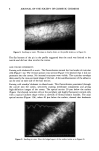
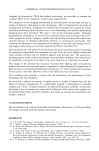
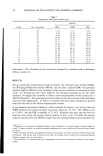
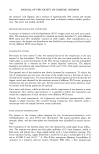
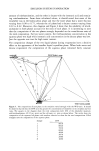
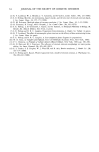
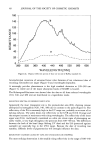
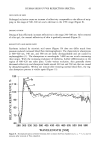
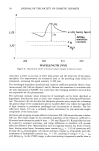
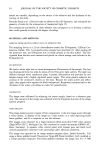
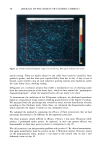
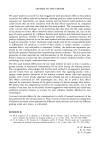
50 JOURNAL OF THE SOCIETY OF COSMETIC CHEMISTS 1.55 1.33 n (dry horny layer) I fallin moisture content n 260 300 310 350 WAVELENGTH [NM] Figure 16. Hypothetical scheme of moisture-induced changes of refraction indices. noise-ratio is lower on account of lower lamp power and the sensitivity of the photo- multiplier. For improvement the attenuator used in the preceding study should be eliminated, increasing the signal intensity (300 nm). The wavelength-dependent intraindividual variation coefficient generally shows a max- imum around 330-340 nm (Figures 5 and 6). Because this maximum is coincident with the main absorption of NADH, this could mean that changing metabolic states of skin are responsible for this phenomenon. The individual intensity values irrespective of wavelength can be better described as logarithmic distributions than as linear ones evaluated by the Kolmogoroff-Smirnow test. This seems to fit into the idea that absorption processes play a major role in forming the general shape of the standardized spectra: Lambert-Beer's law relates the logarithm of light intensity to penetration pathlength and concentration of absorber. The low reflectivity below 310 nm is probably mainly determined by low-molecular-weight components of the horny layer. Occlusion and stripping increase reflectivity between 300-340 nm and decrease it below 300 nm. The reason might be the anomalous dispersion of the refraction coefficient n (8) around main absorption peaks (•. max. "• 295 nm) (Figure 16). Rising reflection may be caused by increased scattering, and rising differences at interfaces will increase reflection (Fresnel's law). Moisturization such as stripping removes dry levels of horny layer, leaving moist layers. Increasing water content (ni% o = 1.33) of corneocytes will decrease the ni• of hydrophylic cell content and leave constant n L of lipophilic parts like membranes or hydrophobic proteins (nsc= 1.55), resulting in rising n = n•. - n• with falling n•. In the UVB/C-range, n after moisturizing is apparently smaller than in
Purchased for the exclusive use of nofirst nolast (unknown)
From: SCC Media Library & Resource Center (library.scconline.org)