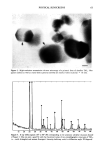
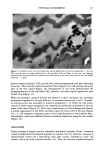
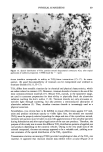
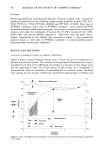
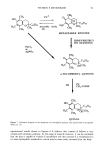
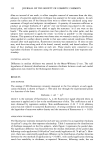
PHYSICAL SUNSCREENS 69 Figure 13. Spatial distribution of TiO 2 particles around desquamated corneocytes (Co), after topical application of sunblock preparation 3 (TEM) (scale bar = 1 }xm). tissue interface corresponds in reality to TiO2/tissue interactions (15-17). In conse- quence, the good biocompatibility of titanium can be extrapolated and widened to titanium dioxide (10,11, 15-17). TiO 2 differs from metallic titanium by its chemical and physical characteristics, which are rather related to ceramics (15). Moreover, titanium dioxide is known to be one of the most corrosion-resistant materials (17). Minute TiO2 crystals, in the nanometer range, are used in sunscreen preparations for their ability to physically block the ultraviolet radiation reaching the skin's surface (7, 18). Titanium dioxide not only attenuates ul- traviolet light through scattering, but also presents a semiconductor absorption of ultraviolet radiation (5). Thus, ultrafine titanium dioxide is increasingly used as a physical sunscreen. Nevertheless, two criteria have to be fulfilled to ensure effectiveness against UV radi- ation and produce minimum opacity to visible light: first, the mineral raw material (TiO2) must be properly selected regarding the shape and size of the crystallites second, extensive precautions must be taken to avoid the agglomeration of the ultrafine particles during formulation and after topical application of the sun care products. Therefore, the purpose of this study was to assess the different TiO2 distribution patterns of applied sun care products depending on the cosmetic vehicles. Owing to the very small sizes of the mineral compound, electron microscopy appeared to be a valuable tool, yielding accu- rate estimates of the spatial distribution of the TiO• crystallites. Transmission electron microscopy (TEM) provided morphological data of the TiO2 raw material. It appeared that titanium dioxide may exhibit either acicular (Figure 2) or

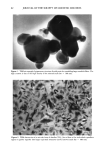
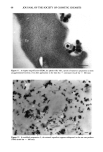
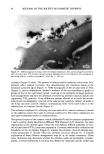
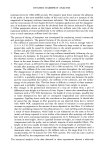
70 JOURNAL OF THE SOCIETY OF COSMETIC CHEMISTS Figure 14. TEM micrograph showing a rather thin deposit of prismatic TiC) 2 crystals along the outer horny layer of human skin. The scratches (arrows) running perpendicular to the corneocytes (Co) correspond to sectioning artefacts. Sunblock preparation 3 (scale bar = 100 nm). prismatic (Figure 3) habits. The patterns of minute parallel striations within some TiO 2 particles reflect ordered structures, thus demonstrating the crystalline nature of the employed sunscreen agent (Figure 3). TEM micrographs of the acicular form of TiO 2 (Figure 2), prior to formulation, showed a tendency of the tiny crystallites to gather in groups of four or five individual crystals, resulting in the formation of larger particles. Such arrangements may have the drawback of converting ultrafine titanium dioxide into pigmentary TiO 2 particles. X-ray diffraction analysis allowed us to verify the stoichi- ometry and crystallographic structure of the selected raw materials. Indeed, all peaks in the X-ray spectrum could be indexed, corresponding either to the rutile form or to the anatase form of titanium dioxide (Figure 4). The technique employed for collecting the outer layer of the stratum corneum is similar to the adhesive-coated discs used in previous studies (19). The plastic substratum we used gave satisfactory results in ultramicrotomy. The spherical aspect of the cosmetic vehicle (H•liosides ©) used in sunscreen preparations 1 and 2 could be clearly identified in SEM and TEM (Figures 5,6,8). However, the inner organization of the mineral agent within the microspheres differed markedly. In fact, the acicular form of TiO 2 (sunscreen preparation 1) seemed preferentially confined at the boundaries of the oil droplets (Figure 6), whereas the prismatic titanium dioxide (sun- screen preparation 2) literally filled the spherical structures (Figure 8). A possible explanation of these different arrangements may lie in the surface treatments. These latter treatments may determine whether the ultrafine oxides are hydrophilic or hydro- phobic. It seems noteworthy to mention that despite the important specific surface area
Purchased for the exclusive use of nofirst nolast (unknown)
From: SCC Media Library & Resource Center (library.scconline.org)