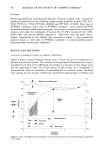
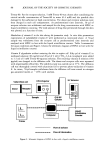
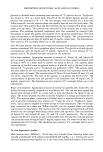
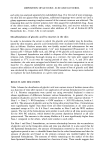
DYNAMIC HAIRSPRAY ANALYSIS 75 (15). Most hairspray solutions become tacky after partial evaporation of the solvent. For water-based systems, the duration of tackiness is considerably longer than for high VOC compositions due to their relatively slow drying rates. Thus, parameters such as tack duration or the magnitude of the adhesive force are important, consumer- perceptible attributes of a hairspray product. Formulation viscosity and spray particle size distribution are among the factors affecting the rate of hairspray drying on hair and thus determine the tactile perception of a product (13, 14). Although several studies of the mechanism of action of hairsprays were published, there is a virtual dearth of quantitative, instrumental information on the parameters charac- terizing these formulations. There is also little knowledge regarding structure-property relationships of polymers, which are the main components of these systems. Therefore, we have explored new methods of instrumental analysis of the process of hairspray setting of hair. In this report, we introduce a new technique, termed dynamic hairspray analysis, which can simultaneously measure the stiffness, geometrical dimensions, and tackiness of hair shaped into an omega loop, before and after treatment with hairspray compositions. The methodology is based on a commercial instrument, a texture ana- lyzer, which can measure the force in both compression and tensile modes while keeping track of the probe displacement in relation to the sample. EXPERIMENTAL INSTRUMENT The dynamic hairspray analysis utilized a texture analyzer, model TA-XT2, from Tex- ture Technologies Corp., with a load sensitivity of 0.1 g. XTRA Dimension software, version 3.7, from Stable Micro Systems, was used to collect and display the data. The whole system, including the texture analyzer, sample holder, and spraying devices, was housed in a plexiglass box equipped with a humidity controller. A drawing of the experimental setup is shown in Figure 1. Two aerosol cans, each containing 100 grams of the same formulation, were positioned 9 inches away from the hair tress at an angle of 60 ø from the horizontal plane by the use of three-prong clamps. Each aerosol can was equipped with a Seaquist ST-71 valve with a 0.013-inch stem orifice, a 0.023-inch SS spring, and a 0.013-inch vapor tap. ST-150 Misty activators with a 0.023-inch orifice were used. HAIR SAMPLES AND PROCEDURES All hair samples were commercially blended virgin brown hair purchased from DeMeo Brothers, New York. The hair was precleaned with 3% ammonium lauryl sulfate and thoroughly rinsed prior to use in experiments. To prepare a hair tress, both sides of approximately 0.3 g of 3.5-inch-long virgin brown Caucasian hair were glued onto square plexiglass plates using Duco cement, leaving 1.5 inches of fibers between the tabs as shown in Figure 2. The hair was wetted, dried with paper towels, shaped into an omega (fl) loop using a wooden rod, and dried at 50% RH for at least 12 hours to form a set maintaining geometrical dimensions at low humidity for a period of time necessary to carry out fixative treatments.

76 JOURNAL OF THE SOCIETY OF COSMETIC CHEMISTS Humidity Control Unit • • Cables to Computer Figure 1. Scheme of the experimental setup performing dynamic hairspray analysis. Dehumidification System For the measurements, the tress was weighed and then positioned under the texture analyzer's probe. It was fastened to a base plate, with the two plastic tabs set 1.2 cm apart, as shown in Figure 2. Each test was performed by oscillating a clear plastic probe (2.5 cm in diameter) between the fiber surface and the calibration height of 10 cm. After touching the surface of hair and sensing a 2.0 G force, the probe produces an additional 1-mm deformation of the loop before rising to the calibration height. Initially, the texture analyzer measures the stiffness of untreated hair. After a baseline value is established, the tress is sprayed for two seconds on each side with an aerosol hairspray formulation. The measurements are continued for 80 minutes, and then the tress is reweighed to determine the amount of deposited resin. The raw data from the experiment include the values of force and distance as a function of time collected at a frequency of 6.25 points/sec. The instrument software allows the presentation of data either as force (distance) as a function of time or force as a function of distance. For a hairspray drying experiment described above, the plot of force as a function of time is a series of peaks, with each peak corresponding to one deformation cycle of a hair loop. In order to facilitate the analysis and comparisons of experimental curves for different polymers, the maximum positive and negative values of force (peak force), together with the corresponding displacement values, were extracted from the whole dataset by using a Lotus macro. The peak forces were found to be proportional to the stiffness modulae of the fiber assembly, as indicated by the linear dependence of force as a function of distance. We have also used an alternative hair treatment procedure that consisted of an appli- cation of a hairspray solution to the fiber surface by using an Eppendorf pipette. The
Purchased for the exclusive use of nofirst nolast (unknown)
From: SCC Media Library & Resource Center (library.scconline.org)