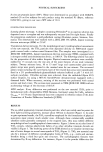
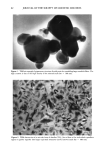
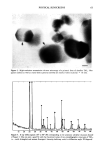
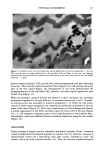
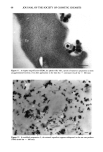
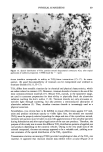
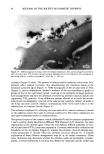
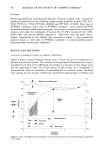
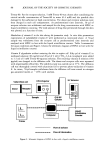
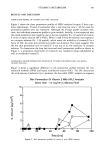
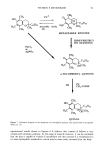
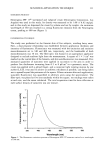
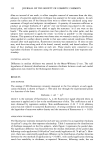
PHYSICAL SUNSCREENS 61 In vivo sun protection factors (SPF). These were determined in accordance with COLIPA method (9) on five subjects for each product using the standard P3 (Bayer, reference C202/101), giving in our case a SPF value of 18.4. INVESTIGATION PROCEDURES Scanning electron microscopy. A droplet containing H61iosides © in an aqueous solution was deposited onto a coverglass and was subsequently vacuum dried for eight hours. Finally the preparation underwent a gold-palladium coating (Hummer-junior, Siemens, Ger- many). The observations were realized with a JEOL JSM 35C (JEOL, Japan) scanning electron microscope (SEM) at 25 kV. Transmission electron microscopy. For the morphological and crystallographical assessments of the raw material, the TiO2 particles were deposited directly on 1000-mesh copper grids covered with a carbon-coated formvar film. The samples were investigated in a JEOL EM 100B (JEOL, Japan) transmission electron microscope (TEM), equipped with a nitrogen-cooled anticontamination device, at 100 kV. The following scheme was used for the preparation of skin surface biopsies: Physical sunscreen products were carefully rubbed for 15 seconds into the test area of the inner forearm of one male volunteer subject. Twenty minutes later, 10 to 15 mm 2 large and cyanoacrylate glue-coated plastic strips were gently pressed to the creamed areas for one minute. The recovered plastic strips including the outer horny layer of the treated skin areas were immediately fixed in a 2% paraformaldehyde-glutaraldehyde solution buffered at pH 7.4 with 0.1 sodium cacodylate. Ultrathin sections were achieved, from the embedded (Epon 812) surface biopsies, by using a MT-2C Sorvall-Porter ultramicrotome equipped with a diamond knife. When necessary, staining of the sections was performed with uranyl acetate and lead citrate. The sections were examined in TEM (JEOL EM 100B) with an accelerating voltage of the electrons of 60 kV. XRD analysis. X-ray diffraction was performed on the raw material (TiO2 prior to formulation) with a Kristalloflex D500 (Siemens, Germany) using the CuK• radiation (kCuK• = 0. 154 nm). Experimental data were compared to reference values of the Joint Committee of Powder Diffraction Standards (JCPDS). RESULTS The so-called pigmentary titanium dioxide particles, which are widely used in paints for their light-scattering properties, measure about 300 nm in diameter (Figure 1). In order to gain optimum benefit, the TiO• crystallites employed for the formulation of physical sunscreens must present much smaller sizes. Although these commercially available ultrafine oxides generally correspond to the required sizes, they may exhibit different morphological and crystallographical characteristics. Figure 2 shows an acicular form of TiO2 crystals, whereas platelet-like habits of an other ultrafine titanium dioxide are visible in Figure 3. The resolving power of the TEM allowed us to visualize intersecting sets of lattice fringes in several nanocrystals of TiO• (Figure 3). TiO2 raw material may also be a mixture of different crystallographic forms of TiO2, e.g., rutile and anatase, brookire being a third but quite rare structure. The crystallographic features were determined by X-ray diffraction. For instance, Figure 4 is the powder diffraction dia-

62 JOURNAL OF THE SOCIETY OF COSMETIC CHEMISTS Figure 1. TEM micrograph ofpigmentary titanium dioxide particles resembling large roundish flakes. The high contrast is due to the high density of the mineral (scale bar = 100 nm). Figure 2. TEM observagion of an acicular form of ultrafine TiO 2. Sets of four or five individual crystallites appear to gather together into larger equi-axed structures (curved arrows) (scale bar = 100 nm).
Purchased for the exclusive use of nofirst nolast (unknown)
From: SCC Media Library & Resource Center (library.scconline.org)