190 JOURNAL OF THE SOCIETY OF COSMETIC CHEMISTS A 20-min skin barrier integrity check, using [3H]water, was conducted prior to the application of the AHA test formulations to ensure that the permeability of the human skin was in the normal range and that the skin was not damaged (7). Cells in which the percent of the applied dose of [3H]water absorbed through the skin was greater than the historical limit of 0.35% were discarded. The AHA test formulations were previously prepared to give an average dose of 0.55 laCi of [•4C] radiolabeled AHA per cell. The emulsion was applied to the skin at 3 mg/cm 2 of exposed skin in the diffusion cells (exposed skin -- 0.64 cm2). At the end of each experiment the skin surface was washed three times with 0.3 ml of a 10% soap solution and rinsed three times with 0.3 ml of distilled water to remove unabsorbed material remaining on the surface of the skin. The skin was removed from the diffusion cell and tape-stripped with Scotch Magic TM cellophane tape (3M Commercial Office Supply Division, St. Paul, MN) ten times to remove the stratum corneum. The remaining epidermis was separated from the dermis with heat. The skin was wrapped in Saran Wrap plastic wrap (DowBrands L.P., Indianapolis, IN) and submerged in a 60øC water bath for 40 s. The skin was unwrapped and the epidermis was then slowly peeled from the dermis. The epidermis and dermis were cut into thin strips with a razor and digested with tissue solubilizer. ALPHA HYDROXY ACID ANALYSIS The absorbed radioactivity in the 6-h receptor fluid fractions and the skin layers was measured by liquid scintillation counting (Minaxi• Tri-Carb © 4000 Series liquid scin- tillation counter, Packard Instrument Co., Downers Grove, IL) using Ultima Gold TM (Packard Instrument Co., Meriden, CT) liquid scintillation cocktail. BARRIER INTEGRITY DETERMINATIONS The barrier integrity of hairless guinea pig skin following 24-h exposure to glycolic acid formulations was assessed by measuring the steady-state rate of penetration of [•H]water and then calculating a permeability constant (Kp). Skin from 4- to 6-month-old male hairless guinea pigs [strain Crl:AF/HA (hr/hr)Br] (Charles River Laboratories, Wilming- ton, MA) was dermatomed to a thickness of 200-300 pm and assembled into flow- through diffusion cells. Glycolic acid formulations were applied to the surface of the skin (3 mg/cm2), while some diffusion cells containing skin were left untreated (control skin). After 24 h, the surface of the skin (including untreated control skin) was washed three times with 0.3 ml of a 10% soap solution, rinsed three times with distilled water, and blotted dry with a cotton-tipped applicator. [•H]water (2.34 to 2.88 pCi) was applied in excess (800 pl) to the surface of the skin, the diffusion cell was covered, and effluent from the flow cell was collected every half hour until a steady-state rate of permeation was established (about 4 to 4.5 h). Permeability constants were calculated by dividing the rate by the initial concentration of [•H]water. SKIN SURFACE pH MEASUREMENTS The pH profile of human skin in flow-through diffusion cells was determined 24 h after

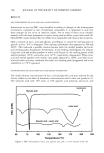
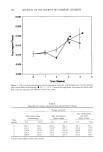
ABSORPTION OF AHAs IN SKIN 191 application of an O/W Emulsion (Formulation A, without AHA) at pH 3.0. The O/W emulsion was applied to the surface of the skin (3 mg/cm2), and after 24 h the skin was washed, rinsed, and dried in a manner described previously. The skin was removed from the diffusion cell, and the pH of the skin surface was measured on a Corning pH meter model 320 (Corning Inc., Science Products Division, Corning, NY) using an MI-404 Flat Membrane pH Electrode with an MI-402 Micro-Reference Electrode (Microelec- trodes, Inc., Bedford, NH). The layers of the stratum corneum were removed by strip- ping 15 times with cellophane tape. After each tape strip, the pH of the skin surface was measured. STATISTICAL ANALYSIS Total absorption values represent the combined absorption values for receptor fluid and skin (stratum corneum, viable epidermis, and papillary dermis) and were compared by the Student's t-test or a one-way analysis of variance (ANOVA, SigmaStat TM Statistical Software, Jandel Scientific Software, San Rafael, CA). The permeability constant (Kp) determinations were compared statistically by performing a Student's t-test, and an ANOVA. The Student-Newman-Keuls test was used as the method for multiple pair- wise comparisons at a significance level of p 0.05 (SigmaStat TM Statistical Software). RESULTS The in vitro percutaneous absorption of glycolic acid was measured from an oil-in-water (O/W) emulsion (Formulation A) at a concentration of 5% at pH 3.0 and 7.0. Greater glycolic acid absorption was observed in all locations with the emulsion adjusted to pH 3.0. Total absorption ofglycolic acid in 24 h decreased from 27.2% at pH 3.0 to 3.5% with the pH 7.0 emulsion (Table II). Significant amounts ofglycolic acid were found in the receptor fluid at pH 3.0 (2.6%), but larger amounts were found in the skin layers (24.6%). Glycolic acid was not only located in the surface layer (the stratum corneum), but greater amounts were found in the deeper skin layers (the viable epidermis and dermis). In order to study the effects of surfactants on the percutaneous absorption of glycolic Table II Percent Applied Dose Absorbed of 5% AHA in Formulation A 5 % Glycolic acid 5 % Lactic acid 5% 2-OH-hexanoic acid Location pH 3 pH 7 pH 3 pH 7 pH 3 pH 7 Receptor fluid 2.6 _+ 0.7 • 0.8 _+ 0.3 3.6 + 1.2 b 0.4 _+ 0.1 32.9 -+ 2.6 a'b 1.0 _+ 0.2 Stratum corneum 5.8 _+ 2.8 1.2 _+ 0.4 6.3 -+ 1.4 3.2 _+ 0.8 3.4 _+ 0.4 2.8 _+ 0.3 Viable epidermis 6.6 _+ 2.5 0.8 _+ 0.3 6.6 _+ 0.9 3.2 _+ 0.8 2.8 _+ 1.4 3.7 -+ 1.3 Dermis 12.2 _+ 1.4 • 0.6 _+ 0.2 13.9 -+ 2.3 b 2.9 -+ 1.3 4.0 _+ 1.8 a'b 2.0 _+ 0.3 Total in skin 24.6 _+ 4.0 • 2.6 _+ 0.6 26.8 _+ 4.5 9.4 -+ 2.1 10.2 + 3.3 • 8.4 _+ 1.0 Total absorption 27.2 _+ 3.3 3.5 -+ 0.9 30.4 _+ 3.3 9.7 -+ 2.0 43.1 _+ 5.9 9.4 -+ 1.1 Values are the mean _+ SEM of two to five determinations in each of three subjects. Values obtained at pH 3.0 in each location with similar superscripts are significantly different from each other (ANOVA, p 0.05).
Purchased for the exclusive use of nofirst nolast (unknown)
From: SCC Media Library & Resource Center (library.scconline.org)